
Uruguay · Paraguay · Forestry · Pulp · Rail · Ports · Project Finance
Three Pulp Projects, Three Infrastructure Models: UPM, Montes del Plata and Paracel
The three projects are often grouped under one South American pulp story. Their operating logic is different. UPM relies on a public railway and a company-operated export terminal, Montes del Plata integrates production and logistics inside one industrial platform, and Paracel is building enabling infrastructure before its planned pulp mill becomes an operating asset.
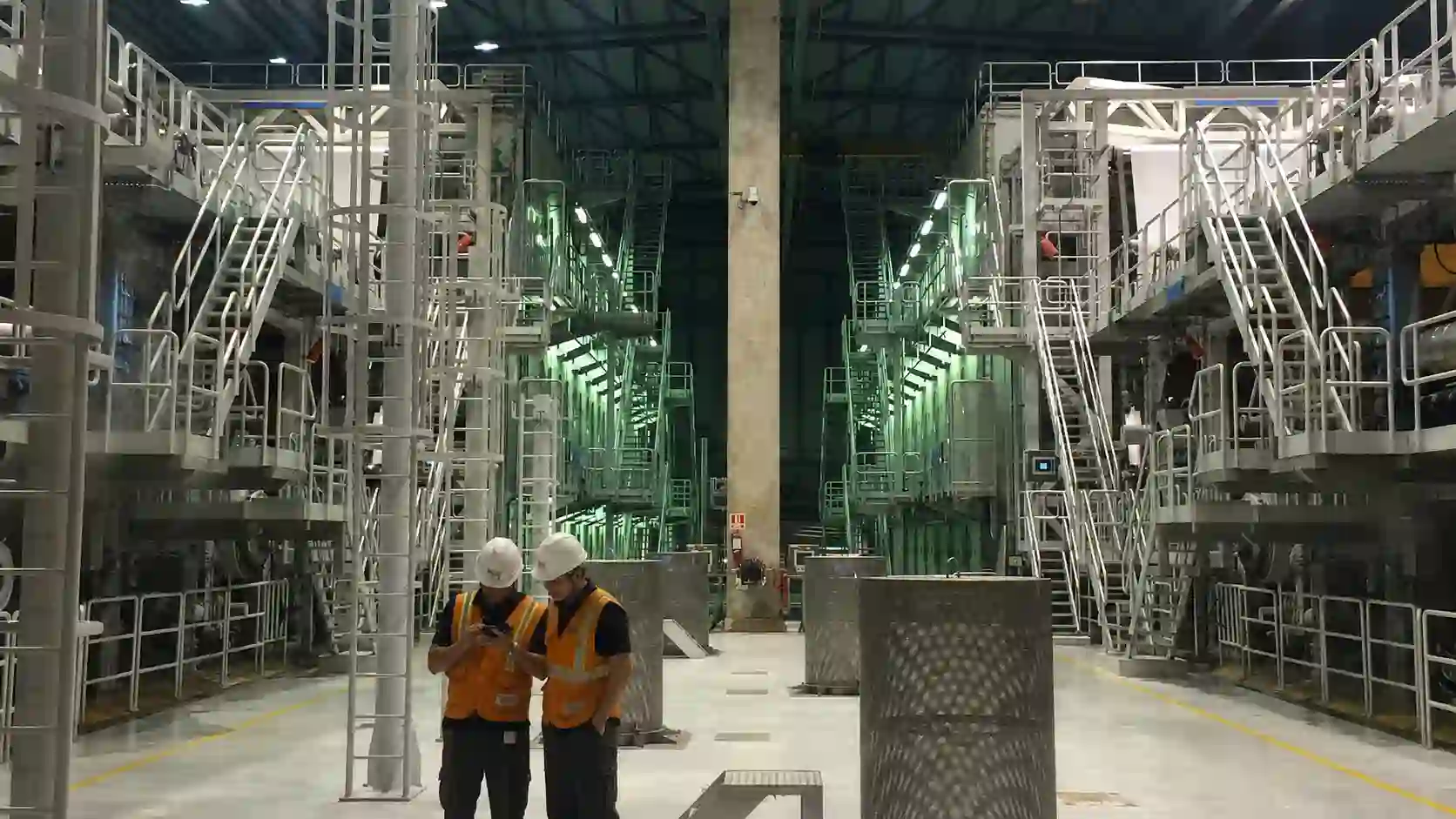
UPM, Montes del Plata and Paracel are not three versions of the same pulp investment.
UPM’s Paso de los Toros mill is part of an institutionally divided system. Uruguay delivered and maintains the central railway through a public-private partnership, a private rail consortium operates UPM’s freight service, and UPM owns the mill and operates its specialized terminal in Montevideo.
Montes del Plata is a more integrated private operating platform. Its shareholders combined forest supply, pulp production, biomass energy, barge transport and a deep-water export port. The project still used development-bank and commercial-bank financing, so integration should not be confused with shareholder-only funding.
Paracel is in a different project phase. Infrastructure works began in May 2026 for a river port, transmission lines, access roads and logistics. IDB Invest describes these assets as creating the conditions for the future pulp mill and additional wood-processing industries. The company now also publishes a formal supplier-registration and onboarding framework. The infrastructure phase and supplier-access structure do not establish that the full pulp mill is financed, built or operating.
The wider market context is covered by Econosur’s South American forestry, pulp and paper overview, the Uruguay pulp analysis and the Paraguay River economy analysis.
The decisive question is not whether a project received public or development-bank support. All three systems involve institutions beyond the mill owner. The useful distinction is which layer of the value chain receives external support, who controls that layer and whether it is built before, with or after the production asset.
That distinction changes project risk, procurement access and supplier strategy. A railway PPP, an integrated mill-port complex and a staged industrial hub do not buy equipment, allocate responsibilities or absorb delays in the same way.
The Same Product Sits Behind Three Different Operating Models
Pulp projects are often compared through capacity, forest area and investment size. Those metrics do not reveal who controls the assets between the plantation and the ocean vessel.
UPM, Montes del Plata and Paracel show three different answers. The first separates public infrastructure, private rail operations and industrial assets. The second integrates most of the chain inside one private operating platform. The third develops forestry and enabling infrastructure before the future pulp mill becomes an operating system.
Public railway infrastructure, a contracted private freight operator, a company-owned mill and a company-operated specialized terminal at Montevideo’s state port.
Forest supply, mill, biomass energy, barge system and export port organized inside one shareholder-controlled industrial chain.
Forestry and enabling assets are advanced first to create the conditions for a future pulp mill and a broader wood-processing hub.
| Dimension | UPM Paso de los Toros | Montes del Plata | Paracel |
|---|---|---|---|
| Country | Uruguay | Uruguay | Paraguay |
| Production status | Operating since 2023 | Operating since 2014 | Future pulp mill; enabling works began in May, with initial port piling reported September 24, 2026 |
| Core infrastructure model | Public railway plus private rail operations and UPM industrial assets | Integrated private mill, energy, river logistics and export port | Staged forestry and infrastructure platform intended to enable later industrial assets |
| Development-finance role | Not the defining finance layer in this comparison | IDB loan and expected commercial-bank mobilization supported the integrated complex | IDB Invest financing targets forestry and essential infrastructure before the future mill |
| Port logic | Specialized UPM terminal in Montevideo connected by rail | Deep-water port at the industrial site | River-port infrastructure in Concepción; downstream export structure remains part of project implementation |
| Main execution interface | Coordination across state infrastructure, PPP maintenance, rail operator, mill and terminal | Performance of a vertically integrated shareholder-controlled chain | Transition from plantations and infrastructure to fully financed and completed pulp production |
UPM Depends on a Public Railway but Controls the Industrial Endpoints
UPM’s Paso de los Toros system is built around a division of responsibilities. The 2017 investment agreement committed Uruguay to build and maintain the Ferrocarril Central between Paso de los Toros and the Port of Montevideo. The railway was delivered through a public-private partnership between the Ministry of Transport and Grupo Vía Central.
UPM did not become the railway infrastructure owner. It became the anchor industrial user. The company separately contracted a consortium including Christophersen Group, Cointer Concesiones and Deutsche Bahn International Operations to develop and operate its freight service. The original service agreement covered up to three million tonnes per year of pulp, chemicals and fuel over a long-term operating period.
UPM controls the industrial endpoints. Its US$3.47 billion investment covered the 2.1-million-tonne Paso de los Toros mill, the specialized Montevideo terminal, a eucalyptus nursery and local infrastructure and facilities. UPM reported approximately US$280 million for the terminal alone and operates the specialized facility within Montevideo’s state-owned port system.
This structure spreads responsibility across several institutions. It also creates interfaces. Railway availability, maintenance standards, operating rules, rolling-stock performance and terminal coordination all affect a mill whose production asset is privately controlled but whose core inland corridor is public infrastructure.
UPM’s competitive platform is not simply a private mill supported by the state. It is an interdependent system in which the state, a PPP infrastructure company, an international railway operator and UPM each control different assets.
This matters commercially because procurement is divided. Railway infrastructure, rolling stock, train operations, mill systems and port equipment can follow different technical standards, contracts and decision paths.
Econosur’s UPM company insight examines the wider Uruguay platform. The national context is developed in the Uruguay pulp economy analysis.
Montes del Plata Integrates the Mill, Energy and Export Chain
Montes del Plata follows a different operating model. The 50–50 venture between Stora Enso and Arauco placed forest supply, industrial production, biomass energy, river transport and export handling inside one shareholder-controlled platform.
The project entered operation in 2014. Contemporary company and development-bank sources described an industrial investment above US$2 billion and an original annual capacity of 1.3 million tonnes. Stora Enso separated the project into approximately US$2.27 billion for the mill and US$230 million for the port.
Integration did not mean shareholder-only financing. The Inter-American Development Bank approved a US$200 million loan and expected to mobilize approximately US$250 million from commercial banks. The financing supported construction and operation of the pulp complex, including biomass power and logistics assets.
The physical chain is also more integrated. Wood can move through the M’Bopicuá logistics terminal and a barge system to Punta Pereira. Each purpose-built barge was designed for around 5,000 tonnes. The industrial site includes a deep-water port, allowing pulp to move directly from the complex into export shipping.
Current operating data reinforce that integration. Montes del Plata reported more than 1.44 million tonnes of pulp production in 2025, harvested more than 4.6 million cubic metres of wood and operated a bimodal logistics system split 51% river transport and 49% road transport. The company also reported renewable power generation equivalent to 7.6% of Uruguay’s total electricity production.
Plantation supply, inland collection and barge transport reduce dependence on one road-only system.
The production complex generates energy from industrial and forestry residues while prioritizing its own operating demand.
The port sits at the industrial location rather than at the end of a separate national rail corridor.
Arauco and Stora Enso control the combined industrial platform through their joint venture.
Montes del Plata internalizes more operating interfaces than UPM Paso de los Toros. The 2025 operating data, including 1.44 million tonnes of pulp and a 51% river / 49% road logistics split, show that this integrated model is not only a project design but an operating system.
The IDB role shows why ownership, financing and operating control must be separated. A project can be privately controlled, multilaterally financed and operationally integrated at the same time.
The Montes del Plata company insight provides the company-level structure, while the Uruguay export analysis places pulp inside the wider trade model.
Paracel Is Building the Conditions for a Future Industrial System
Paracel should not be compared with the two Uruguayan mills as though all three were operating production assets. IDB Invest describes Paracel as a large-scale pulp project with a planned annual capacity of 1.8 million tonnes, a forestry program covering approximately 203,000 hectares and complementary civil works.
In March 2026, IDB Invest announced approval of financing of up to US$165 million. The IDB Invest project page, reviewed October 13, 2026, still lists a US$120 million financing amount, while the syndicated amount is N/A and the signed date is N/A. The approved package ceiling should therefore not be presented as a fully signed US$120 million plus US$45 million financing split.
The financed scope is the important point. It covers essential infrastructure including power lines, substations, a port and access roads. IDB Invest states that these assets create the conditions for the future pulp mill and for additional wood-related industries.
Infrastructure construction began in May 2026 at Paso Horqueta. Paracel reported on September 24 that the first port piles had been installed, with T&C Ingeniería de Topografías y Caminos working on the river-port infrastructure. This is a physical construction milestone for enabling assets; it does not confirm completion of the terminal or financing and commissioning of the pulp mill.
Paracel now publishes a formal supplier framework including a supplier code of conduct, instructions for potential suppliers and a guide explaining how companies can register as Paracel suppliers. The company also provides a supplier-registration form and documents meetings with potential suppliers.
This verifies an access route for potential vendors. It does not prove that every infrastructure, Sudati or future pulp-mill package has an open RFQ or current procurement process.
Paracel’s May 2026 release places the 2027 construction date and the 2028 first-phase target in the passage describing Sudati’s planned plywood investment, the hub’s first additional industrial partner. This analysis therefore attributes those dates to Sudati and does not use them as a confirmed construction or start-up schedule for Paracel’s pulp mill.
Paracel’s model therefore begins with a broader territorial platform. Plantations, electricity, roads, a river terminal and additional wood-processing industries can be developed before the pulp mill itself reaches operating status.
Paracel is currently an infrastructure and industrial-development story with a future pulp mill at its center. The sequence may reduce some greenfield bottlenecks by advancing common assets first, but it does not remove financing, construction and commissioning risk from the pulp plant.
Suppliers now have a documented registration route, but they still need to identify which opportunity belongs to the current infrastructure package, which belongs to Sudati or another hub tenant, and which depends on the future pulp mill reaching a later project stage.
The Paracel company insight follows the project directly. Its river dependence connects the case to Econosur’s Paraguay River economy analysis and the regional Paraná–Paraguay Waterway analysis.
The IDB Appears in Two Projects but Finances Different Stages
The comparison becomes more useful when the development-bank role is separated from general labels such as public, private or greenfield.
In Montes del Plata, the IDB supported construction and operation of an integrated pulp complex. The project already combined the mill, power generation, port and barge-related logistics in one investment structure.
In Paracel, IDB Invest’s 2026 financing is directed toward forestry and essential infrastructure that should enable the future pulp mill and other industries. The bank is supporting an earlier layer of the industrial sequence.
| Project | Development-finance instrument | Financed layer | Analytical meaning |
|---|---|---|---|
| Montes del Plata | US$200 million IDB loan plus expected mobilization of about US$250 million from commercial banks | Construction and operation of the integrated pulp, energy and logistics complex | Development finance entered a project already designed as a complete operating platform |
| Paracel | Up to US$165 million approved; current project page lists US$120 million financing, syndicated amount N/A and signed date N/A | Forestry and essential infrastructure such as electricity, port and access roads | Development finance advances the conditions for later industrial production |
“The relevant question is not whether a development bank is present. It is which risk the bank is helping the project absorb.”
These mill-to-port chains illustrate the industrial role of transport networks examined in South America’s Transport Infrastructure 2035: A Six-Country Outlook.
Port and Transport Control Shape the Real Industrial Boundary
A pulp mill is only one part of the export system. Wood must reach the plant, chemicals and fuel must arrive, electricity must remain available, finished pulp must be stored and heavy volumes must reach an ocean vessel.
UPM and Montes del Plata solve this problem differently. UPM uses a public central railway, a contracted rail operator and its own specialized terminal. Montes del Plata places river logistics and the export port closer to the industrial platform itself.
Paracel’s current phase is building a river terminal and inland infrastructure in northern Paraguay. The final downstream export chain must still connect inland river logistics to the wider Paraguay–Paraná waterway and seaborne markets. Earlier project documents envisaged external downstream logistics, but the implemented structure should be verified as contracts and operating arrangements advance.
UPM controls the mill and terminal while relying on public infrastructure and contracted rail operations between them.
The venture coordinates the mill, biomass energy, barges and deep-water export port within one industrial system.
River-port and inland assets are being built while the full production and export system remains under development.
The regional logistics layer is examined in Econosur’s Logistics and Waterways overview. Energy requirements connect the projects to the Energy and Infrastructure overview.
Each Model Places Delays and Performance Risk in a Different Location
Capacity announcements do not show where a project can fail. The risk sits at the interfaces between forest supply, utilities, transport, financing, construction and operations.
The mill and terminal operate, while long-term competitiveness depends partly on railway availability, regulatory coordination and contracted train performance.
The main responsibility is concentrated in the venture’s ability to coordinate forest supply, mill performance, energy and export logistics.
The confirmed investment advances roads, electricity, port and logistics, but later pulp-mill financing, construction and commissioning remain separate milestones.
UPM and Montes del Plata have operating plants. Paracel’s 1.8-million-tonne figure is planned annual capacity and must not be presented as output.
The Supplier Market Follows Asset Control, Not the Project Headline
A supplier looking only for the name of the pulp producer can miss the actual purchasing authority. Different packages may be controlled by the state, a PPP company, a railway operator, a port concessionaire, the mill owner, an engineering contractor or a development-bank-financed project company.
The commercial route therefore changes by model. UPM’s rail corridor separates infrastructure and freight operations from the pulp mill. Montes del Plata concentrates more purchasing and operating authority inside the integrated venture. Paracel’s current opportunities are divided between forestry, infrastructure, the industrial hub and future production assets.
Paracel adds one important current distinction: potential suppliers can now enter through a documented company registration and onboarding process. That makes supplier access more concrete than a generic greenfield-project signal, while leaving package-level procurement, vendor qualification and award status to be verified separately.
Railway infrastructure, rolling stock, port handling, mill equipment, transmission lines and forestry systems can belong to different contracts.
Technical specifications may come from a public authority, shareholder, operator, EPC contractor or lender requirement.
Operating replacement demand, active infrastructure construction and future mill procurement require different sales strategies.
- Which packages are already awarded, under procurement, operating or still dependent on a later investment decision?
- Does the mill owner, infrastructure concessionaire, operator or EPC contractor control the purchase?
- Which systems require local installation, maintenance, spares and emergency response?
- Which technical standards are defined globally and which are adapted to Uruguay or Paraguay?
- Does development-bank financing impose specific environmental, social, reporting or supplier requirements?
- Which logistics assets are common infrastructure and which are dedicated industrial facilities?
- Where does the project’s present status end and its announced future phase begin?
What Should Be Watched Next?
The two Uruguayan systems are operating and can be assessed through production, railway performance, port throughput, maintenance and export data. Paracel requires a different monitoring framework because the infrastructure hub and the future pulp mill are not the same project milestone.
| Case | Near-term evidence | Why it matters |
|---|---|---|
| UPM | Rail reliability, terminal throughput, mill utilization, maintenance performance and logistics costs | Shows whether the divided institutional chain performs as one competitive export system |
| Montes del Plata | Production, forestry supply, power generation, barge utilization and port operations | Tests the resilience and efficiency of the integrated platform |
| Paracel | Financing signature, infrastructure completion, additional industrial tenants, mill financing, EPC status and construction milestones | Separates real implementation from planned capacity and future project claims |
The three cases show that pulp competitiveness is partly an infrastructure-governance question.
The decisive distinction is not public versus private investment. It is who owns, finances, operates and procures each asset between the forest and the export vessel.
UPM shows an operating chain split across public railway infrastructure, contracted freight operations and company-controlled industrial endpoints. Montes del Plata shows a more integrated private operating platform. Paracel adds a third model in which forestry, common infrastructure, supplier access and additional industrial tenants are being assembled before the central pulp asset reaches the same operating stage.
These structures create different markets for machinery, engineering, energy systems, rail and port equipment, environmental services, maintenance and logistics. The relevant commercial opportunity depends on asset ownership and project stage, not simply on the name of the pulp producer.
Verified operating: UPM Paso de los Toros and Montes del Plata are operating pulp systems. Montes del Plata reported more than 1.44 million tonnes of pulp production in 2025 and a logistics split of 51% river / 49% road.
Current Paracel implementation: forestry development, enabling infrastructure, supplier registration and the industrial hub are documented. Sudati is identified as an additional industrial tenant.
Approved but not established as fully signed/disbursed: IDB Invest announced financing of up to US$165 million. The current project page lists US$120 million financing, syndicated amount N/A and signed date N/A.
Planned: Paracel’s 1.8-million-tonne pulp mill and Sudati’s future plywood phases.
Unresolved: full Paracel mill financing, EPC and procurement architecture, complete package awards, mill construction schedule, commissioning, stable production and the final downstream ocean-export arrangement.
This analysis prioritizes official government, development-bank and company sources. Company sources are used for their own investments, plans and operating structures and are not treated as independent proof of future performance. Project status, financing approval, signed financing, construction and operating production are kept separate. Evidence reviewed through 13 October 2026.
- Paracel, September 24, 2026 — first piles installed for the Paso Horqueta river port.
- Uruguay — investment-agreement railway commitments and state responsibilities
- Uruguay Ministry of Economy and Finance — Ferrocarril Central PPP project record
- UPM — Paso de los Toros investment, capacity and operating start
- UPM — Montevideo terminal investment and operating structure
- UPM Uruguay — long-term rail operator agreement
- Inter-American Development Bank — Montes del Plata loan and commercial-bank mobilization
- Stora Enso — Montes del Plata mill and port investment
- Montes del Plata — Sustainability Report 2025 operating data: pulp production, wood harvest, bimodal logistics and renewable energy
- Montes del Plata — barge capacity and bimodal wood logistics
- IDB Invest — Paracel financing structure, planned pulp capacity and infrastructure scope
- IDB Invest — financing purpose and future-mill status boundary
- Paracel — May 2026 infrastructure works and Sudati industrial-hub agreement
- Paracel — supplier documents, code of conduct, potential-supplier instructions and supplier-registration guidance
- Paracel — supplier-registration form
- Agencia IP — official reporting on the infrastructure groundbreaking in Concepción
Forestry and Industrial Infrastructure Analysis
Econosur prepares custom analysis for companies and investors evaluating forestry, pulp and paper, industrial infrastructure, project finance, logistics, suppliers and procurement structures in South America.
Research can cover Uruguay, Paraguay, Brazil and regional supply chains, including company structures, project status, infrastructure ownership, procurement access, supplier qualification and commercial conditions.
Explore custom market analysisFrequently Asked Questions
What is the main difference between UPM, Montes del Plata and Paracel?
The main difference is the allocation and timing of infrastructure risk. UPM depends on a public railway delivered through a PPP and a company-operated port terminal. Montes del Plata integrates the mill, biomass energy, river logistics and its export port inside one industrial platform. Paracel is currently building enabling infrastructure intended to support a future pulp mill and additional wood-processing industries.
Did the Uruguayan government build a private railway only for UPM?
Uruguay committed to build and maintain the Ferrocarril Central between Montevideo and Paso de los Toros through a public-private partnership. UPM is the anchor industrial user, while the railway remains public infrastructure governed by a broader regulatory framework.
Was Montes del Plata financed entirely with private shareholder capital?
No. The Inter-American Development Bank approved a US$200 million loan and expected to mobilize approximately US$250 million from commercial banks. The important distinction is that this financing supported an integrated operating complex rather than only preliminary infrastructure.
Is the Paracel pulp mill already under full construction?
The confirmed phase that began in May 2026 covers enabling infrastructure such as a river port, transmission lines, access roads and logistics. IDB Invest describes this infrastructure as creating conditions for the future pulp mill. A complete financing and construction status for the full pulp plant should not be inferred from the infrastructure groundbreaking alone.
Do Paracel’s 2027 and 2028 dates refer to the pulp mill?
No. Paracel’s May 2026 release places the 2027 construction date and the 2028 first-phase target in the passage describing Sudati’s planned plywood investment. This analysis therefore attributes those dates to Sudati and does not use them as a confirmed construction or start-up schedule for Paracel’s pulp mill.
Why does infrastructure ownership matter to suppliers and investors?
Infrastructure ownership helps identify who controls technical standards, procurement, operating performance and long-term maintenance. A supplier may need to approach a government PPP, a railway operator, an engineering contractor, the mill owner or a port concessionaire rather than the pulp producer alone.