
Why Is Petrobras
Locking In U.S. LNG
for 22 Years?
Petrobras signed two long-term U.S. LNG agreements within two weeks in September 2026. The apparent paradox is that Brazil is doing this while producing very large volumes of its own natural gas. The explanation lies in the gap between offshore production and marketable supply, high reinjection, transport constraints, declining Bolivian gas, still-limited Argentine flows and a power system that increasingly values flexible gas.
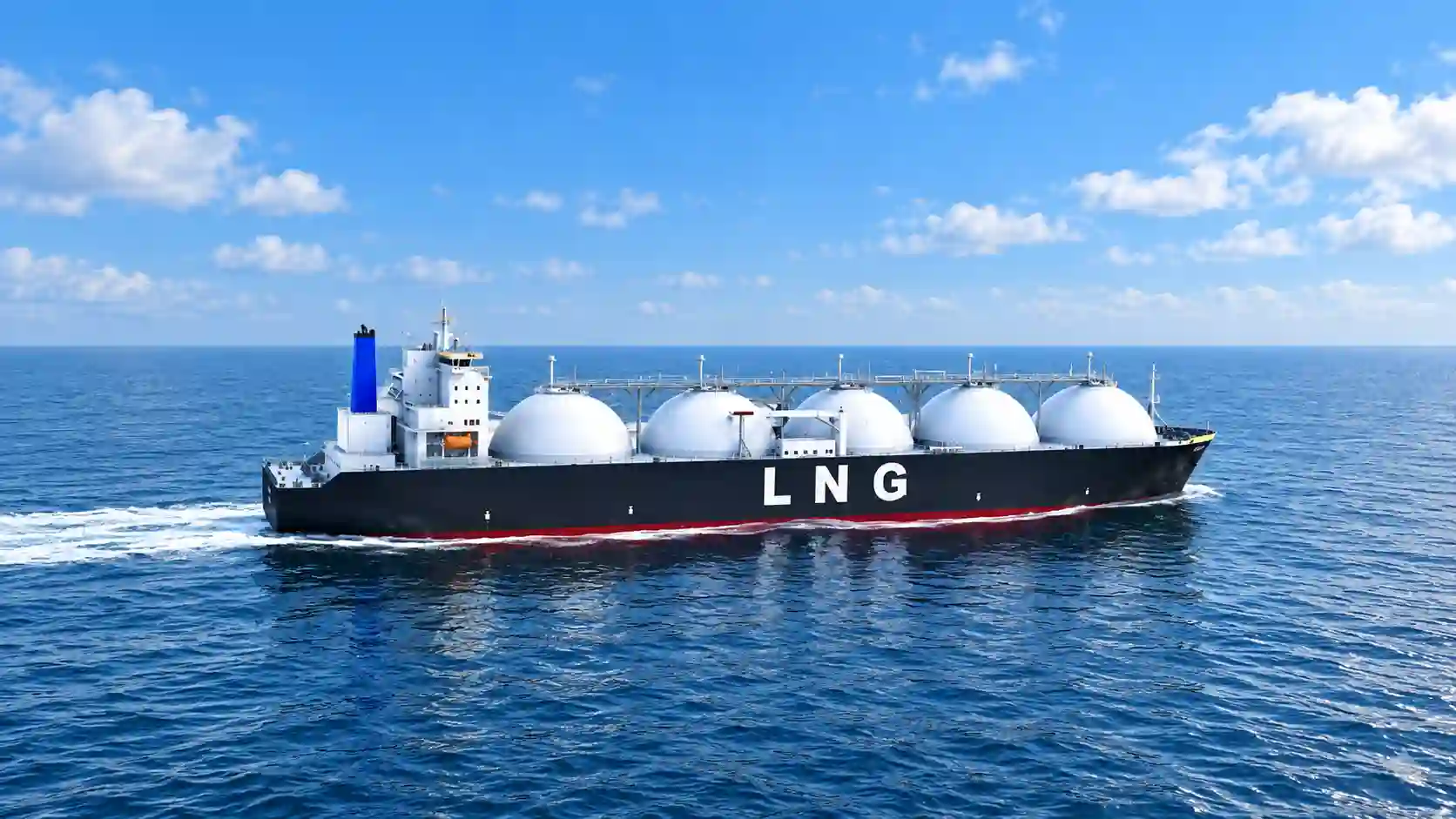
On September 29, Petrobras announced a 22-year agreement to buy approximately 0.8 million tonnes per year of liquefied natural gas from Cheniere Marketing. Two weeks earlier, it had announced another long-term U.S. agreement: approximately 0.8 million tonnes per year from Sempra Infrastructure for 20 years, supplied from Port Arthur LNG Phase 2 in Texas.
The timing creates an obvious question. Brazil is producing more natural gas than in previous years. Why is Petrobras simultaneously locking in U.S. LNG for decades?
Quick answer: why does Petrobras need long-term U.S. LNG?
Because Brazilian gas production and Brazilian gas availability are not the same thing. ANP reported 220.55 million m³/day of production in August 2026, but only 69.41 million m³/day was made available to the market. Most Brazilian gas is produced offshore, and large volumes are reinjected, consumed in production operations or depend on processing and transport infrastructure before they can reach industrial and power-sector consumers.
At the same time, the regional supply map is changing. Bolivian exports are declining. Argentine gas from Vaca Muerta has reached Brazil, but not yet at the scale envisioned for the end of the decade. Brazil's power system is also adding large volumes of gas-fired capacity that require flexible fuel supply rather than a simple constant baseload flow.
The two U.S. contracts therefore look less like a bet against Brazilian gas and more like portfolio insurance. Petrobras itself says the long-term volumes reduce exposure to LNG spot-market volatility, strengthen risk management and improve flexibility and security of supply.
Two U.S. LNG contracts within two weeks
The Cheniere agreement is the more recent and longer of the two. Petrobras will buy approximately 0.8 Mtpa on a free-on-board basis for 22 years. Cheniere did not disclose the start date or price formula in its announcement. Petrobras stated that the purpose is to reduce exposure to the volatility of the LNG spot market, strengthen gas-portfolio risk management and increase flexibility and security in meeting its contracts.
The Sempra agreement adds another approximately 0.8 Mtpa for 20 years from Port Arthur LNG Phase 2. That project is under construction in Texas. Sempra expects the two Phase 2 liquefaction trains to enter commercial operation in 2030 and 2031.
Together, the agreements add about 1.6 Mtpa of long-term U.S. LNG to Petrobras' portfolio. That volume is meaningful, but it should not be read as a replacement for domestic supply. Petrobras is simultaneously investing in infrastructure designed to bring more pre-salt gas to the Brazilian market.
The key question is not why a gas producer imports gas. It is why so much Brazilian gas production cannot be treated as immediately available supply.
Brazil's gas production hides a much smaller marketable volume
The latest ANP production data make the gap visible. Brazil produced 220.55 million m³/day of natural gas in August 2026, 16.8% more than a year earlier. Pre-salt output alone reached 177.58 million m³/day. Yet only 69.41 million m³/day was made available to the market.
This difference is fundamental for understanding the LNG contracts. Gross production includes gas that is reinjected into reservoirs, used in exploration and production operations, flared or otherwise not delivered into the commercial gas network. A high offshore production figure therefore does not translate one-for-one into gas that a power plant, fertilizer producer, distributor or industrial user can buy.
Econosur's broader Oil & Gas analysis treats this distinction as an infrastructure question as much as a resource question: the commercial value of a molecule depends on whether it can be processed, transported and delivered at the right point and time.
Reinjection is a core part of the Brazilian gas paradox
ANP's open reinjection dataset shows why the production headline can be misleading. In June 2026, Brazil reinjected roughly 3.79 billion m³ of natural gas over the month. That is about 126.2 million m³/day, or approximately 58% of the 217.35 million m³/day produced that month, based on Econosur's calculation from the ANP dataset.
Reinjection should not be treated simply as wasted gas. In pre-salt reservoirs it supports reservoir pressure and oil recovery. Petrobras explains that pre-salt gas contains natural gas and CO₂, which can be separated on the production unit and reinjected into the reservoir. The company says this helps maintain reservoir pressure and improve oil recovery while avoiding the release of separated CO₂ to the atmosphere.
But the scale of reinjection also exposes the physical limits of Brazil's current gas system. More gas can only become commercially available when offshore gathering, processing and transport capacity expand and when the economics of bringing that gas to shore compete with reinjection and other uses.
Brazil's gas problem is increasingly a delivery problem
EPE's PDE 2035 projects that Brazilian net natural-gas production will rise strongly over the next decade and that the country's potential supply can exceed projected maximum demand. The same study identifies the constraint: existing pipeline infrastructure can prevent potential supply from reaching geographically dispersed demand centres.
This is already changing. Petrobras' Rota 3 system links the Santos Basin pre-salt to the Boaventura processing complex in Rio de Janeiro. The pipeline can transport around 18 million m³/day and the processing unit can handle up to 21 million m³/day. The objective is to increase domestic market supply and reduce import dependence.
Domestic gas and LNG are therefore being developed at the same time, not as opposing strategies.
New offshore routes can increase structural Brazilian supply. LNG provides a separate form of flexibility because cargoes can be scheduled into regasification terminals when the power system or industrial market needs additional gas.
That infrastructure logic connects directly with Econosur's Energy & Infrastructure coverage.
Bolivia is becoming a smaller structural source of gas
For decades, the Bolivia–Brazil pipeline was a central import route into the Brazilian gas market. That role is weakening as Bolivian production and reserves decline.
YPFB projected average gas exports of 9.11 million m³/day in 2026, about 30% below the previous year, according to data reported by eixos from the company's accountability report. YPFB also estimated that export capacity could be exhausted around 2030 if the country relies only on its currently proven reserves, although new exploration and contingent resources could extend that horizon.
This matters because Brazil is not merely replacing one imported molecule with another. It is moving from a historically important regional pipeline source toward a more diversified system of domestic pre-salt gas, LNG and potentially Argentine pipeline gas.
Vaca Muerta is the regional alternative, but not yet at scale
Argentina offers the obvious regional counterweight to U.S. LNG. The Brazilian and Argentine governments have a roadmap to move approximately 2 million m³/day in the short term, rise toward 10 million m³/day and potentially reach 30 million m³/day by 2030.
The commercial problem is timing and infrastructure. In 2026, Argentine gas moving through Bolivia toward Brazil is still expected to remain below 0.5 million m³/day, according to Gas TransBoliviano figures reported by eixos. Larger volumes depend on transport routes, interconnections, transit arrangements, tariffs and the delivered price into the Brazilian market.
Econosur examined those alternatives separately in Vaca Muerta → Brazil Gas Corridors. The regional option is therefore real, but it is not yet a substitute for contracted LNG at commercial scale. The investment side of the equation is also visible in Who Is Investing in Vaca Muerta? and the YPF company profile.
Brazil's power system increases the value of flexible gas
The March 2026 capacity auction added a large block of dispatchable generation to the Brazilian power system. The MME reported 19 GW of contracted capacity across gas, coal and hydro projects. Sector reporting by eixos estimates that around 15 GW of the contracted capacity is gas-fired and could require up to approximately 95 million m³/day of flexible gas.
That 95 million m³/day figure should not be read as normal daily consumption. It describes a potential flexible requirement associated with the contracted gas-fired capacity. Actual consumption depends on how often the plants are called by the power system and at what load. Petrobras has separately indicated that current firm gas demand is roughly 50–55 million m³/day, while thermal consumption can reach around 40 million m³/day at peak dispatch.
This distinction is exactly where LNG has strategic value. A power system with high hydro, wind and solar participation does not necessarily need gas at maximum volume every day. It needs access to large volumes when conditions require dispatch. That makes terminal access, shipping, storage, regasification and transport capacity part of the electricity-security equation.
Why lock in long-term LNG now?
Petrobras' official explanation is portfolio risk. The company explicitly links both long-term contracts to lower exposure to spot-market volatility and greater flexibility in fulfilling its gas contracts.
The global market in 2026 demonstrates the value of that protection. Shell's LNG Outlook states that disruption through the Strait of Hormuz shut in around one fifth of monthly global LNG supply after the Middle East conflict began, pushing up spot prices. North American liquefaction growth offset part of the shock, but the episode showed how quickly flexible LNG can become expensive when global supply routes tighten.
The Cheniere and Sempra contracts should therefore be read against two different time horizons. The immediate market demonstrated severe spot volatility. The longer Brazilian horizon points to a structural need for optionality while domestic infrastructure, Bolivian decline, Argentine integration and power-sector demand evolve at different speeds.
What changes commercially?
| Market actor | What changes | Status | Commercial question |
|---|---|---|---|
| Petrobras | Adds 1.6 Mtpa of long-term U.S. LNG across two agreements while expanding domestic gas infrastructure | Contracted | How will long-term LNG be balanced against own production, third-party gas and thermal dispatch? |
| U.S. LNG exporters | Gain long-duration Brazilian demand and revenue visibility | Contracted | Which Brazilian demand profiles justify further South American offtake? |
| Brazilian LNG terminals | Become more valuable as flexible entry points into the domestic gas system | Existing system | Which terminals can deliver into the relevant power and industrial demand centres? |
| Pipeline & processing operators | Domestic gas growth increases the value of bottleneck removal and network flexibility | Investment need | Where does additional capacity convert offshore production into saleable gas? |
| Bolivian suppliers | Remain relevant but face declining production and reserve constraints | Declining supply | How much firm volume remains available and at what delivered price? |
| Argentine producers & traders | Gain a strategic opening if Vaca Muerta gas can reach Brazil competitively | Emerging route | Which corridor, tariff structure and contract model can scale beyond test volumes? |
| Industrial gas buyers | Potentially gain a more diversified supply portfolio, but price effects are not automatic | Conditional | Does additional supply create actual competition at the buyer's delivery point? |
The regulatory tension: more LNG while Brazil debates gas release
The timing also has a competition-policy dimension. ANP is developing a gas-release programme designed to reduce concentration in a market where Petrobras still controls a large share of supply. The agency opened public consultation in August and held a second workshop on the programme on September 29, the same day Petrobras announced the Cheniere agreement.
Long-term LNG can improve supply security while simultaneously strengthening the portfolio of the market's dominant supplier. Those effects are not mutually exclusive. The relevant competition question is whether new volumes translate into wider access, lower entry barriers and more supplier choice at the customer level.
Marcus A. Volz perspective
The 22-year contract is not primarily a story about Brazilian dependence on U.S. gas. It is a story about mismatched time horizons inside Brazil's gas system.
Brazil can increase pre-salt production quickly, but commercial gas availability grows only as processing, gathering and transport infrastructure catches up. Bolivia's historical supply role is shrinking faster than a replacement regional system is being built. Vaca Muerta has the resource base, but commercial scale into Brazil still depends on routes, tariffs and contracts.
The electricity system adds another mismatch. Flexible gas-fired plants need fuel capacity when dispatched, not necessarily a constant daily flow. That rewards optionality: LNG terminals, shipping access, storage, transport capacity and contracts that can support variable demand.
Against that background, Petrobras is doing two things at once. It is investing in domestic infrastructure such as Rota 3 to monetize more Brazilian gas, while buying long-term LNG to reduce exposure to the spot market and cover uncertainty elsewhere in the portfolio.
The business question is therefore not whether LNG or domestic gas will “win.” It is which combination of molecule, route, infrastructure and contract can deliver gas to a specific Brazilian buyer at the required time, reliability and cost.
Three business questions that require deeper research
1. Where will Brazil actually need imported LNG?
National supply-demand balances are not sufficient. The useful analysis identifies the demand centre, thermal plant or industrial cluster; the available pipeline capacity; terminal connectivity; transport tariff; alternative domestic supply and dispatch profile. A national gas surplus can coexist with a local delivery deficit.
2. Can Vaca Muerta beat U.S. LNG on delivered cost and flexibility?
Resource cost alone does not answer the question. A commercial comparison has to include Argentine production price, pipeline capacity, new interconnections, Bolivian transit where relevant, Brazilian transport tariffs, LNG shipping and regasification costs, contract flexibility and seasonal demand.
3. Which infrastructure investment removes the highest-value bottleneck?
The Brazilian opportunity may sit in offshore gathering, processing, transport pipelines, LNG terminals, storage, compression or connections to power and industrial demand. The highest-value project is the one that converts physically available gas into reliable commercial delivery where the market is willing to pay for it.
Public production data show how much gas exists. They do not show which molecule can reach which buyer on competitive commercial terms.
The next layer requires route economics, infrastructure access, contracts, buyer location, dispatch behaviour and company-level supply positions.
Researching Brazil's gas market as a commercial question
Econosur can structure a focused analysis around a gas buyer, supplier, project, transport corridor, LNG terminal or industrial demand cluster in Brazil and the Southern Cone.
The objective is to move from broad supply headlines to a defined business question: which sources can reach a specific market, where infrastructure constrains delivery, which companies control the relevant assets, how regional alternatives compare and what evidence would change a commercial decision.
Supply-Mix Analysis
Compare domestic pre-salt gas, Bolivian pipeline gas, Argentine supply and LNG by volume, timing, reliability and delivered-market relevance.
Infrastructure & Bottlenecks
Map gathering systems, processing plants, pipelines, regasification terminals, storage and the constraints between supply points and demand centres.
Buyer & Demand Analysis
Identify industrial clusters, utilities, thermoelectric plants, fertilizer producers and other users whose gas demand can justify infrastructure or supply decisions.
Regional Corridor Comparison
Compare Vaca Muerta routes, Bolivian transit, LNG import points and domestic Brazilian corridors by execution status, capacity and commercial constraints.
Company & Supplier Mapping
Identify operators, transporters, LNG suppliers, traders, infrastructure owners, buyers and potential B2B suppliers linked to a defined gas-market question.
Local Source Verification
Combine ANP, EPE, MME and company disclosures with Portuguese- and Spanish-language market reporting and direct regional verification where useful.
Need a specific Brazil or Southern Cone gas-market analysis?
Econosur can examine one buyer, supplier, corridor, terminal, industrial cluster or infrastructure project and connect physical gas supply with commercial access, companies and market implications.
Custom Market AnalysisResearch boundary
Gross production is not market supply. ANP production data include gas that is reinjected, consumed in E&P operations or otherwise not sold into the commercial network. Comparisons must use consistent definitions.
Reinjected gas is not automatically recoverable commercial supply. Reinjection supports reservoir pressure and oil production and can include CO₂ management. Reducing reinjection depends on reservoir conditions, processing, infrastructure and economics.
The 95 million m³/day figure is not expected normal daily gas consumption. It is a sector estimate of flexible gas requirements associated with gas-fired capacity contracted in the 2026 LRCAP. Actual consumption depends on plant dispatch.
Vaca Muerta's 30 million m³/day is a target, not current supply. The Brazil-Argentina roadmap describes potential scale by 2030. Actual volumes depend on infrastructure, transport agreements, tariffs, contracts and price competitiveness.
The LNG contracts do not establish a fixed future import share for Brazil. Cheniere did not disclose its start date or pricing formula, and Petrobras' future supply mix will depend on domestic production, regional gas, power dispatch and market conditions.
Gas-release effects remain regulatory and market questions. ANP's programme is under development. Its final design and effect on market concentration, infrastructure access and end-user competition cannot yet be treated as settled outcomes.
Frequently asked questions
Why is Petrobras buying U.S. LNG for 22 years?
Petrobras says long-term LNG volumes reduce exposure to spot-market volatility, strengthen gas-portfolio risk management and increase supply flexibility. The wider Brazilian context includes high offshore reinjection, pipeline and processing constraints, declining Bolivian imports and growing requirements for flexible gas supply.
How much LNG has Petrobras contracted from U.S. suppliers?
In September 2026 Petrobras announced two long-term agreements: approximately 0.8 million tonnes per year from Sempra Infrastructure for 20 years and approximately 0.8 million tonnes per year from Cheniere Marketing for 22 years, for a combined 1.6 million tonnes per year.
Why does Brazil import LNG if it produces so much natural gas?
Gross production is not the same as gas available to the market. A large share of pre-salt gas is reinjected, consumed in production operations or constrained by processing and transport infrastructure. ANP reported 220.55 million cubic metres per day of production in August 2026 but 69.41 million cubic metres per day available to the market.
Is Bolivia still an important gas supplier to Brazil?
Yes, but Bolivian export volumes are declining. YPFB projected average exports of 9.11 million cubic metres per day in 2026, 30% below the previous year, and warned that export capacity could be exhausted around 2030 if reserves are not replenished.
Can Vaca Muerta replace LNG imports into Brazil?
Potentially at much larger scale, but not yet. Brazil and Argentina have a roadmap that envisages up to 30 million cubic metres per day by 2030, while 2026 flows via Bolivia remain small. Commercial scale depends on transport routes, tariffs, interconnections and delivered price.
Does the 22-year contract mean Brazil will depend on U.S. LNG?
No such conclusion follows from the contract alone. The agreements add long-term LNG to a diversified portfolio that also includes domestic pre-salt gas, Bolivian pipeline gas, emerging Argentine supply and other market purchases.