
Argentina’s Bioethanol Market
The Companies Behind the E15 Opening
Argentina has removed a technical barrier to gasoline blends containing up to 15% bioethanol, while the national mandate remains at E12. A Senate committee agreement reached on 3 September 2026 now advances a proposed framework that would retain E12 for twelve months after enactment and then move to mandatory E15. The next stage depends on legislation, refinery incentives, oil prices and whether additional production can obtain reliable market access.
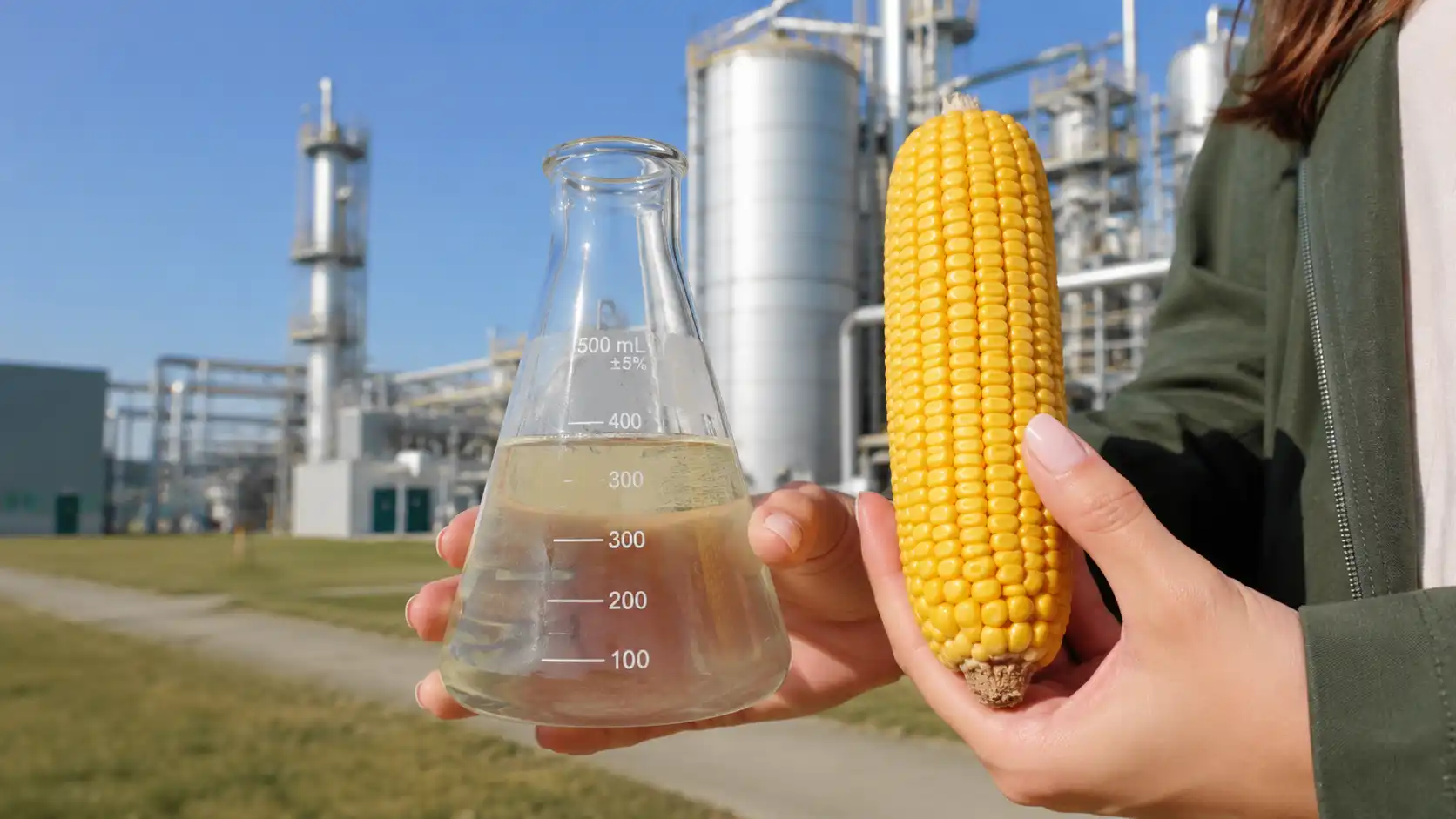
Argentina’s E15 opening has created a technically possible market, not a guaranteed one.
Resolution 79/2026 raised the permitted oxygen-content limit in gasoline to 5.6% when the increase results exclusively from additional bioethanol. Fuel specifications had already admitted blends containing up to 15% bioethanol since 2022. The mandatory national blend remains E12 under Law 27,640.
Argentina already has substantial production capacity. Industry data place 2025 output at approximately 1.3 million cubic metres, domestic sales at 1.181 million cubic metres and installed capacity at around 1.45 million cubic metres. The decisive question is whether refiners have a commercial reason to replace more of their own gasoline with ethanol, especially when the cost advantage changes with oil and fuel prices.
The political position has advanced since July. On 3 September 2026, a plenary of Senate committees issued a favorable agreement on a proposed new biofuels framework. According to the reported compromise, E12 would remain in place for the first twelve months after enactment and would then rise to mandatory E15. The proposal has not yet become law, so E12 remains the binding national requirement as of 9 September 2026.
For September 2026, Resolution 219/2026 set minimum acquisition prices at ARS 1,072.497 per litre for sugarcane bioethanol and ARS 982.976 per litre for corn bioethanol, with a maximum payment period of 30 calendar days.
Argentina does not have one uniform bioethanol industry. It has two production systems connected to the same regulated fuel market. Sugarcane ethanol comes primarily from Tucumán, Jujuy and Salta. Corn ethanol is concentrated in Córdoba, with additional production in San Luis and Santa Fe.
The distinction reaches beyond raw materials. Sugarcane producers operate mills, distilleries, cogeneration systems and seasonal harvest chains. Corn plants tend to operate as year-round biorefineries combining ethanol with animal feed, corn oil, carbon dioxide and other coproducts. Each system has different cost structures, logistics, regional interests and expansion constraints.
The companies matter because the March 2026 regulation did not assign additional volumes or order refiners to purchase more ethanol. A real E15 market requires an operational chain: feedstock, processing capacity, storage, transport, commercial prices, vehicle compatibility, monthly supply and fuel companies willing to blend above the legal minimum.
Market reading: Argentina’s bioethanol market has moved from a capacity question toward a market-access question and is now approaching a regulatory decision point. Producers already have industrial capacity and E15 is technically permitted. The unresolved issue is whether the Senate proposal becomes law and converts that technical option into mandatory demand after the proposed transition period.
What Argentina actually opened in March 2026
The description “E15 opening” needs a precise boundary. Resolution 79/2026 did not introduce a mandatory 15% blend. It changed the technical specification governing gasoline quality.
The official resolution states that Resolution 689/2022 had already admitted bioethanol contents of up to 15% by volume in gasoline. The difficulty was that the permitted oxygen-content parameter did not fully reflect a higher ethanol share. Bioethanol is an oxygenated component, so increasing the blend can also increase the total oxygen content of the finished fuel.
Resolution 79/2026 concluded that it was technically viable to raise the maximum oxygen content to 5.6%, provided that the increase results exclusively from the higher bioethanol share and does not come from the addition of other oxygenated compounds. The government cited combustion efficiency, lower carbon-monoxide emissions and higher effective octane as relevant technical effects.
The legal demand floor did not move. Law 27,640 continues to require a 12% bioethanol blend in gasoline. The new specification therefore creates room between the mandatory E12 level and a technically permitted E15 blend.
Regulatory boundary. E15 is permitted within the fuel specification. E12 is required by law. Permission does not oblige fuel companies to purchase or blend the additional three percentage points.
The March decision should therefore be read as the removal of a technical inconsistency rather than the creation of a guaranteed new market.
Argentina opened an E15 window. It did not yet create E15 demand.
On 3 September, the Senate committees on Mining, Energy and Fuels and on Budget and Finance advanced a committee agreement on a new biofuels framework. The reported compromise would keep the mandatory ethanol blend at E12 for the first twelve months after enactment and then raise it to mandatory E15.
The proposal also changes the market architecture beyond the headline blend. Reporting on the committee text describes competitive allocation mechanisms, limits on individual company participation, an electronic market for monthly mandatory-blend transactions and transition provisions for existing producers.
Evidence boundary: a committee agreement is not enacted legislation. Until Congress completes the legislative process and a new law enters into force, Law 27,640 and its E12 mandate remain the binding framework.
Production, demand and the unused-capacity gap
The 2025 Argentine Bioethanol Yearbook, prepared by the Centro Azucarero Argentino and the Cámara de Bioetanol de Maíz, estimates national production at approximately 1.3 million cubic metres. It places domestic market sales at 1.181 million cubic metres and exports at around 130,000 cubic metres.
These figures describe different categories. The 1.181 million cubic metres represent estimated domestic sales associated primarily with the fuel-blending market. The approximate 1.3 million cubic metres represent total production, including volumes available for export or other destinations. The two figures should not be treated as competing estimates of the same quantity.
The same yearbook places current production capacity at approximately 1.45 million cubic metres per year and annual domestic demand near 1.2 million cubic metres. It describes around 25% of installed infrastructure as idle. The percentage is an industry estimate and its exact calculation depends on the capacity base used, operating assumptions and whether seasonal or commercially unavailable capacity is included.
The direction is nevertheless clear. Argentina has built more ethanol-production infrastructure than the mandatory domestic market currently absorbs. The chambers report more than US$1.5 billion invested since 2012 and more than US$150 million of investment during 2024 and 2025.
The domestic blend was estimated at an effective 12.1% in 2025, although monthly values varied because monthly ethanol allocations are based on estimated gasoline demand while actual fuel consumption changes. The industry also notes that colder Patagonia markets may use a lower blend for temperature-related reasons.
The import-substitution argument is important, but it comes from the industry chambers and should be read as their calculation rather than a separately audited fiscal account. Their yearbook estimates that ethanol deliveries avoided US$619.4 million of gasoline imports through November 2025 and more than US$5 billion during the preceding eight years.
The yearbook also argues that ethanol’s octane value reduces the need for imported octane-enhancing components such as MTBE or toluene. This technical role helps explain why bioethanol is not only an agricultural component of gasoline. It is also part of the refining equation.
Exports are a pressure valve, not a solution
Argentina exported an estimated 130,000 cubic metres of bioethanol in 2025, around 55% more than in the preceding year according to the industry yearbook. The export channel matters because it allows producers to sell volumes that the mandatory E12 market does not absorb.
The export growth should therefore be read partly as a sign of industrial capability and partly as a symptom of the domestic ceiling. Argentina’s plants have sought external customers because the regulated local market has remained broadly fixed while productive capacity has continued to expand.
Exports cannot currently absorb the entire surplus. The approximate gap between reported annual capacity of 1.45 million cubic metres and domestic demand near 1.2 million cubic metres is around 250,000 cubic metres. Exports of 130,000 cubic metres cover only part of that difference, even before seasonal availability, maintenance, non-fuel alcohol and commercially unavailable capacity are considered.
The external market also exposes Argentine producers to price competition from the United States and Brazil, the world’s two dominant ethanol industries. Brazil is an important destination for Argentine ethanol, but it is also a large-scale producer with its own sugarcane cycle, domestic fuel system and export capacity. A favourable trade window can open when regional supply is tight; it can close again when Brazilian or US volumes become cheaper.
Export boundary. Exports give individual plants a commercial outlet beyond E12, but they do not create the stable domestic demand, regulated access or predictable margins that a national E15 market would provide.
The export channel reduces pressure on unused capacity. It does not remove the underlying dependence on foreign prices, certification, freight and competing supply.
Argentina exports ethanol partly because its domestic market has stopped at E12.
One mandate, two production systems
The E12 mandate is divided between ethanol produced from corn and ethanol produced from sugarcane. For domestic supply in 2025, the industry yearbook estimates a 53% share for corn ethanol and a 47% share for sugarcane ethanol.
Córdoba was the leading producing province, with approximately 44.5% of national bioethanol production in 2025. Tucumán followed with approximately 24.5%. Jujuy, Salta, San Luis and Santa Fe accounted for the remainder.
The two systems are commercially linked but not interchangeable. A refinery may receive the same fuel-grade molecule, but the upstream economics are different. Sugarcane ethanol is tied to the annual harvest, sugar prices, mill efficiency and regional policy. Corn ethanol is tied to grain prices, natural gas and electricity, coproduct revenue, continuous plant operation and export certification.
That distinction also affects investment. A sugar company may expand cane area, milling, fermentation, distillation, molecular-sieve dehydration or cogeneration. A corn biorefinery may expand dry milling, fermentation, DDGS drying, corn-oil recovery, carbon-dioxide capture, biogas or export storage.
The companies behind Argentina’s bioethanol market
The current market consists of established sugarcane groups, large corn processors, smaller regional plants, fuel refiners and approved projects that have not necessarily become operating suppliers.
Company data must be compared carefully. A plant’s technical capacity does not establish its mandatory-market quota. A regulatory quota does not prove current production. Monthly allocations do not establish annual output. Exports and non-fuel alcohol can also use capacity that is not visible in domestic blending figures.
Los Balcanes: an integrated Tucumán platform
Compañía Azucarera Los Balcanes is one of the clearest company cases for understanding Argentina’s sugarcane-based ethanol system. The Tucumán group describes itself as a producer of sugar, bioethanol and electricity from sugarcane.
According to company information, Los Balcanes was founded in 1994 by Jorge Rocchia Ferro and Catalina Lonac, who remain its principal shareholders. The group manages more than 23,000 hectares of sugarcane land, works with more than 230 independent growers and employs more than 1,500 people.
Its industrial structure comprises the La Florida, Cruz Alta and Aguilares mills and the La Florida distillery. The mills produce white sugar, raw sugar and molasses. The molasses is transported to La Florida, where it is fermented and distilled to produce industrial alcohol. Los Balcanes states that all alcohol produced is dehydrated through a molecular-sieve plant and converted into bioethanol for gasoline blending.
Bioenergética La Florida reports daily bioethanol production of approximately 500,000 litres. The company describes an energy-efficient dehydration process using vapour recovery, cascading water use, vacuum systems and molecular sieves. The figure is company-reported production and should not automatically be converted into annual output without information on operating days, maintenance stops, seasonal constraints and plant utilisation.
The group’s other mills also feed the alcohol chain. Los Balcanes reports milling capacity of approximately 6,000 tonnes of sugarcane per day at both Cruz Alta and Aguilares, with molasses from both sites sent to La Florida.
Logistics are part of the operating model. The affiliated company Covemat reports a fleet of 60 trucks transporting alcohol, fuels, vinasse and other liquid or hazardous loads. This gives Los Balcanes a degree of internal control over the movement of raw materials, fuel products and industrial residues.
Resolution 960/2023 increased the company’s bioethanol quota by 44,000 cubic metres to a total of 150,500 cubic metres annually. The resolution also makes clear that definitive allocation remained subject to technical, regulatory and legal conditions.
Quota is not production. The 150,500-cubic-metre figure defines a regulatory market position. It does not independently prove actual annual production, monthly deliveries, available spare capacity or plant utilisation.
A company visit can therefore add information that public documents do not provide: current output, seasonal utilisation, feedstock balance, refinery customers, maintenance cycles, storage, transport routes and the volume Los Balcanes could supply above E12.
Los Balcanes also occupies a visible political position in the sector. In July 2026, Vice President Victoria Villarruel visited Ingenio La Florida and met company representatives and officials from Tucumán’s sugar and alcohol institute, IPAAT. Contemporary reporting said the discussion included the future biofuels law, winter gas supply and the position of the northwestern sugarcane industry.
The visit did not change the law or guarantee an E15 mandate. It did, however, place Los Balcanes at the centre of the national discussion at the same moment that the technical E15 option and the legislative reform were moving onto the political agenda.
- What was the actual bioethanol output of La Florida in 2025 and during the 2026 harvest?
- How many days per year does the dehydration plant operate?
- How much capacity remains available after mandatory-market deliveries and other alcohol sales?
- What share of alcohol comes from molasses, direct sugarcane juice or other intermediates?
- Which refinery and fuel-company customers receive the company’s ethanol?
- How are winter gas availability and electricity costs affecting production?
- Could existing equipment supply a voluntary E15 market without a major expansion?
- Which process, logistics or environmental investments would be required for a larger market?
The other major sugarcane producers
Los Balcanes is part of a wider northwestern industrial system. Seaboard Energías Renovables y Alimentos and Ledesma are two of the other most visible integrated sugarcane producers.
Seaboard Energías Renovables y Alimentos operates a large sugarcane-processing complex in Salta. Seaboard states that approximately 70,000 acres are planted with sugarcane on the company’s land, supplying most of the mill’s raw material. The facility has a maximum annual alcohol capacity of approximately 33 million gallons when production is directed toward alcohol, equivalent to roughly 125 million litres. It also operates a 51 MW cogeneration plant fuelled primarily by sugarcane byproducts.
The maximum-alcohol figure is a technical production scenario rather than a statement of annual fuel-ethanol output. The plant can allocate cane between sugar and alcohol, and not all alcohol necessarily enters Argentina’s mandatory fuel market.
Ledesma and BioLedesma operate from the company’s agroindustrial complex in Jujuy. Ledesma extracts sugar and molasses from sugarcane and uses them to produce ethyl alcohol and bioethanol. BioLedesma, created specifically for the fuel business in 2010, sells the bioethanol to refiners.
Ledesma describes BioLedesma as Argentina’s second-largest sugarcane bioethanol producer, with an approximate market share of 8%. This is a company statement and should be read together with current government allocations and actual annual deliveries.
The Ledesma case also demonstrates the wider industrial use of sugarcane. The same agroindustrial base supports sugar, ethanol, renewable energy and bagasse-based paper. The commercial value of the crop therefore depends on how the company allocates material and energy across several product chains.
Sugarcane ethanol is produced inside a wider decision about sugar, alcohol, energy, molasses and industrial residues.
The corn biorefineries behind the other half of the market
Corn-based bioethanol supplies a slightly larger share of Argentina’s domestic market than sugarcane ethanol. Its main production centre is Córdoba, close to maize production, livestock markets and Argentina’s central logistics network.
ACA Bio operates in Villa María as a cooperative industrial venture linked to the Asociación de Cooperativas Argentinas and associated agricultural cooperatives. A company publication reports that an expansion increased annual ethanol capacity from 170 million to 290 million litres. The plant also produces distillers grains, corn oil and recovered food-grade carbon dioxide.
ACA Bio illustrates the difference between industrial scale and mandatory-market access. Its technical capacity is considerably larger than the volume it may receive through regulated domestic allocations. Once mandatory deliveries are fulfilled, the remaining output can serve exports or non-fuel uses, subject to market conditions and certification.
Promaíz operates a dry-milling complex in Alejandro Roca, Córdoba. The company describes the plant as a joint venture between Aceitera General Deheza and Bunge and reports annual ethanol capacity of 200,000 cubic metres and daily capacity of 575,000 litres. The complex also produces DDGS, crude corn oil and recovered carbon dioxide.
Promaíz reports dry-milling capacity of 1,450 tonnes of corn per day, alcohol storage in two 5,000-cubic-metre tanks and dedicated loading systems for ethanol, DDGS and corn oil. These assets show why a larger ethanol market affects grain intake, storage, truck traffic, animal-feed supply and industrial logistics as well as fuel production.
Bio4, legally Bioetanol Río Cuarto, describes itself as a biorefinery founded by 26 agricultural partners to process locally produced corn. It was the first Argentine plant to produce corn-based bioethanol and distillers grains and completed another plant expansion at the end of 2024.
Bio4 has not published a sufficiently clear current capacity figure on the corporate pages reviewed for this analysis. The expansion therefore confirms additional productive capability but should not be converted into a new annual-capacity number without direct company confirmation.
Diaser operates a bioethanol plant in Villa Mercedes, San Luis. The company produces ethanol for fuel blending and alcohol for other uses, together with DDGS and corn oil. Since June 2024, a two-megawatt biogas plant has operated alongside the ethanol facility, using organic material to generate renewable electricity.
The producers do not control E15 demand
The production side is only half of the market. Bioethanol enters the national fuel system through the companies that refine, blend and distribute gasoline.
The Secretaría de Energía’s monthly allocation system identifies producers and the fuel companies responsible for receiving and blending the volumes needed for the mandatory market. The demand-side companies include YPF, Raízen Argentina, Pan American Energy, Trafigura Argentina, Refinor and other authorised market participants.
The current E12 system gives producers a regulated destination for allocated volumes. A voluntary increase toward E15 changes that relationship. The additional three percentage points need a buyer, an agreed price, fuel-quality compliance, adequate logistics and a commercial reason for the blender to use more ethanol.
That commercial reason is not automatic. YPF is both Argentina’s largest fuel supplier and a major refiner of fossil gasoline. Replacing another three percentage points of gasoline with ethanol reduces the volume of petroleum-derived fuel that its own refining and distribution system can sell, unless the ethanol creates a compensating advantage through lower delivered cost, higher octane, reduced imports or regulatory value.
The same conflict applies in different forms to other refiners and fuel blenders. Ethanol producers gain from a higher blend because it expands their market. A refinery may gain from cheaper octane or reduced imported gasoline, but it also gives up part of the fossil component it would otherwise manufacture, import or market. The two sides therefore enter the E15 debate with different commercial incentives.
Refiners may evaluate the octane contribution, the cost of ethanol against other components, gasoline availability, storage and blending infrastructure, tax treatment, distribution requirements and the effect on different vehicle segments. The decision cannot be inferred only from spare ethanol capacity.
Argentina’s 2025 industry yearbook argues that ethanol is competitive as an octane component and reduces the need for imported MTBE or toluene. That argument strengthens the economic case for a higher blend. Refiners will still make decisions according to their own supply systems, prices, specifications and commercial incentives.
The distilleries can offer E15. The fuel companies decide whether E15 becomes a market.
The economics of E15 move with the oil price
The price effect of E15 is conditional. A higher ethanol share lowers the cost of finished gasoline only when the delivered litre of ethanol, including transport, storage and blending, is cheaper than the gasoline component it replaces or provides enough octane and import-substitution value to offset the difference.
When crude oil, imported gasoline or refinery feedstock prices rise, ethanol can become more attractive. It replaces a more expensive fossil component, reduces exposure to imported fuel and can supply octane without additional imported additives. Under those conditions, moving from E12 toward E15 can improve both fuel economics and foreign-exchange use.
When oil and gasoline prices fall, the relationship can reverse. The regulated or negotiated ethanol price may remain above the value of the fossil component being displaced. In that environment, a higher blend can increase the cost of the finished fuel unless tax treatment, octane value or other policy benefits compensate for the difference.
The E15 opportunity is therefore linked to more than agricultural production costs. It depends on corn and sugarcane prices, gas and electricity costs, the regulated ethanol formula, refinery economics, international oil prices, exchange rates and the cost of imported fuel components.
Price boundary. E15 is not structurally cheaper under every market condition. Its cost advantage expands when fossil gasoline becomes expensive and narrows when oil and gasoline prices fall.
This volatility helps explain why fuel companies may prefer a legally defined obligation or a transparent price mechanism before committing to additional volumes.
The oil-price relationship strengthens the central market distinction. Argentina has technically enabled E15, but the economic incentive to use it can change from month to month. A voluntary market remains exposed to that price cycle. A mandatory blend transfers more of the price risk into the regulatory system and ultimately into the fuel-price formula.
Capacity, quota, allocation and output are four different numbers
The most common error in reading Argentina’s bioethanol market is to combine incompatible figures. Four categories need to remain separate.
Resolution 960/2023 demonstrates the distinction. It awarded new or expanded quotas to Biosanfe, Kalpa Group, Grancor, Bioetanol Río Cuarto, Bioenergías Agropecuarias, Bio San Isidro and Los Balcanes. The allocations were subject to compliance with technical, legal and regulatory conditions.
A company’s appearance in that resolution does not prove that its plant was subsequently completed, commissioned and included in current monthly supply. Biosanfe, Grancor and Kalpa should therefore be treated as approved or conditionally allocated projects until separate operating evidence establishes current deliveries.
Prices add another layer. Resolution 219/2026 set the minimum acquisition prices for September 2026 at ARS 1,072.497 per litre for sugarcane bioethanol and ARS 982.976 per litre for corn bioethanol. The payment period remains capped at 30 calendar days from the invoice date.
For comparison, the July values under Resolution 149/2026 were ARS 1,043.615 per litre for sugarcane ethanol and ARS 956.505 per litre for corn ethanol. The separate monthly prices show that the state continues to regulate the two production systems differently. Technical E15 permission has not turned the mandatory market into a uniform free market.
Evidence boundary. A company may possess spare technical capacity but lack an additional domestic buyer. It may hold a quota but deliver less in a given month. It may produce above its quota and export the difference. It may also divert alcohol into pharmaceutical, beverage or industrial markets.
Plant utilisation can only be assessed by combining technical capacity, operating days, monthly allocations, actual production, exports and other product destinations.
The next biofuels law will decide whether E15 remains optional
The technical opening arrived while Argentina was debating a broader reform of its biofuels legislation. In June 2026, the Senate resumed discussion of proposals to amend the current framework. One proposal under debate would increase the mandatory ethanol blend from 12% to 15%.
A legislative proposal is not enacted law. Its final provisions can change during committee debate, negotiation between producing provinces, the federal government and fuel companies, and votes in both chambers.
The central policy questions extend beyond the blend percentage. They include how volumes are divided between sugarcane and corn, how prices are calculated, whether additional volumes are purchased through quotas or open competition, whether imports are permitted, how small producers are treated and whether consumers can purchase higher blends or pure ethanol for compatible vehicles.
The sugarcane and corn-ethanol chambers have argued for a higher mandatory blend, more competition and a structure capable of moving beyond E15. Their 2025 yearbook compares Argentina’s 12% level with higher ethanol use in Brazil, Paraguay and Bolivia.
Regional comparisons require care. A country’s headline blend does not describe its complete fuel market, vehicle fleet, tax system or use of hydrous ethanol. Brazil’s flex-fuel system, for example, cannot be reduced to one blend percentage. The comparison still shows that Argentina’s market has remained at E12 since 2016 while neighbouring systems have continued to evolve.
The July 2026 visit to Los Balcanes by Vice President Villarruel added political visibility to the debate. It did not establish the content or timing of a new law.
The discussion broadened again on 21 August, when Tucumán hosted the second Bioethanol Summit with provincial and national officials, legislators and sugar-and-alcohol industry representatives. The summit focused on policy, investment, innovation and mobility, reinforcing the pressure for a revised national framework without itself changing the law.
The legislative stage changed on 3 September. Senate committees advanced a compromise text that would retain E12 for twelve months after enactment and then move to mandatory E15. That is a materially stronger political signal than the proposals under discussion in July, but the final trigger remains enactment of a new law or a voluntary commercial shift by fuel blenders under the existing technical rules.
The supplier market behind a larger ethanol blend
A move from E12 toward E15 would add demand across the industrial chain. Some plants could increase output through existing equipment. Others would need debottlenecking, storage, energy, water, wastewater, logistics or additional feedstock.
The opportunity differs between the two production systems. Sugarcane operators may need harvesting equipment, mill upgrades, fermentation systems, distillation, molecular-sieve dehydration, boilers, cogeneration, vinasse management and transport. Corn operators may require grain handling, enzymes, yeast, fermentation controls, centrifuges, DDGS drying, corn-oil recovery, carbon-dioxide purification and biogas equipment.
The existing manufacturing and industrial cases overview is relevant because ethanol facilities are continuous-process plants with strict reliability, safety and quality requirements. Supplier access depends on more than product availability. Local service, spare parts, response time and the ability to work during short maintenance windows can decide whether imported equipment is commercially viable.
The market also connects to South America’s energy infrastructure. Gas supply, electricity reliability, cogeneration, grid access and transport costs directly affect plant economics. For the sugarcane system, bagasse-based power can create self-sufficiency or electricity exports. For corn plants, natural gas, power and heat integration are central operating costs.
The agriculture and food systems overview provides the upstream context. Higher ethanol output changes demand for sugarcane and corn, but it also changes the supply of animal feed, molasses, corn oil, carbon dioxide and other coproducts. A fuel-policy decision therefore reaches several markets at once.
- Which plants have genuinely available capacity rather than only nameplate capacity?
- Which producers can supply additional E15 volumes without new capital expenditure?
- How would additional demand be divided between sugarcane and corn ethanol?
- Would extra volumes remain price-regulated or be negotiated freely?
- Which fuel companies have the storage and blending systems to move beyond E12?
- At what oil and gasoline prices does E15 become economically attractive to refiners?
- Can exports absorb surplus production when the domestic market remains at E12?
- How would higher output affect corn, sugar, animal-feed and electricity markets?
- Which approved projects have become operating suppliers?
- Which technical bottlenecks require investment before E15 can scale?
What international companies should watch
International suppliers should watch three separate signals. The first is legal: whether Congress replaces E12 with a mandatory E15 level or creates a structured pathway toward higher blends. The second is commercial: whether refiners begin purchasing voluntary volumes before a new law is enacted. The third is operational: whether producers announce debottlenecking, storage, export, energy or coproduct investments.
The company map matters because different operators require different supplier-access and commercial routes. Los Balcanes, Seaboard and Ledesma are integrated sugarcane groups with established mill and energy systems. ACA Bio, Bio4, Promaíz and Diaser are corn-processing platforms with different ownership models, coproduct strategies and plant histories.
The location also matters. Tucumán, Salta and Jujuy form the sugarcane system of the northwest. Córdoba and San Luis form the main corn-ethanol system. Technical support, spare parts, local representation and travel time need to be evaluated at plant level rather than through a generic Argentina strategy.
Argentina’s broader operating conditions remain relevant. The stabilization gap affects investment, finance, imported equipment and domestic demand. The Vaca Muerta, urea and fertilizer analysis shows the same connection between agricultural competitiveness, energy availability and industrial conversion. The Paraná–Paraguay Waterway analysis adds the export and logistics layer for grain, feed and biofuel-related trade.
Conclusion
Argentina has created the technical conditions for gasoline containing up to 15% bioethanol. It has not yet created a national E15 obligation or guaranteed the three additional percentage points of demand.
The supply side already has an industrial base. Production reached approximately 1.3 million cubic metres in 2025. Domestic sales were estimated at 1.181 million cubic metres. The two industry chambers place installed capacity near 1.45 million cubic metres and estimate that around one quarter of the infrastructure is idle.
Exports provide a partial outlet, but they do not resolve that imbalance. Estimated exports of 130,000 cubic metres absorb only part of the approximate capacity gap and remain exposed to competition from Brazil and the United States. The export channel is evidence that Argentine plants can reach foreign markets, but also that domestic demand has stopped short of the capacity already built.
That capacity is distributed across two different systems. Los Balcanes, Seaboard, Ledesma and other northwestern companies connect sugarcane, sugar, alcohol, bioethanol and electricity. ACA Bio, Bio4, Promaíz, Diaser and other central-region plants connect corn, ethanol, feed, oil, carbon dioxide and biogas.
Los Balcanes is a particularly revealing case. Its three mills, central distillery, 23,000 hectares under management, reported 500,000-litre daily production and 150,500-cubic-metre regulatory quota show the scale of the sugarcane system. They do not reveal actual plant utilisation or the volume available for E15. Those are questions that require direct company access.
The final market decision lies between the producers and the fuel companies. YPF and the other refiners gain from ethanol when its price, octane and import-substitution value exceed the fossil gasoline being displaced. They lose part of their own gasoline volume when that calculation does not work. The balance changes with the oil price.
A new law could make E15 mandatory and remove that demand uncertainty. Refiners could also create voluntary demand under the current technical rules. Until one of those events occurs, Argentina’s E15 opportunity remains an opening rather than a completed market.
Argentina’s bioethanol market has moved from a capacity question toward a market-access question and is now approaching a regulatory decision point.
The country already has producers, installed capacity and technically permitted E15. The unresolved issue is whether political agreement converts that option into mandatory demand, and how a new framework distributes the market between sugarcane producers, corn biorefineries and fuel blenders.
For producers, a mandatory E15 path could turn part of the existing spare capacity into more predictable domestic demand. For refiners, it changes the economics of the gasoline pool and the volume of fossil gasoline displaced. The commercial balance still depends on ethanol prices, oil and gasoline prices, octane value, import substitution and the final allocation mechanism.
For equipment and service suppliers, the relevant trigger is not the headline blend percentage alone. Plant-specific debottlenecking, storage, logistics, energy systems, wastewater, coproduct processing, maintenance and certification determine where actual procurement demand appears.
Verified: Law 27,640 keeps E12 mandatory; Resolution 79/2026 permits the technical conditions for blends up to E15; Resolution 219/2026 sets September 2026 minimum acquisition prices; Senate project S-809/26 exists and a committee agreement was reported on 3 September.
Political / legislative, not enacted: the committee compromise would retain E12 for twelve months after enactment and then raise the mandatory ethanol blend to E15. As of 9 September 2026, this has not become law.
Industry-reported: approximately 1.3 million m³ of 2025 production, 1.45 million m³ of installed capacity, around 25% idle infrastructure, roughly 130,000 m³ of exports and the import-substitution estimates cited in the 2025 Bioethanol Yearbook.
Company-reported: Los Balcanes land and daily production figures, Seaboard maximum alcohol scenario, Ledesma market-position claims and the capacity or expansion figures published by ACA Bio, Promaíz, Bio4 and Diaser.
Unresolved: actual 2026 output by plant, current utilisation of spare capacity, refinery customers and voluntary E15 volumes, the final legislative text, enactment timing, the definitive allocation mechanism and plant-specific procurement requirements.
This analysis prioritises official regulation and government data, followed by industry and institutional sources, corporate disclosures and current reporting. Company capacities and market-position claims are identified as company-reported where applicable. Information available by 9 September 2026.
Primary & official sources
- Boletín Oficial — Secretaría de Energía Resolution 79/2026, 27 March 2026 — confirms that the 2022 fuel specification admitted up to 15% bioethanol and raises the oxygen-content limit to 5.6% when linked exclusively to additional ethanol.
- Argentina.gob.ar — Resolution 960/2023 — mandatory E12 framework, new and expanded company quotas, conditional status of the allocations and the 150,500 m³ total quota stated for Los Balcanes.
- Boletín Oficial — Resolution 149/2026, 1 July 2026 — July minimum prices of ARS 1,043.615 per litre for sugarcane ethanol and ARS 956.505 for corn ethanol, with a maximum 30-day payment period.
- Boletín Oficial — Resolution 219/2026, 1 September 2026 — September minimum prices of ARS 1,072.497 per litre for sugarcane ethanol and ARS 982.976 per litre for corn ethanol, with a maximum 30-day payment period.
- Honorable Senado de la Nación — project S-809/26 — official parliamentary record of the proposed new national biofuels regulatory framework.
- Secretaría de Energía — Biocombustibles portal — statistics, prices, company register, legal framework and market systems.
- Secretaría de Energía — monthly bioethanol allocations — producer and fuel-company volumes for the mandatory blending market. Monthly allocations should not be treated as annual production.
- Argentina Bioeconomy Observatory — bioethanol indicators — official structural and historical reference data.
Industry & institutional sources
- Anuario Bioetanol Argentina 2025, Centro Azucarero Argentino and Cámara de Bioetanol de Maíz, 20 January 2026 — production, domestic sales, capacity, provincial distribution, prices, exports, effective blend and industry import-substitution estimates.
- IPAAT — II Bioethanol Summit, 21 August 2026 — institutional context on policy, investment, innovation, mobility and the national bioethanol debate.
- USDA Foreign Agricultural Service — Argentina Biofuels Annual 2025 — market structure, plant numbers, production outlook, exports and regulatory context. Forecast figures are not final official production data.
- Revista de Economía y Estadística — Argentina in the global bioethanol value chain, December 2025 — academic context on Argentina’s international position and comparison with the United States and Brazil.
Company sources
- Los Balcanes — company structure — ownership, more than 23,000 hectares, three mills, La Florida distillery, sugar, molasses and full dehydration of alcohol into bioethanol.
- Los Balcanes — operating companies — Bioenergética La Florida, approximately 500,000 litres of daily production, Cruz Alta and Aguilares milling capacities and Covemat’s 60-truck fleet.
- Seaboard Corporation — Seaboard Energías Renovables y Alimentos — planted area, maximum alcohol-production scenario and 51 MW cogeneration plant.
- Ledesma — Alcohol and Bioethanol — BioLedesma structure, refinery sales and company-reported position in sugarcane ethanol.
- Asociación de Cooperativas Argentinas — ACA Bio expansion — reported increase from 170 million to 290 million litres of annual capacity and the coproduct model.
- ACA — value-added ventures — cooperative structure and production of corn-starch bioethanol and coproducts.
- Promaíz — products and process capacities — annual and daily ethanol capacity, corn milling, DDGS, corn oil, carbon dioxide and storage.
- Promaíz — company information — Alejandro Roca location and joint-venture structure as described by the company.
- Bio4 — company history — first Argentine corn-ethanol plant and completion of a further expansion at the end of 2024.
- Bio4 — biorefinery structure — 26 agricultural partners, local corn processing and circular-economy model.
- Diaser — company and energy operations — Villa Mercedes bioethanol plant and the two-megawatt biogas facility operating since 2024.
Secondary reporting on legislation and current developments
- Parlamentario — Senate resumes the biofuels debate, 3 June 2026 — reports a proposal to raise the ethanol mandate from 12% to 15%. A proposal under debate is not enacted law.
- TN — Senate committees advance a new biofuels framework, 3 September 2026 — reports the committee agreement, the twelve-month E12 transition and subsequent mandatory E15 proposal.
- TN Campo — agroindustrial groups request Senate treatment, 8 September 2026 — current evidence that the committee text is still awaiting legislative treatment rather than being enacted law.
- La Gaceta — IPAAT and Los Balcanes present sector concerns, 10 July 2026 — reporting on the Vice President’s visit to Ingenio La Florida and discussions about the biofuels framework.
- TN Campo — Villarruel visit to Los Balcanes, 10 July 2026 — secondary reporting on the political commitment to continue the legislative debate.
- Econosur analysis of company structures, refinery incentives, oil-price sensitivity, export limitations, regulatory access, and the distinction between capacity, quota, allocation and output.
From blend percentages to company-level market access
Argentina’s bioethanol opportunity cannot be assessed through the E12 or E15 headline alone. Company capacity, actual output, quotas, monthly allocations, refinery incentives, oil prices, exports, feedstock, energy, coproducts and logistics determine whether additional ethanol becomes a commercially accessible market.
Econosur prepares sector briefs, company reports and custom market analysis for companies, analysts and institutions evaluating Argentina’s sugarcane and corn-ethanol sectors. Possible scopes include Los Balcanes, the Tucumán sugarcane system, Córdoba corn biorefineries, producer comparisons, refinery demand, E15 scenarios, equipment suppliers, procurement structures or the status of approved new plants.
Explore custom market analysisFrequently asked questions
Is E15 mandatory in Argentina?
No. Argentina’s mandatory gasoline blend remains E12 under Law 27,640. Fuel specifications permit bioethanol content of up to 15%, but Resolution 79/2026 did not establish a national E15 mandate.
Has Argentina approved mandatory E15?
No. As of 9 September 2026, E12 remains mandatory under Law 27,640. A Senate committee agreement reached on 3 September proposes keeping E12 for twelve months after enactment and then moving to mandatory E15, but the proposal has not yet become law.
What did Resolution 79/2026 change?
Resolution 79/2026 changed the technical gasoline specification by allowing an oxygen-content limit of up to 5.6% when the increase results exclusively from higher bioethanol content. The earlier fuel specification already admitted blends containing up to 15% bioethanol.
How much bioethanol did Argentina produce in 2025?
The 2025 Argentine Bioethanol Yearbook reports production of approximately 1.3 million cubic metres. Estimated domestic sales were 1.181 million cubic metres, while exports were estimated at around 130,000 cubic metres.
Does Argentina have enough production capacity for E15?
Industry estimates place installed capacity at approximately 1.45 million cubic metres per year and describe around 25% of the infrastructure as idle. This suggests that part of an E15 increase could be supplied from existing assets. Available capacity is not the same as guaranteed supply, monthly allocation or commercially viable output.
What share comes from corn and sugarcane?
For domestic market supply in 2025, the Argentine Bioethanol Yearbook estimates a 53% share for corn-based ethanol and a 47% share for sugarcane-based ethanol.
Why is Los Balcanes important?
Los Balcanes operates an integrated Tucumán sugarcane system comprising the La Florida, Cruz Alta and Aguilares mills, the La Florida distillery, more than 23,000 hectares under management and an affiliated logistics fleet. Resolution 960/2023 stated a total annual mandatory-market quota of 150,500 cubic metres.
Does the Los Balcanes quota prove its annual production?
No. A regulatory quota defines an authorised or allocated volume for the mandatory blending market. It does not independently prove actual annual output, plant utilisation, monthly delivery or commercial sales.
Why might YPF or another refinery oppose a higher blend?
A higher ethanol share replaces part of the fossil gasoline that the refinery would otherwise produce or sell. A refinery may support more ethanol when its delivered cost, octane contribution or import-substitution benefit exceeds that loss, but its commercial interests are not identical to those of ethanol producers.
Does E15 always reduce gasoline costs?
No. E15 reduces finished-fuel costs only when ethanol is cheaper than the gasoline component it replaces or provides enough octane and import-substitution value to offset the difference. Lower oil and gasoline prices can narrow or reverse that advantage.
Can exports absorb Argentina’s idle ethanol capacity?
Exports provide a useful outlet but remain too small and commercially uncertain to replace a larger domestic market. Estimated 2025 exports of around 130,000 cubic metres covered only part of the gap between domestic demand and installed capacity, while Argentine producers compete with larger suppliers from Brazil and the United States.