
Argentina · Chile · Vaca Muerta · Oil Exports · Pacific Route · Updated September 20, 2026
Vaca Muerta’s Pacific Question: Can Chile Become Argentina’s Oil Exit to Asia?
Chile gives Vaca Muerta a working Pacific oil corridor, while Argentina is reducing export friction and building much larger Atlantic infrastructure. Record shale-oil production is increasing the value of both routes. The strategic distinction is clear: Pacific optionality for crude oil, Atlantic scale for oil and LNG.
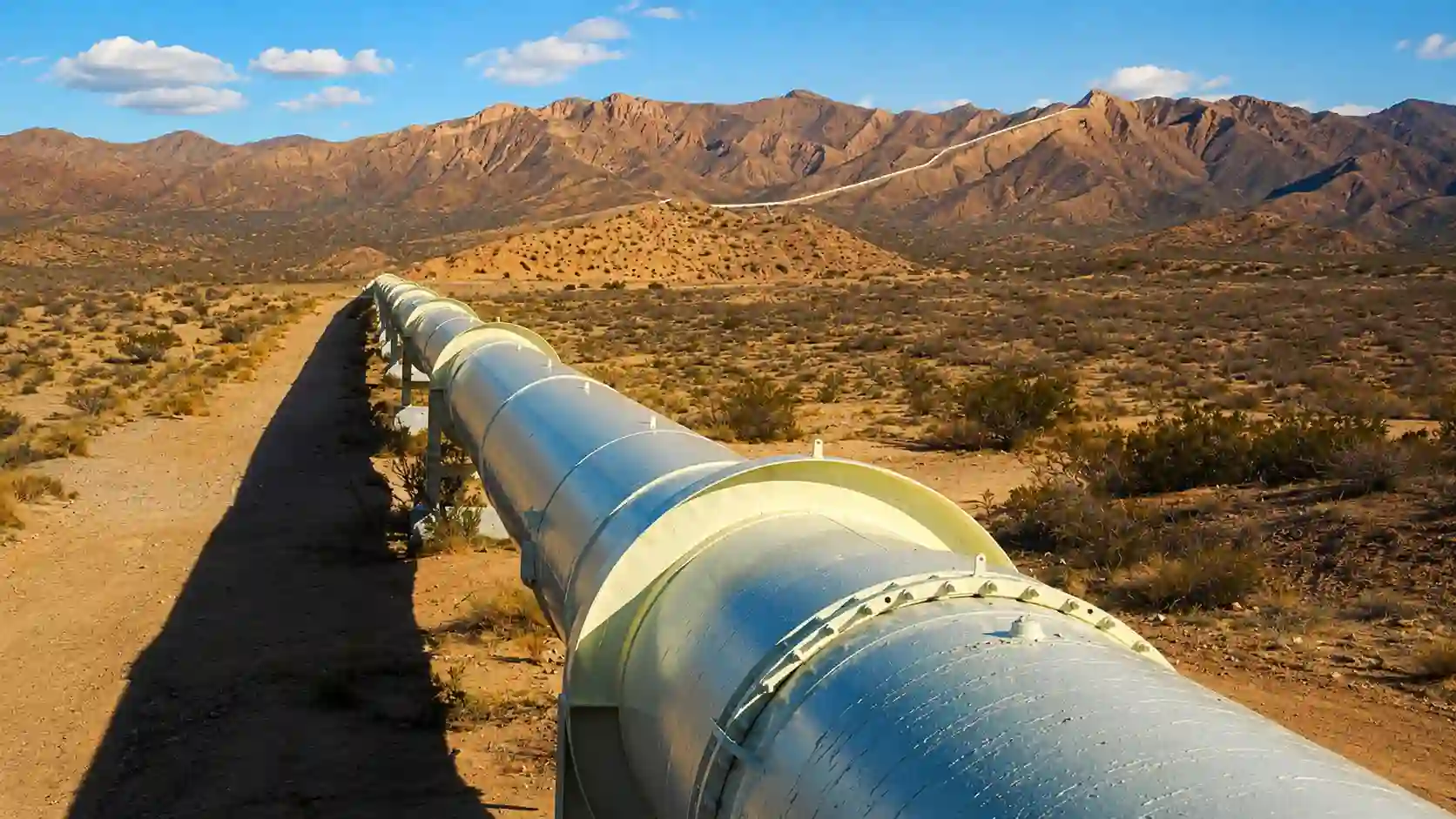
Chile can become a real Pacific exit for Vaca Muerta crude oil. Argentina’s LNG strategy is taking a different route.
The Trans-Andean oil route is operating again, and ENAP has signed long-term contracts with YPF, Vista Energy, Shell Argentina and Equinor to receive crude oil from Vaca Muerta until June 2033. That gives Neuquén a concrete corridor toward Chile’s Biobío region and the Pacific.
Argentina’s larger LNG export strategy is being built around Río Negro and Atlantic-facing infrastructure. On August 14, YPF, Eni and XRG also submitted Argentina LNG for RIGI admission, targeting a final investment decision by the end of 2026 for the 12-MTPA first integrated development.
A second change is regulatory. Resolution 166/2026, effective since July 22, created a unified notification and registration procedure for liquid-hydrocarbon exports. That does not create pipeline capacity, but it reduces one layer of administrative uncertainty around long-term export corridors.
Production is also raising the stakes. Argentina reached a record 916,200 barrels of oil per day in July 2026, including 643,100 barrels per day from Vaca Muerta. That strengthens the case for multiple export corridors rather than a single coastal outlet. The wider resource-security context is developed in South America’s Strategic Resource Advantage in a Fragmenting World Economy.
The capital behind that export geography is now easier to separate by stage. Econosur’s Vaca Muerta investment map distinguishes upstream development, acquisitions, pipelines, LNG, project finance and supplier investment and separates announced capital from RIGI approval, FID, construction and operating assets.
Core market reading:
Vaca Muerta is becoming an export-geography and export-rules story. Chile provides an operating second coast for crude, while VMOS and Argentina LNG build Atlantic scale. Resolution 166/2026 matters because infrastructure and long-term contracts now sit inside a clearer notification-based export procedure rather than the older fragmented approval architecture.
Argentina changed the oil-export procedure in July 2026
On July 22, Resolution 166/2026 entered into force and created the Registro de Operaciones de Exportación for crude oil and other liquid hydrocarbons and derivatives. The new procedure consolidates rules that had previously been spread across several resolutions.
For crude oil, exporters notify the operation and submit the required information through the new procedure. The Secretariat of Energy can object within a maximum of 30 administrative business days, but only on defined technical or economic grounds such as domestic supply, inaccurate information, insufficient production basis or lack of transport capacity. If the authority does not object within the applicable procedure, administrative silence has positive effect and the exporter can require issuance of the Constancia de Libre Exportación.
The rule is especially relevant for long-term corridors. Export notifications exceeding 12 consecutive months must include the underlying commercial contracts and evidence of production availability. Exporters must also declare secured transport capacity. Where new infrastructure is required, they must demonstrate the project’s technical consistency, location and financing structure unless that information has already been submitted through a RIGI application.
The regulatory change strengthens the corridor without changing its physical hierarchy.
Resolution 166 reduces procedural uncertainty around exports, but it does not create spare pipeline capacity or port capacity. That distinction matters. The Pacific route becomes institutionally easier to read, yet its strategic value still comes from diversification and optionality. The Atlantic system remains the scale play.
Why this is an oil question first
Chile’s offer to connect Vaca Muerta with Pacific markets sounds like a broad energy-integration story. In political language, it includes ports, logistics, LNG terminals, regulation, energy security and future routes to Asia.
For market analysis, the story needs a sharper distinction. The Pacific corridor is concrete today mainly for crude oil. Oil can move through existing pipeline infrastructure from Neuquén into Chile. It can supply ENAP’s refineries and, under the right conditions, use Chilean port infrastructure for Pacific shipments.
Natural gas follows a more complex industrial path. Gas can move across borders through pipelines, and Chile has LNG infrastructure. A large-scale export platform for Argentine LNG requires liquefaction capacity, dedicated upstream supply, pipeline capacity, financing, long-term offtake and regulatory certainty. Argentina’s most advanced LNG export path currently points to Río Negro.
This distinction gives the article its analytical edge: Vaca Muerta’s Pacific question is concrete for oil and still exploratory for LNG.
"The Pacific route becomes strongest when it is read as an oil corridor with strategic upside."
The oil route to Chile is already operating
The hard starting point is the ENAP agreement. In December 2025, Chile’s state oil company announced long-term contracts with YPF, Vista Energy, Shell Argentina and Equinor for the supply of crude oil from Vaca Muerta. The contracts run until June 2033 and have a projected value close to US$12 billion.
The crude moves through the Oleoducto Trasandino, a pipeline of more than 400 kilometers built in the 1990s. It connects Puesto Hernández in Neuquén with ENAP’s facilities in Hualpén, in Chile’s Biobío region.
After 17 years of inactivity, the pipeline restarted oil shipments in 2023 following rehabilitation work. Since then, shipments have averaged around 40,000 barrels per day. With the new contracts, throughput is expected to reach the pipeline’s full capacity of 110,000 barrels per day.
Buenos Aires Times reported that the initial combined volume under the deal is up to 70,000 barrels per day. ENAP stated that the supply would cover around 35 percent of its annual crude oil demand. For Chile, the deal strengthens supply security. For Argentina, it creates export revenue and opens a route across the Andes.
Talcahuano is the Pacific detail that makes the story strategic
The strongest Pacific point is the role of ENAP’s logistics system. The corridor supplies Chilean refining demand and can also support export flows through the Pacific.
ENAP stated that the agreement reinforces its logistics business because it enables the export of Vaca Muerta crude through the Terminal Marítimo San Vicente in Talcahuano. That point turns Talcahuano into more than a destination for Argentine crude. It gives the corridor a Pacific-facing hub.
This is where the Asia angle becomes plausible. Chile’s ports face the Pacific. Argentina’s main hydrocarbon basin sits on the other side of the Andes. If crude can cross the mountains reliably, Chile gives Vaca Muerta a route toward Pacific markets without sending every barrel toward the Atlantic.
The limitation is capacity. The Pacific oil route is useful and commercially real, with a smaller scale than the major Atlantic export system. It gives Argentina optionality, Chile supply security and Biobío/Talcahuano a stronger role in the Southern Cone’s energy map.
Chile’s opportunity is focused and credible.
It can become the Pacific outlet for a defined share of Vaca Muerta crude oil, alongside the larger oil and LNG infrastructure that Argentina is building on the Atlantic side.
The Atlantic route is moving from construction story to export system
The reason the Pacific story needs scale discipline is Vaca Muerta Oil Sur. VMOS links Allen in Río Negro with the future Punta Colorada export terminal through a 437-kilometer pipeline and an offshore loading system.
Current official sources describe the same scale but not exactly the same ramp schedule. The VMOS corporate site presents a first phase of 190,000 barrels per day, a second phase of 390,000 barrels per day around mid-2027 and a later build-out toward 550,000 barrels per day. Río Negro’s September 1 construction update points instead to an operating start in February at 180,000 barrels per day and a progressive ramp toward 550,000 barrels per day by July-August. The provincial update also identifies connection with YPF infrastructure on December 15 as a preceding milestone.
For market analysis, the useful common denominator is therefore the project stage rather than one isolated schedule number: VMOS is under construction, the first operating stage is around 180,000–190,000 barrels per day, and 550,000 barrels per day is the relevant base-scale target. Later expansion above that level remains an option. Econosur tracks the capital and execution stages separately in Who Is Investing in Vaca Muerta? Where the Capital Is Actually Going.
The project has also moved further into physical execution. Río Negro reported on September 9 that inspectors were overseeing offshore-pipeline welding aboard the Seminole. The approximately seven-kilometre subsea pipeline will connect the Punta Colorada terminal with the two offshore loading buoys, which are still expected to arrive toward the end of October. These are construction-stage signals rather than planning assumptions.
This sharpens the comparison. The Trans-Andean corridor gives Vaca Muerta an operating Pacific route with roughly 110,000 barrels per day of pipeline capacity. VMOS is designed around several times that scale and is being built as Argentina’s main Atlantic crude-export backbone.
The Chile route therefore remains important as a second route, a diversification option and a regional-integration asset. For exporters, optionality has value. For Chile, the route has supply and logistics value. For Argentina, it reduces dependence on one coast and one terminal system.
"The Pacific route is a corridor of optionality. VMOS is the scale project."
Why LNG is even more clearly Atlantic-facing
The LNG question has become more concrete since the earlier version of this analysis. On August 14, YPF, Eni and XRG submitted the Argentina LNG integrated project for admission to RIGI.
Eni describes the first integrated development as two floating LNG units offshore Río Negro with combined liquefaction capacity of 12 million tonnes per year. The project also includes upstream Vaca Muerta production, gas transportation and processing infrastructure. The partners are targeting a final investment decision by the end of 2026.
YPF describes the broader Argentina LNG platform as a project capable of scaling beyond that first development. But the relevant geographic point is already clear: the concrete LNG build-out is being structured around Río Negro and the Atlantic, not through Chilean liquefaction infrastructure.
A Chilean LNG role remains possible over a longer horizon because Chile has Pacific ports, terminals and a long history of cross-border energy integration. Current project execution, however, points in a different direction. Chile’s strongest near-term role is crude-oil logistics and Pacific optionality.
Key distinction:
Oil already has an operating Trans-Andean route. Argentina LNG has now reached the RIGI-application stage, but its liquefaction and export infrastructure is being developed on the Atlantic side of Río Negro.
I would not describe Chile as Argentina’s general “energy exit to Asia.”
That wording is too broad for the evidence. Chile is becoming a credible Pacific oil outlet for a defined share of Vaca Muerta crude. Argentina’s largest new oil and LNG infrastructure is simultaneously concentrating on the Atlantic. The more precise strategic picture is therefore two coasts with different functions, not two equivalent export systems.
The old gas crisis still shapes the trust question
Energy corridors are built with steel, contracts and money. They also depend on trust. Argentina and Chile learned this in 2004.
In April 2004, Argentina began cutting natural gas exports to Chile. Inter Press Service described the episode as a major Chilean energy crisis. Chile had built its gas strategy around Argentine supply, and the cuts exposed the fragility of cross-border dependence when domestic politics and supply constraints intervene.
This history does not block new integration. It explains why the new integration needs stronger commercial discipline. Chile knows that energy dependence on Argentina can become politically painful. Argentina knows that export credibility matters if it wants to become a stable supplier of oil, gas and LNG.
The roles have changed. In 2004, Argentina protected its domestic market by cutting exports. In the Vaca Muerta phase, Argentina wants export revenue, foreign currency and market access. This time, Argentina has something to lose if reliability fails.
The infrastructure question is also a credibility question.
Chile can offer ports and logistics. Argentina can offer Vaca Muerta supply. A durable energy corridor needs stable rules, predictable flows and contracts that survive pressure in winter, elections and price shocks.
The strategic value of Chile is route optionality, not replacement of the Atlantic.
Vaca Muerta is producing enough oil for export geography to matter. The Trans-Andean route gives producers an operating second-coast option, shortens the path to ENAP and creates a potential Pacific outlet. VMOS is being built at a much larger scale and remains the main Atlantic crude-export system.
The commercial question is therefore which route controls each marginal barrel under different price, capacity and logistics conditions. Pipeline availability, ENAP demand, San Vicente terminal use, VMOS ramp-up and export contracts determine whether Chile functions mainly as a bilateral supply corridor or as a repeatable third-market Pacific platform.
This is the energy-corridor layer of South America’s Strategic Resource Advantage in a Fragmenting World Economy: strategic resources create leverage only when infrastructure, rules, finance, logistics and buyers can move them reliably to market.
What the corridor means for market observers
For market observers, the Chile route should be read as a focused opportunity inside a broader export system. It combines an operating pipeline, long-term ENAP contracts and a clearer Argentine export procedure, but it remains physically smaller than the Atlantic infrastructure now under construction.
The corridor strengthens three things at once. First, it gives Chile more supply security and reduces dependence on distant maritime imports. Second, it gives Argentina a Pacific-facing route for crude oil. Third, it turns Biobío and Talcahuano into more relevant nodes in the Southern Cone’s energy geography.
The larger question is whether the corridor remains a supply arrangement for ENAP or becomes a broader export platform. That depends on volumes, spare capacity, terminal performance, commercial agreements, price differentials and regulatory reliability.
For companies, the opportunity extends beyond production. It can emerge in pipeline operation, port services, storage, measurement, maintenance, engineering, environmental compliance, maritime logistics, customs systems, insurance, data services and cross-border project management.
The corridor also sits inside a much larger Vaca Muerta capital cycle. Upstream projects, VMOS, gas processing, LNG, acquisitions and supplier investment are moving at different speeds. The Econosur Vaca Muerta investment map separates those capital categories and project stages so that corridor demand is not confused with the total headline investment pipeline.
Econosur’s European Suppliers in Vaca Muerta report examines how industrial suppliers reach this demand through operators, project companies, EPC and engineering structures, integrators, distributors and local service platforms rather than through one single Vaca Muerta market.
- Oil logistics: pipeline capacity, terminal operations, storage, maritime services and port handling.
- Cross-border infrastructure: maintenance, monitoring, metering, safety systems and regulatory coordination.
- Energy trading: crude supply contracts, Pacific market access, pricing and offtake structures.
- LNG development: liquefaction, upstream gas supply, pipeline links and Atlantic export infrastructure.
- Risk management: winter supply pressure, political reliability, environmental permitting and contract enforcement.
- Regional integration: Neuquén, Biobío, Talcahuano and Río Negro as nodes in a larger energy map.
What to watch next
The first point to watch is the actual flow through the Oleoducto Trasandino. The route is now backed by long-term contracts, with commercial importance depending on stable volumes and operational reliability.
The second point is Talcahuano. If the Terminal Marítimo San Vicente handles more Vaca Muerta crude for third markets, the Pacific route becomes more than a bilateral supply story.
The third point is VMOS. The project is now in late-stage physical execution, with offshore pipeline welding under way and the monobuoys expected at Punta Colorada toward the end of October. Current official sources differ slightly on the first operating stage and ramp schedule, but they converge on a system starting around 180,000–190,000 barrels per day and scaling toward 550,000 barrels per day. The relevant question is whether the construction, connection and commissioning milestones hold.
The fourth point is Argentina LNG. The August RIGI application is a new formal milestone. The next decisive signal is whether YPF, Eni and XRG reach the targeted final investment decision by the end of 2026.
The fifth point is political reliability. Argentina and Chile can build a practical energy corridor, but the old gas crisis shows that integration works best when infrastructure is matched by trust and predictable rules.
Vaca Muerta’s larger export question
Vaca Muerta is becoming an export project with two different geographies.
Oil already has a working Pacific option through Chile. The ENAP contracts, the revived Trans-Andean pipeline and the Talcahuano terminal give the corridor commercial substance. This route matters because it connects Neuquén with the Pacific and gives Argentina an additional export direction.
LNG is moving differently. The larger LNG export strategy is being developed through Río Negro and the Atlantic. That path requires greater scale, more capital, more infrastructure and longer timelines.
The strongest conclusion is focused: Chile can function as Vaca Muerta’s Pacific oil exit, while Argentina’s largest new oil and LNG infrastructure remains Atlantic-facing.
Resolution 166/2026 adds a more export-oriented regulatory layer to that geography. But the hierarchy remains physical: Atlantic at scale, Pacific with optionality.
Research boundary
Pipeline capacity is not the same as third-market export capacity. The 110,000-barrel-per-day Trans-Andean figure describes the route’s cited transport capacity; the amount available for Pacific re-export depends on ENAP demand, stable supply, terminal operations and commercial arrangements.
Construction milestones are not commercial operation. VMOS offshore welding, tanks, monobuoys and pump-station work are execution evidence, while commissioning and sustained throughput remain future milestones.
Project targets can move, and official sources can describe phases differently. The VMOS corporate site currently presents a 190,000-barrel-per-day first phase and 390,000-barrel-per-day second phase before later expansion, while Río Negro’s September 1 construction update points to a February start at 180,000 barrels per day and a ramp toward 550,000 barrels per day by July-August. This analysis therefore treats 180,000–190,000 barrels per day as the initial operating range and 550,000 barrels per day as the relevant base-scale target.
LNG and crude should be kept separate. Chile has a working role in crude logistics; Argentina LNG is a different value chain with dedicated upstream gas, transport, processing and Atlantic-facing liquefaction infrastructure.
Project status and regulatory claims in this update are anchored first in official laws, government publications and company disclosures.
- Argentina Secretariat of Energy — July 2026 oil and gas production: 916.2 thousand b/d national oil production and 643.1 thousand b/d from Vaca Muerta.
- Argentina Secretariat of Energy — Resolution 166/2026: unified liquid-hydrocarbon export procedure, objection windows and positive administrative silence.
- ENAP — long-term Vaca Muerta crude contracts through June 2033: projected value near US$12bn, roughly 35% of annual ENAP crude demand and San Vicente/Talcahuano logistics role.
- YPF — VMOS project: 437-kilometre pipeline, 550,000 b/d design capacity and potential expansion to 700,000 b/d.
- Government of Río Negro — VMOS Allen update, 1 September 2026: December 15 YPF-connection milestone, February operating-start target at 180,000 b/d and ramp toward 550,000 b/d by July-August.
- Government of Río Negro — offshore-pipeline welding inspection, 9 September 2026: approximately seven-kilometre subsea link between Punta Colorada and the loading buoys.
- Government of Río Negro — VMOS offshore-loading system, 2 September 2026: monobuoy function and expected late-October arrival.
- VMOS — official project site: current phase description, initial investment reference and transport-capacity build-out toward 550,000 b/d.
- VMOS — project-finance announcement: syndicated facility of up to US$2bn, five-year term, SOFR +5.5% and approximately 70% debt funding for the project.
- Vista Energy — Form 20-F: 110,000 b/d total capacity of the Trans-Andean pipeline and current Vaca Muerta transport context.
- Eni — Argentina LNG RIGI application, 14 August 2026: two FLNG units with combined 12 MTPA capacity and end-2026 FID target.
- Reuters — ENAP/Vaca Muerta crude-export deal: independent context on initial corridor volumes and the commercial agreement.
- U.S. EIA — Brazil, Guyana and Argentina support forecast crude-oil growth in 2026: wider context for South America’s growing role in non-OPEC+ supply.
- Infobae — Chile’s Pacific-port proposal: political and regional-integration framing.
- Inter Press Service / Global Issues — historical context on Argentina’s 2004 gas-export cuts to Chile.
- Evidence note: production, regulation, contracts and project execution are anchored in official or company-primary sources. Secondary sources are used for independent context, historical interpretation and reported commercial detail not fully disclosed in official releases.
- Who Is Investing in Vaca Muerta? Where the Capital Is Actually Going
- Argentina’s RIGI Energy Pipeline: The Next Constraint Is Execution
- South America’s Strategic Resource Advantage in a Fragmenting World Economy
- European Suppliers in Vaca Muerta — procurement chains and supplier-access models.
- YPF company analysis.
- Vista Energy company analysis.
Commercial & Infrastructure Questions
The Pacific route is already more than a political concept, but its commercial significance depends on scale, infrastructure use and the procurement structures around the corridor. Three questions matter most for suppliers, investors and commercial teams.
How much Vaca Muerta crude can realistically reach Pacific markets through Chile?
The route is commercially real, but it is capacity-constrained. The article records long-term ENAP supply contracts, initial combined volumes of up to 70,000 barrels per day and roughly 110,000 barrels per day of capacity on the Trans-Andean oil pipeline. That makes Chile a functioning export direction, but not an unlimited alternative to Argentina’s Atlantic system.
How much crude can move onward to third-country Pacific markets depends on more than nominal pipeline capacity. Stable upstream flows, spare transport capacity, terminal performance at San Vicente/Talcahuano, commercial agreements and the balance between ENAP supply needs and export use all affect the corridor’s realistic scale.
How does the Vaca Muerta–Chile Pacific route compare with the VMOS Atlantic export corridor?
The two routes serve different strategic functions. Chile provides an operating Pacific option, diversification and access to a second coast. VMOS is the scale project: the article cites Phase 2 at 550,000 barrels per day, expandable to 700,000 barrels per day, far above the present Trans-Andean system.
For investors and exporters, the useful distinction is therefore not which route “wins.” The Pacific corridor provides optionality and regional integration; VMOS is designed to become the larger oil-export backbone. The commercial value of Chile rises if Talcahuano develops beyond an ENAP supply point into a repeatable platform for Pacific third-market shipments.
Which infrastructure and supplier opportunities are emerging along the Vaca Muerta–Chile oil corridor?
Relevant demand areas extend beyond crude production. The corridor can create requirements in pipeline operation, maintenance, metering, storage, port services, engineering, environmental compliance, maritime logistics, customs systems, data services and cross-border project management.
These categories should not be read as automatically open procurement opportunities. Commercial accessibility depends on the asset owner, project stage, incumbent suppliers, qualification procedures, local service expectations and whether procurement sits with an operator, engineering contractor, terminal, logistics provider or specialist partner.
Public sources can establish pipeline capacity, contract announcements, project design, named operators and official export ambitions. They do not reliably show current spare capacity, active procurement packages, incumbent supplier positions, qualification windows, buyer-level technical requirements or which market-entry route remains realistically open for a specific supplier.
That gap is where project verification and primary market research become commercially useful.
Vaca Muerta–Chile Market Research for International Suppliers and Investors
Econosur structures custom research for international companies evaluating energy infrastructure, suppliers, export corridors and cross-border commercial questions in Argentina, Chile and the wider Southern Cone.
- Which companies control procurement and technical specification along a defined part of the Vaca Muerta–Chile corridor?
- Which suppliers are already positioned in pipeline, metering, maintenance, storage or port-related packages?
- Are supplier qualification or tender windows still open for a specific technology?
- What local service, stock, documentation or partner structure does the buyer require?
- Is Talcahuano developing into a broader export platform or remaining primarily an ENAP logistics node?
- Which announced infrastructure developments are commercially actionable and which remain strategic or political signals?
From public corridor data to commercial verification
Public reporting can show contracts, pipeline capacities, port infrastructure and announced export strategies. It does not reliably show who controls a specific procurement decision, which suppliers are already positioned, whether qualification remains open or what local execution model a buyer expects.
Marcus A. Volz and Econosur provide custom and primary market research to investigate those questions for defined products, companies, infrastructure packages and commercial decisions in Argentina and the Southern Cone.
Discuss a Research QuestionFAQ
Can Chile become Argentina’s energy exit to Asia?
Chile can become a real Pacific exit for part of Vaca Muerta’s crude oil exports. The existing Trans-Andean oil route and ENAP’s long-term contracts make the oil corridor concrete. Argentina’s LNG projects are being structured mainly around Río Negro and the Atlantic.
Is the Pacific route mainly about oil or gas?
Today it is mainly an oil question. Crude oil can move through the Oleoducto Trasandino toward ENAP’s facilities in Biobío and the San Vicente terminal in Talcahuano. LNG exports are being developed mainly through Argentina LNG and Atlantic-facing infrastructure in Río Negro.
What is the Oleoducto Trasandino?
The Oleoducto Trasandino is a pipeline of more than 400 kilometers that connects Puesto Hernández in Neuquén with ENAP’s facilities in Hualpén, Chile. It was inactive for 17 years and restarted shipments in 2023.
Why does VMOS matter?
Vaca Muerta Oil Sur is the larger Atlantic-facing oil export project. Current official materials describe an initial operating stage of roughly 180,000 to 190,000 barrels per day, with the system scaling toward 550,000 barrels per day. VMOS itself describes a later expansion option to about 690,000 barrels per day, while YPF has communicated up to 700,000 barrels per day. The 550,000-barrel-per-day level is the relevant base-scale comparison with the much smaller Trans-Andean route.
What changed in Argentina’s oil-export rules in July 2026?
Resolution 166/2026 created a unified export-operations register and notification procedure for crude oil and other liquid hydrocarbons. For crude oil, the Secretariat of Energy has a maximum 30-business-day objection window based on defined technical or domestic-supply grounds. If the authority does not object within the applicable procedure, administrative silence has positive effect.
Why does the 2004 gas crisis still matter?
In 2004, Argentina began cutting natural gas exports to Chile, triggering a major energy crisis. That history still matters because cross-border energy corridors depend on infrastructure, trust, contracts and political reliability.
What is the main strategic question?
The main question is whether Vaca Muerta becomes a one-coast export project through the Atlantic, or a two-ocean platform where part of its crude oil reaches Pacific markets through Chile.
How much Vaca Muerta crude can realistically reach Pacific markets through Chile?
The route is commercially real but capacity-constrained. The article records long-term ENAP supply contracts, initial combined volumes of up to 70,000 barrels per day and approximately 110,000 barrels per day of Trans-Andean pipeline capacity. Third-country Pacific exports also depend on stable flows, spare capacity, terminal performance and commercial arrangements at Talcahuano.
How does the Vaca Muerta–Chile Pacific route compare with the VMOS Atlantic export corridor?
The Chile route provides an operating Pacific option and diversification value, while VMOS is the larger-scale Atlantic export project. The relevant base comparison is roughly 110,000 barrels per day of Trans-Andean pipeline capacity versus VMOS scaling toward 550,000 barrels per day. Later VMOS expansion above that level remains an option rather than present base capacity.
Why is the Vaca Muerta–Chile corridor strategically important?
The corridor gives Vaca Muerta a functioning second-coast option for crude oil while Argentina builds much larger Atlantic export infrastructure. Its value is diversification and route optionality rather than scale equal to VMOS.
Which infrastructure and supplier opportunities are emerging along the Vaca Muerta–Chile oil corridor?
Relevant demand areas include pipeline operation, port services, storage, metering, maintenance, engineering, environmental compliance, maritime logistics, customs systems and cross-border project management. Actual procurement access must be verified by asset owner, project stage and qualification route.