
Market Insight · Brazil · Asia · Critical Minerals · Trade · Technology
Brazil’s Asia Pivot Is Broader Than China
China remains the anchor of Brazil’s Asian economic relations. Brazil is building additional channels around South Korea’s industrial capabilities and Japan’s search for secure supplies and market access. Critical minerals connect all three relationships, while each one serves a different economic purpose.
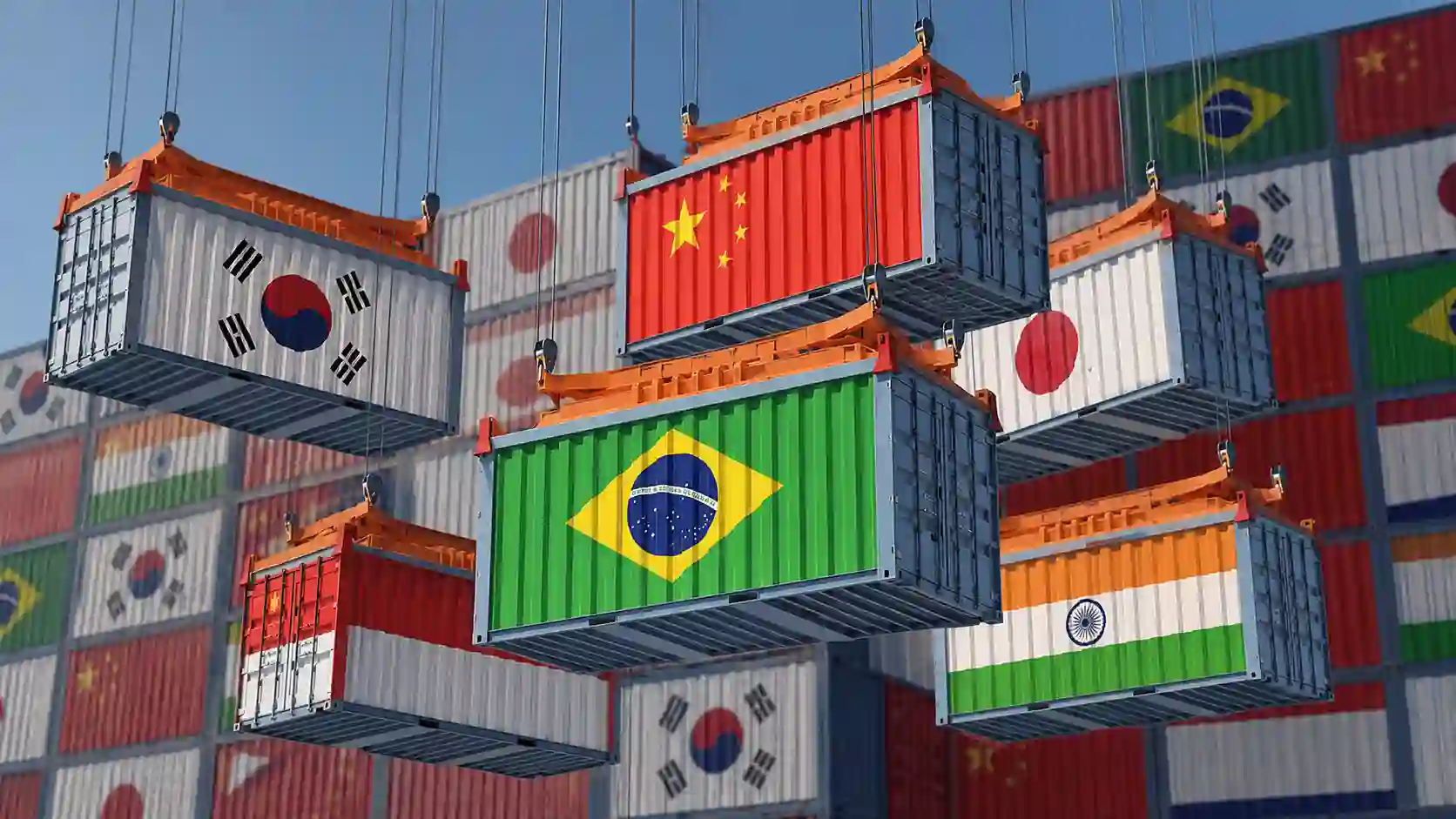
China remains the anchor of Brazil’s Asia strategy, while South Korea and Japan expand the country’s commercial and technological options.
China remains the relationship with the greatest trade scale, financing depth and industrial reach. Brazil is now adding more defined channels with South Korea and Japan. South Korea brings batteries, semiconductors, vehicles and other technology-intensive supply chains. Japan brings an established industrial relationship, demand for secure supplies and a newly launched Mercosur trade negotiation.
Critical minerals connect the three relationships, but the commercial logic differs. China is already embedded in Brazilian trade and investment. South Korea is developing institutional links around mineral processing, technology and agricultural market access. Japan is opening a formal trade framework that could connect industrial exports, investment and supply security.
Brazil now has to convert these relationships into processing, technology partnerships, diversified finance and more resilient market access instead of relying mainly on raw-material exports.
For the domestic foundation of this strategy, see Econosur’s Brazil critical-minerals analysis, Panda Bond insight, Viridis Mining company insight and Serra Verde company insight.
Core market reading:
Brazil is trying to turn geopolitical demand for minerals, food and energy into three different economic channels. China supplies scale and finance. South Korea offers a direct link to advanced industrial supply chains. Japan adds a formal trade route and a demand profile shaped by supply security. The outcome depends on whether Brazil captures processing, engineering and investment rather than remaining mainly a supplier of raw materials.
Why the shift matters now
Several developments converged between June and July 2026. Mercosur and Japan formally launched negotiations for an Economic Partnership Agreement on June 30. Brazil and South Korea created a bilateral working group on July 27 to accelerate a possible Korea–Mercosur agreement. On the same date, Brazil and China supported faster discussions around a possible Mercosur–China arrangement.
These developments are not identical. Japan has entered a formal negotiating process with the four Mercosur states participating in the agreement. The Korea process is being reactivated after earlier rounds stalled. The China discussion remains politically more complex and has not yet become a formal comprehensive negotiation.
The timing reflects a wider change in Brazil’s external strategy. Trade uncertainty, supply-chain pressure and stronger demand for critical minerals have increased the value of Brazil’s resource base. At the same time, Brasília is looking for additional markets, investment sources and financing channels without committing itself to one exclusive geopolitical alignment.
The pivot is broader than a sequence of diplomatic meetings.
Brazil is testing whether its minerals, agriculture, energy and domestic market can support different commercial bargains with different Asian economies. The partnerships overlap, but each one solves a different Brazilian problem.
One Asian strategy, three different roles
The phrase “Asia pivot” can hide more than it explains. China, South Korea and Japan do not occupy equivalent positions in Brazil’s economy, and the three relationships are at different stages of institutional development.
| Relationship | Primary economic role | Current 2026 channel | Main limitation |
|---|---|---|---|
| China | Trade scale, commodity demand, investment, industrial competition and yuan-linked finance. | Support for possible Mercosur talks, strategic-sector cooperation and Brazil’s planned Panda Bond. | A Mercosur agreement requires political consensus and must address Brazilian industrial exposure. |
| South Korea | Technology-intensive supply chains, mineral processing, batteries, electronics, vehicles and agricultural access. | Working group for Korea–Mercosur talks and institutional mineral cooperation through ANM and KOMIR. | Cooperation agreements are not yet proof of large operating investments or completed trade liberalization. |
| Japan | Supply security, industrial trade, investment and integration of value chains. | Official Economic Partnership Agreement negotiations launched with Mercosur. | The negotiating scope, tariff schedules and sector-specific concessions remain open. |
Brazil is assigning different economic functions to relationships that already differ in scale, technology and institutional maturity.
China: scale, finance and the established economic anchor
China remains the foundation of Brazil’s Asian economic position. The relationship already combines commodity demand, manufacturing imports, investment, infrastructure, agricultural market access and financial cooperation. No newer relationship with South Korea or Japan operates at comparable scale.
Brazil’s change lies in its willingness to consider a more structured Mercosur relationship with China. Lula called for future talks at the Mercosur summit on June 30. In a later call with Xi Jinping, both sides supported faster movement toward a possible agreement while also discussing artificial intelligence, satellites, critical-mineral processing and fertilizer trade.
This is strategically important because Brazil had previously treated a formal Mercosur–China negotiation with caution. Chinese industrial capacity creates opportunities for investment and cheaper inputs, but it also creates competitive pressure for Brazilian manufacturers. A partial or flexible agreement may therefore be more realistic than immediate comprehensive free trade.
The financial channel is also expanding. Brazil began preparing its first sovereign yuan-denominated Panda Bond in June 2026, with a possible size of up to five billion yuan. The initiative is intended to test China’s domestic capital market, diversify Brazil’s external financing channels and establish a reference point for Brazilian companies seeking yuan funding.
Econosur examines this finance channel in Brazil’s Panda Bond Bet. The mineral and industrial constraints behind the wider relationship are covered in Brazil’s Critical Minerals Question.
South Korea: mineral processing, industrial technology and market access
South Korea provides the clearest new industrial layer in Brazil’s Asian strategy. Its economy depends on reliable inputs for semiconductors, rechargeable batteries, electric vehicles, electronics, steel and other technology-intensive industries. Brazil offers mineral resources, agricultural exports, renewable-energy potential and a large consumer market.
The relationship moved in two stages during 2026. A February summit in Seoul elevated cooperation across trade, critical minerals, artificial intelligence, agriculture, biotechnology, defence and space. The July meeting in Brasília then added a working group intended to accelerate a possible Korea–Mercosur trade agreement.
The institutional mineral link became more concrete when Brazil’s National Mining Agency and Korea’s KOMIR signed a memorandum on July 27. The agenda includes regulation, mineral management, innovation, technological development, sustainability, technical studies and a joint working group.
Agricultural access forms part of the same package. Brazil announced that a Korean mission would inspect Brazilian meat plants, an operational step toward possible market access. The mineral, industrial and agricultural files should be read as connected negotiations, but not as a formally documented “meat-for-minerals” exchange.
The main evidence limit is execution. A memorandum, working group or summit statement does not confirm a refinery, separation plant, battery-material facility or long-term offtake agreement. The commercial test will be whether Korean companies commit capital and technology to Brazilian processing rather than sourcing minerals after most value has been added elsewhere.
Japan: supply security and a formal Mercosur trade route
Japan’s role is less immediate than Korea’s mineral-agency cooperation, but institutionally more advanced at the trade-policy level. Mercosur and Japan officially launched negotiations for an Economic Partnership Agreement on June 30, 2026.
The process follows the Strategic Partnership Framework created in December 2025 and meetings held in January and March 2026. Mercosur reported that the future agreement would cover a market of roughly 400 million people with combined GDP of approximately USD 7 trillion. Japan–Mercosur trade reached USD 13.7 billion in 2025.
The official objective is wider access for agricultural and non-agricultural goods, stronger cooperation, mutual investment and more integrated value chains. Japan’s interest in secure supplies of energy and critical minerals gives Brazil a strong position within those talks. Brazil also offers agriculture and a large market for Japanese industrial products.
The automotive dimension will be sensitive. Japan has an interest in improved access for industrial exports, while Mercosur countries protect vehicle production through tariffs and industrial policy. Econosur’s analysis of South America’s car market between Europe, the United States and China provides the wider competitive context.
The evidence limit is clear: negotiations have started, but there is no final agreement, tariff schedule or guaranteed investment package. Japan should therefore be described as a formal negotiating channel, not yet as a completed market opening.
Japan and the participating Mercosur states formally opened Economic Partnership Agreement negotiations on June 30, 2026.
Agriculture, industrial goods, automobiles, energy and critical minerals create both opportunities and defensive interests.
The start of negotiations does not confirm new Japanese processing plants, offtake agreements or infrastructure investments in Brazil.
Brazil is using Mercosur as leverage
Brazil’s domestic market and resource base are central to all three Asian relationships, but trade negotiations with South Korea and Japan are conducted through Mercosur. This gives Brazil more negotiating weight while requiring accommodation of Argentine, Paraguayan and Uruguayan interests.
Japan has already entered a formal bloc-to-country process. Korea and Mercosur created negotiations in 2018, but the talks stalled after seven rounds. The new Brazil–Korea working group is intended to reactivate that process rather than create an entirely new one.
China is more complicated. Brazil has become more open to talks, but Mercosur consensus cannot be assumed. Paraguay maintains diplomatic relations with Taiwan. Argentina’s foreign-policy priorities can diverge from Brazil’s. Domestic industries across the bloc will also assess Chinese competition differently.
The result is a two-level strategy. Brazil negotiates bilaterally on minerals, technology, finance and sanitary access while using Mercosur for broader tariff and market-access frameworks. This distinction matters because a presidential meeting can move bilateral cooperation faster than a full trade agreement involving several governments and protected sectors.
For the wider regional logic, see Econosur’s analysis of Paraguay’s role in Mercosur, Chile and Mercosur and Mercosur’s agricultural dependence and regional-autonomy limits.
Negotiation distinction:
Brazil can sign bilateral memoranda and advance sector cooperation on its own. Tariff agreements with South Korea, Japan or China require a wider Mercosur process. The first track can move quickly; the second is slower and politically more demanding.
Critical minerals connect the strategy—but do not complete it
Critical minerals appear in all three relationships because they connect geology to batteries, electronics, renewable energy, defence, vehicles and digital infrastructure. Brazil has the resource base and wants a larger share of the value chain. Asian partners need diversified supplies and reliable processing.
The commercial opportunity is therefore not limited to mine development. It includes mineral characterization, separation, refining, metallurgy, equipment, automation, environmental control, traceability, logistics, power supply and long-term financing.
Brazil’s challenge is that resource potential does not automatically create an industrial ecosystem. Projects require permits, capital, infrastructure, technical performance, customer qualification and competitive processing costs. Rare-earth deposits are particularly sensitive to metallurgy and separation capability.
Serra Verde shows the importance of an operating rare-earth platform. Viridis Mining shows the different risks of a development-stage resource, demonstration plant, financing structure and future commercial scale. These cases explain why diplomatic demand should not be confused with immediate supply.
| Value-chain layer | Brazilian opportunity | Execution test |
|---|---|---|
| Resource development | New rare-earth, nickel, lithium, graphite and other strategic-mineral projects. | Permits, resource quality, financing and mine construction. |
| Processing | Separation, refining, metallurgy and production of higher-value materials. | Technology performance, energy cost, waste management and customer specifications. |
| Industrial integration | Links to batteries, magnets, electronics, vehicles and renewable-energy systems. | Long-term offtake, local demand, scale and international competitiveness. |
| Finance and infrastructure | Asian capital, equipment finance, ports, power and logistics. | Bankable contracts, currency risk, delivery schedules and operating reliability. |
Broader than China does not mean less China
The title can be misunderstood as a claim that Brazil is replacing China. The evidence points in the opposite direction. Brazil is deepening parts of the China relationship while adding alternatives around it.
The Panda Bond plan expands Chinese financial access. The proposed Mercosur dialogue would create a more formal trade channel. Cooperation discussions include artificial intelligence, satellites, mineral processing and fertilizers. These are signs of broader engagement, not withdrawal.
South Korea and Japan reduce concentration risk by creating additional customers, technologies, investors and negotiating options. Their value lies precisely in the fact that they do not need to displace China to matter.
Brazil’s strategic gain comes from adding options around China’s scale—not from pretending that Korea or Japan can replace that scale.
What the strategy means for companies
Mining and processing companies
Companies should separate political interest from procurement and investment reality. A government memorandum can open doors, but projects still need technical validation, financing, permits, processing performance and customer qualification. Korean and Japanese interest may create new routes to offtake and technology, while Chinese capital and buyers remain central.
Industrial and technology suppliers
South Korea’s industrial profile creates opportunities around batteries, electronics, automation, materials and vehicle supply chains. Japan’s negotiating process may improve conditions for industrial trade and investment. Suppliers need to identify the actual project owner, local partner, procurement authority and timing rather than relying on broad diplomatic announcements.
Agribusiness and food exporters
The planned Korean sanitary inspection shows how market access can advance alongside mineral and technology cooperation. Japan’s negotiations include agricultural goods, but sensitive sectors will remain contested. Market access depends on sanitary approval, quotas, tariff schedules and product-specific rules.
Financial institutions and corporate borrowers
The Panda Bond initiative may create a sovereign benchmark for Brazilian issuers in yuan. That does not eliminate currency, regulatory or investor-demand risk, but it broadens the financing map beyond conventional dollar and euro markets.
What to watch next
Watch for a formal restart timetable for Korea–Mercosur negotiations, the Korean sanitary mission and specific company commitments in mineral processing or industrial technology.
The first detailed round should reveal the scope of goods, services, investment, rules of origin and sensitive agricultural and automotive sectors.
Brazilian support is not enough on its own. The key test is whether the bloc can agree on a partial, flexible or broader negotiating mandate.
Track signed processing plants, technology licences, offtake agreements, project finance and supplier packages rather than memoranda alone.
The strategic signal becomes stronger when Brazil completes the issuance and Brazilian companies demonstrate practical use of the yuan market.
Market Reality: China remains the dominant relationship. South Korea and Japan expand Brazil’s options through different combinations of technology, supply security, agricultural access, trade negotiations and investment.
Visibility: Diplomatic announcements are highly visible, while the slower operational stages—processing technology, permits, offtake, procurement and financing—receive less attention. Those stages determine whether the strategy creates industrial value inside Brazil.
Human Interpretation: Brazil’s strongest position comes from offering resources, food, energy and market scale to several partners without treating any one relationship as exclusive.
This analysis prioritizes official Brazilian, Korean, Japanese and Mercosur sources, supplemented by Reuters for current negotiations and statements. Agreements, memoranda, negotiations and proposed financing are not described as completed investments or operating projects.
- Reuters — Brazil and South Korea create a working group for Korea–Mercosur talks; meat inspection and critical-mineral cooperation, July 27, 2026.
- Brazilian National Mining Agency — ANM–KOMIR memorandum covering regulation, mineral management, innovation, technology and sustainability, July 28, 2026.
- Korea.net — Korea–Brazil cooperation in minerals, aircraft, industrial sectors and technology, July 2026.
- Reuters — February 2026 Korea–Brazil summit, strategic partnership, critical minerals and wider cooperation.
- MERCOSUR — Official launch of negotiations for a Japan–Mercosur Economic Partnership Agreement, June 30, 2026.
- Japan Ministry of Foreign Affairs — Second meeting under the Japan–Mercosur Strategic Partnership Framework, March 2026.
- Agência Brasil — Lula supports opening Mercosur–China negotiations at the June 2026 summit.
- Reuters — Lula–Xi call on Mercosur talks, AI, satellites, critical-mineral processing and fertilizers, July 27, 2026.
- Reuters — Brazil’s changing position on possible partial Mercosur–China negotiations and the internal political constraints.
- Agência Brasil — Formal preparation of Brazil’s first sovereign Panda Bond, June 25, 2026.
- Reuters — Proposed Panda Bond size of up to five billion yuan and the intended corporate benchmark effect.
Brazil’s broader Asian strategy raises practical questions for mining companies, processors, manufacturers, agribusiness exporters, investors and financial institutions.
- Will Korean cooperation produce operating processing facilities or remain mainly institutional?
- Which agricultural and industrial sectors will enter the Japan–Mercosur negotiating mandate?
- Can Mercosur develop a China mandate that protects sensitive industries and accommodates Paraguay’s Taiwan relationship?
- Will Asian partners finance processing inside Brazil or mainly secure raw-material supply?
- Which rare-earth and strategic-mineral projects can meet customer specifications at commercial scale?
- Will Brazil complete the Panda Bond and create a usable benchmark for corporate issuers?
- Can Brazil connect trade negotiations with local engineering, equipment and supplier development?
- How will the three relationships affect Brazilian automotive, electronics and battery supply chains?
From diplomatic signal to commercial execution
Brazil’s relationships with China, South Korea and Japan create different openings in minerals, finance, technology, agriculture and trade. The value for companies depends on project status, procurement channels, regulatory access and the specific role each partner is prepared to finance.
Econosur prepares custom market analysis for companies and institutions evaluating Brazil, critical minerals, Asian investment, industrial supply chains and Mercosur trade structures.
Explore custom market analysisFAQ
Is Brazil moving away from China?
No. China remains Brazil’s largest and deepest Asian economic relationship. Brazil is adding channels with South Korea and Japan rather than replacing China.
Why are critical minerals central to Brazil’s Asian strategy?
Brazil has a large and diverse mineral base, while China, South Korea and Japan need reliable supplies and processing capacity for batteries, electronics, vehicles, renewable energy and other advanced industries.
What is different about the South Korea relationship?
The South Korea relationship combines critical-mineral cooperation, industrial technology, supply chains, agricultural market access and an effort to restart Korea–Mercosur trade negotiations.
Have Japan and Mercosur started trade negotiations?
Yes. Mercosur and Japan officially launched negotiations for an Economic Partnership Agreement on June 30, 2026. The final scope, tariff schedules and implementation terms remain open.
Is there already a Mercosur–China trade agreement?
No. Brazil supports opening or accelerating talks, but a formal agreement would require political coordination and consensus inside Mercosur.
What is Brazil’s Panda Bond plan?
Brazil began preparing its first sovereign yuan-denominated bond issuance in China in June 2026. The plan is intended to diversify financing channels and create a benchmark for Brazilian companies.
Does a mineral-cooperation memorandum confirm investment?
No. A memorandum can establish working groups, information exchange and a framework for cooperation. It does not confirm a processing plant, project financing, offtake agreement or commercial production.
What should companies monitor next?
Companies should monitor the Korea–Mercosur working group, Japan’s first negotiation rounds, any Mercosur consensus on China, actual mineral-processing investments and completion of Brazil’s Panda Bond issuance.