
Company Insight · Chile · Transelec · Transmission · Mining Infrastructure · Water · Storage
Transelec: From Chile’s Transmission Grid to Mining Infrastructure
Chile’s leading transmission company is expanding across HVDC, mining-water systems, battery storage and strategic grid acquisitions. At the same time, its ownership remains divided between Canadian pension capital and China Southern Power Grid after a reported control transaction collapsed in June 2026.
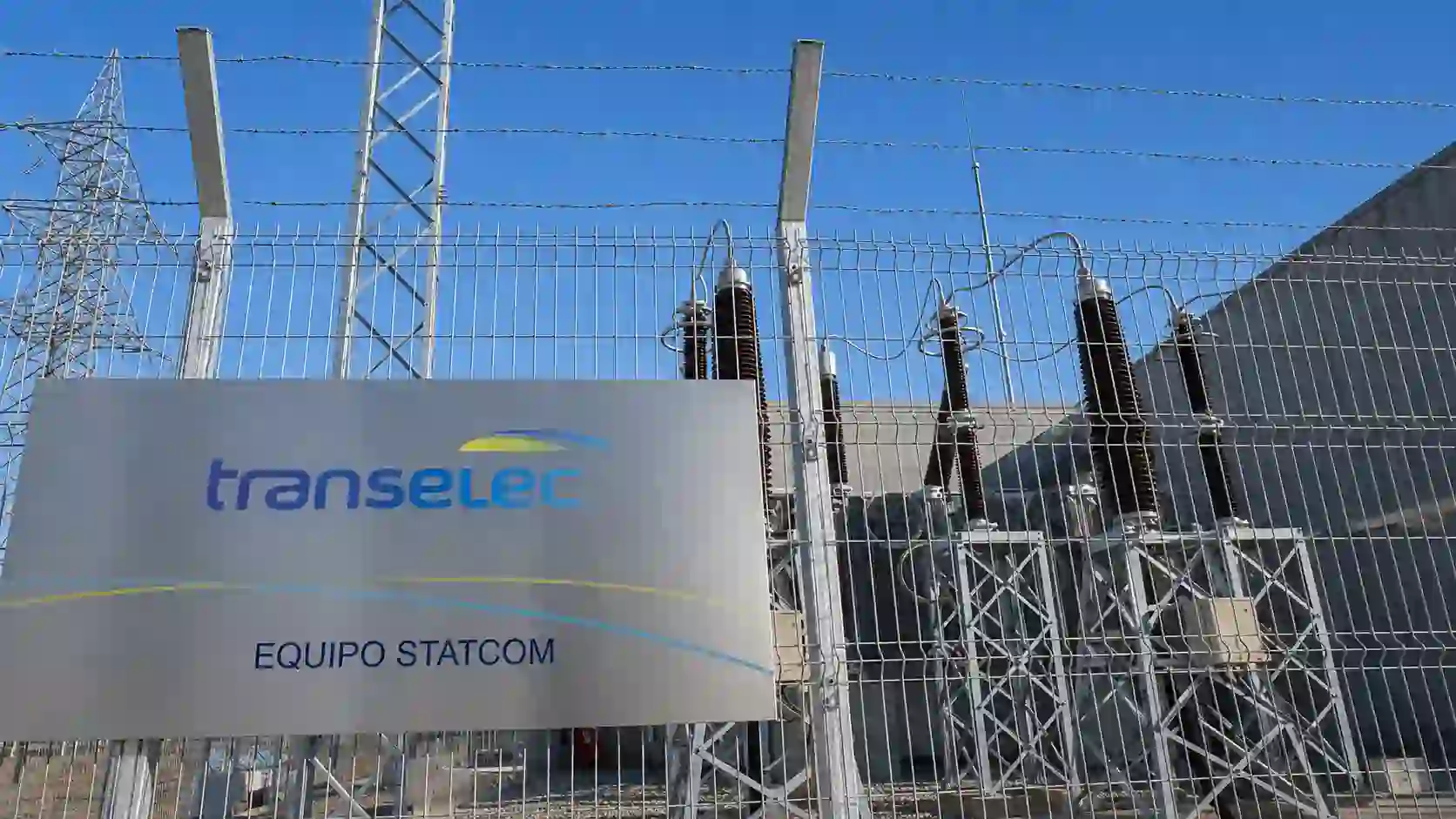
Transelec is still fundamentally a transmission company, but its growth platform now reaches into mining-water systems, battery storage and strategic infrastructure acquisitions.
As of December 31, 2025, Transelec reported 10,743 km of transmission lines, 80 substations and 22,046 MVA of transformation capacity. Its infrastructure forms part of the National Electric System from Arica to Chiloé and serves the system supplying around 98% of Chile’s population.
The company’s ownership is equally important. China Southern Power Grid International holds 27.79%, while CPP Investments, British Columbia Investment Management Corporation and PSP Investments hold a combined 72.21%. Bloomberg reported that CSG abandoned discussions to acquire control in June 2026 after a transaction potentially exceeding US$4 billion failed to reach agreement.
For the wider market structure, see Econosur’s Chile Power Grid analysis, Kimal–Lo Aguirre project analysis, Seawater Mining Infrastructure analysis and Battery Storage analysis.
Core company reading:
Transelec is evolving from a regulated transmission operator into a broader infrastructure platform. The common capability across grid lines, mining-water corridors and battery storage is the development and long-term operation of capital-intensive infrastructure that connects remote resources to demand.
Why Transelec matters now
Chile’s transmission bottleneck has become a commercial problem. Renewable generation is concentrated heavily in the north, mining and desalination add large electrical loads, storage is scaling quickly and the country still needs new high-voltage corridors to move electricity between regions. Transelec sits inside each of those changes.
The company’s 2025 Integrated Report describes its growth model in terms of transmission projects and new capital-intensive linear-infrastructure solutions. Transelec reported US$1.162 billion in investment value across projects managed during 2025. That portfolio included conventional grid reinforcement, Aguas Horizonte for Codelco, Aguas Esperanza for Minera Centinela, the Granja Solar BESS and other energy-system projects.
This matters because the diversification is now visible in operating assets as well as development-stage projects. Aguas Esperanza’s SIAM II water pipeline began supplying Nueva Minera Centinela in April 2026. The Transchile Charrúa acquisition added a strategic regulated corridor in southern Chile in May. Kimal–Lo Aguirre moved into construction and equipment procurement. Transelec’s infrastructure platform is therefore expanding through several different commercial models at the same time.
The core grid business remains the foundation
Transmission remains Transelec’s central business. The company calls itself Chile’s leading high-voltage transmission provider. Its current investor information reports 10,743 km of lines, 80 substations and 22,046 MVA of transformation capacity as of December 31, 2025.
The 98% figure frequently associated with Transelec should be read carefully. It describes the population served by the electricity system using Transelec infrastructure. It is not a transmission-market-share figure. Econosur does not use the conflicting 40% or 85% market-share estimates found in secondary sources because they mix different system definitions and are not required to understand the company’s strategic position.
Recent grid projects show that the core business continues to grow. The 2×500 kV Jadresic–Montemina line and Montemina substation entered operation in 2025, with Transelec reporting US$129 million of investment. Lagunas–Nueva Pozo Almonte also entered operation in 2025 as a 2×220 kV reinforcement project.
Transmission remains the balance-sheet and engineering base from which Transelec diversifies.
The water and storage businesses use many of the same capabilities: long-distance infrastructure development, rights of way, electrical integration, project finance, construction oversight and long-term asset operation.
Ownership after the failed CSG control bid
Transelec has no controlling shareholder. S&P Global’s 2025 ownership description lists China Southern Power Grid International at 27.79%, CPP Investments at 27.73%, British Columbia Investment Management Corporation at 26.00% and PSP Investments at 18.48%.
| Shareholder | Stake | Ownership reading |
|---|---|---|
| China Southern Power Grid International | 27.79% | Largest individual shareholder; acquired the former Brookfield stake in 2018. |
| CPP Investments | 27.73% | Canadian pension investor and second-largest shareholder. |
| bcIMC | 26.00% | Canadian institutional infrastructure capital. |
| PSP Investments | 18.48% | Canadian public-sector pension investor. |
The ownership structure almost changed materially. Bloomberg reported that CSG had spent roughly two years discussing a transaction that could have given it control of Transelec, potentially together with Patria Investments and a Chinese state investment vehicle. The transaction under discussion could have exceeded US$4 billion.
On June 3, 2026, Bloomberg reported that CSG had abandoned the effort. Differences over valuation and transaction structure were cited alongside a more difficult geopolitical environment for Chinese investment in strategic Latin American infrastructure. There was no formal Chilean regulatory rejection of a completed transaction. The negotiations ended before such an outcome occurred.
Current structure: the three Canadian pension investors retain 72.21% combined ownership; CSG remains at 27.79%.
Reported transaction: discussions over a control acquisition ended in June 2026.
What should not be claimed: Chile did not formally reject a completed CSG takeover. The reported negotiations collapsed before control changed.
Kimal–Lo Aguirre: Transelec inside Chile’s largest transmission project
Transelec’s most important current transmission reference is Kimal–Lo Aguirre. In December 2021, the Coordinador Eléctrico Nacional awarded the execution and operating rights to the Yallique consortium formed by ISA Inversiones Chile, Transelec Holdings Rentas and China Southern Power Grid International.
The project has since moved far beyond the original tender parameters. Chile’s Energy Ministry now describes a 1,346 km line connecting María Elena in Antofagasta with Lo Aguirre in the Metropolitan Region, crossing five regions and 28 municipalities. The ministry estimates investment at about US$1.5 billion. Construction began after environmental approval in late 2025.
In April 2026, the Coordinador verified a key development milestone: purchase orders for the principal HVDC transmission equipment had been issued and the associated technical and procurement documentation had been reviewed.
Kimal matters to the Transelec company story for two reasons. First, it keeps the company at the centre of Chile’s regulated grid expansion. Second, it puts Transelec inside a multinational project structure with ISA and CSG that requires specialist HVDC engineering, equipment procurement, logistics and long-term operation.
Mining-water infrastructure: diversification becomes operational
Transelec’s strongest diversification case is water infrastructure for mining. This is more than adjacent marketing. The company is participating in two distinct water systems with different stages, customers and commercial structures.
Aguas Horizonte: Codelco Distrito Norte
Aguas Horizonte was founded by Marubeni and Transelec to finance, build, own and operate Codelco’s Distrito Norte desalinated-water project for 20 years under a BOOT structure before transferring the assets to Codelco.
The system is designed for Chuquicamata, Radomiro Tomic and Ministro Hales. It includes reverse-osmosis desalination, maritime works, more than 160 km of water transport, three pumping stations, a high-altitude reservoir and dedicated electrical infrastructure. The project page still published construction progress in July 2026, so Econosur classifies it as under construction, not operating.
Initial design capacity is 840 l/s, with nominal flow of 630 l/s. A second stage can expand the system to 1,956 l/s of design capacity and 1,630 l/s nominal flow.
Aguas Esperanza: an operating mining-water asset
Aguas Esperanza is a different case. Transelec and Almar Water Solutions jointly developed the seawater-transport system serving Nueva Minera Centinela. On April 24, 2026, Almar confirmed that SIAM II had entered operation and begun water supply.
The new system adds approximately 56,000 m³/day to the 111,000 m³/day already transported through SIAM I. Together, the integrated corridor exceeds 167,000 m³/day across a 144 km route from Puerto de Michilla to the mining district at 2,220 metres elevation.
Why Aguas Esperanza changes the company reading:
Transelec can now point to operating mining-water infrastructure, while Aguas Horizonte provides a second, larger BOOT reference still in construction. The diversification case therefore spans both delivered operations and future project execution.
This is where Transelec connects directly to Econosur’s Seawater Mining Infrastructure coverage. Mining-water systems require pipelines and pumps, but their reliability also depends on substations, transmission and continuous electricity supply. Transelec brings those infrastructure layers together inside the same corporate platform.
Battery storage: the next infrastructure layer
Transelec is also moving into utility-scale battery storage. The Granja Solar project for Copec in Tarapacá has 105 MW of nominal injection capacity and 420 MWh of storage. The original agreement uses a 20-year BOOT structure, with Transelec responsible for construction, management and operation before transfer to Copec.
The storage system connects initially through a 33 kV line at Granja Solar and then through an existing 220 kV corridor to Transelec’s Lagunas substation. That structure makes storage an extension of Transelec’s grid capabilities rather than an unrelated technology investment.
Status requires precision. Transelec’s current corporate history states that the project reached 75% progress and that its construction phase concluded. The 2025 Integrated Report also records 75% progress, approximately US$100 million of investment and a 2026 operating target. The reviewed primary sources do not provide a clear confirmation of commercial operation as of August 9, 2026. Econosur therefore does not classify the BESS as commercially operating yet.
For the market context, see Econosur’s Chile battery-storage analysis. Storage shifts electricity through time; transmission moves electricity across geography. Transelec now participates in both layers.
Transchile Charrúa: growth through regulated M&A
Transelec is expanding its core transmission portfolio through acquisition as well as new construction. On May 13, 2026, the company announced the acquisition of 100% of Transchile Charrúa Transmisión from Ferrovial.
The principal asset is an approximately 200 km transmission corridor running from the Charrúa substation in Biobío to the Cautín substation in La Araucanía. Transelec describes it as a critical corridor for electricity supply in southern Chile and for renewable-energy injection into the National Electric System.
The acquisition price was not disclosed. Earlier figures associated with Ferrovial’s historic investment should not be presented as Transelec’s 2026 purchase price.
This transaction adds a fourth growth mechanism to the company story: regulated-asset acquisition alongside new transmission, project-company partnerships and diversification into water and storage.
What Transelec means for suppliers
Transelec is commercially relevant because its procurement exposure spans several infrastructure categories with different decision routes.
- high-voltage lines, towers, conductors and substations
- HVDC converter technology, specialist transmission equipment and controls
- transformers, switchgear, protection and grid-stability systems
- engineering, environmental studies, rights of way and construction services
- desalination, pumps, pipelines, high-pressure transport and water controls
- battery systems, power-conversion equipment and storage controls
- asset monitoring, cybersecurity, maintenance and condition management
- project finance, logistics and specialist documentation for long-cycle infrastructure
The important distinction is the buyer. A supplier approaching Transelec’s regulated transmission business is not necessarily selling into the same procurement route as Kimal–Lo Aguirre, Aguas Horizonte, Aguas Esperanza or the Granja Solar BESS. Those assets use separate project companies, partners, contractual structures and technical specifications.
Portfolio shift: Transelec’s growth is no longer captured by transmission kilometres alone. Water, storage and acquisitions are becoming material parts of its project pipeline.
Ownership: a failed 2026 control transaction leaves a strategic Chilean infrastructure company divided between three Canadian pension investors and China Southern Power Grid.
Commercial access: the relevant opportunity depends on identifying the correct project vehicle, partner, procurement package and development stage.
Risk map
Transelec remains embedded in Chile’s national grid while expanding into infrastructure required by renewable integration and mining.
HVDC, mining-water systems and BESS require different partners, technologies, permits, construction disciplines and operating models.
The failed CSG control discussions show that ownership of Chilean electricity infrastructure can become a geopolitical as well as financial issue.
Commercial questions behind Transelec’s infrastructure portfolio
Public sources establish Transelec’s transmission footprint, ownership, project partnerships, Kimal–Lo Aguirre participation, mining-water investments, storage activity and recent acquisitions. For suppliers, however, the more difficult commercial questions begin with the procurement structure behind each asset.
Which parts of Transelec’s infrastructure portfolio are creating the strongest supplier opportunities?
The strongest visible supplier demand spans several infrastructure cycles rather than one transmission market. Transelec’s core grid business creates demand for high-voltage lines, towers, conductors, substations, transformers, switchgear, protection and grid-stability systems. Kimal–Lo Aguirre adds specialist HVDC converter technology, control systems, engineering and complex logistics. The mining-water portfolio adds desalination, pumps, pipelines, high-pressure transport, electrical integration and monitoring, while the Granja Solar project adds battery systems, power-conversion equipment and storage controls.
The commercial significance differs by project stage. Some Kimal–Lo Aguirre principal HVDC equipment had already reached purchase-order status by April 2026, while other opportunities sit in construction, operation, maintenance, future expansion or separate project vehicles. A supplier therefore needs to distinguish broad portfolio demand from packages that are still commercially addressable.
Who actually controls procurement across Transelec’s transmission, water and storage projects?
There is no single procurement route across the full Transelec portfolio. The regulated transmission business, Conexión Kimal–Lo Aguirre, Aguas Horizonte, Aguas Esperanza and the Granja Solar BESS operate through different project companies, partners, contractual structures and technical specifications.
That means the decisive commercial question is not simply whether Transelec is involved. Suppliers need to identify which organisation controls the requirement, who prepares the specification, who qualifies vendors, who issues the tender or purchase order and which partner or contractor ultimately signs the contract. In some cases the relevant buyer may be Transelec; in others it may sit inside a project vehicle, consortium, partner organisation, engineering contractor or operating structure.
What should suppliers verify before pursuing a Transelec-related opportunity?
Before committing sales, engineering or qualification resources, suppliers should verify the project vehicle, development stage, responsible buyer, package owner, already awarded scope, upcoming tender sequence, technical qualification requirements, partner structure, EPC or engineering responsibility, local-service requirements and the expected route from vendor registration to a contract.
Timing matters especially in long-cycle infrastructure. A project can be highly visible while its largest equipment packages are already committed, or it can be operational and still create recurring demand for maintenance, monitoring, cybersecurity, spares and asset management. Commercial research therefore has to separate project visibility from the specific packages that remain open or are likely to emerge next.
Public sources can establish ownership, announced investment, project partners, infrastructure scope, major milestones and some awarded equipment. They usually do not provide a complete picture of current buyer responsibilities, package ownership, supplier shortlists, qualification routes, contractor interfaces, live tender timing or which commercial opportunities remain open.
Econosur investigates these questions through targeted primary and commercial research.
Transelec company, project and procurement research
For companies evaluating Transelec or Chile’s wider transmission, mining-water and storage markets, Econosur can extend the public-source analysis with targeted research on the commercial structures behind individual projects.
This analysis prioritises Transelec’s current investor information and 2025 Integrated Report, project-company sources, the Coordinador Eléctrico Nacional and Chile’s Energy Ministry. Bloomberg reporting is used only for the private ownership negotiations that were not disclosed through a company transaction announcement.
- Transelec Investors: 10,743 km, 80 substations, 22,046 MVA, management and current ownership names.
- Transelec Integrated Report 2025: Growth and Diversification: US$1.162 billion of projects managed in 2025, Jadresic–Montemina, Aguas Horizonte, Aguas Esperanza and Granja Solar BESS.
- Transelec Projects and Clients: water infrastructure, Aguas Horizonte, Aguas Esperanza and BESS project structures.
- Aguas Horizonte: July 2026 construction progress, 160 km pipeline, pumping, power supply and Codelco BOOT structure.
- Almar Water Solutions, April 24, 2026: SIAM II operating start and Nueva Centinela water-supply capacity.
- Coordinador Eléctrico Nacional: Kimal–Lo Aguirre award to the Transelec–ISA–CSG consortium.
- Coordinador, April 2, 2026: verification of purchase orders for principal HVDC equipment.
- Chile Ministry of Energy, February 2026: current 1,346 km Kimal–Lo Aguirre scope and approximately US$1.5 billion investment.
- Transelec, May 13, 2026: 100% acquisition of Transchile Charrúa Transmisión and the Charrúa–Cautín corridor.
- S&P Global Ratings: shareholder percentages and no controlling shareholder.
- Bloomberg via Emol, June 3, 2026: reported collapse of CSG’s control-acquisition discussions.
- Econosur factual source base checked through August 9, 2026; page structure and research framing updated August 16, 2026.
Examples of questions that require deeper company, supplier or procurement research beyond the public project record:
- Which Transelec-related projects are still creating addressable equipment or service packages?
- Which major packages have already been awarded, and which are likely to be tendered next?
- Who controls procurement inside each project vehicle or consortium?
- Which engineering, EPC, construction or operating contractors influence supplier selection?
- What qualification, technical-reference and local-service requirements apply to foreign suppliers?
- Which incumbent suppliers already hold positions in HVDC, substations, mining-water systems, BESS or asset management?
- How do procurement routes differ between regulated transmission, Kimal–Lo Aguirre, Aguas Horizonte, Aguas Esperanza and Granja Solar?
- Which operational assets are creating recurring maintenance, monitoring, cybersecurity or replacement demand?
- Which project milestones could trigger the next procurement wave?
- Where should a supplier invest qualification and business-development resources first?
Need to know where Transelec-related procurement is actually moving?
Transelec connects regulated transmission, HVDC, mining-water systems, battery storage and strategic infrastructure assets. For suppliers, the commercial question is which project vehicle controls the package, what has already been awarded and where procurement remains open.
Econosur prepares company, supplier and procurement research for international businesses evaluating Chilean energy, mining and infrastructure markets.
Custom Market AnalysisFrequently Asked Questions
What is Transelec?
Transelec is Chile’s leading high-voltage transmission company. As of December 31, 2025, it reported 10,743 km of transmission lines, 80 substations and 22,046 MVA of transformation capacity.
Who owns Transelec?
China Southern Power Grid International holds 27.79%, CPP Investments 27.73%, British Columbia Investment Management Corporation 26.00% and PSP Investments 18.48%. No shareholder currently holds control.
Did China Southern Power Grid acquire control of Transelec?
No. Bloomberg reported on June 3, 2026 that CSG had abandoned discussions over a potential control acquisition. CSG remained at 27.79% and the three Canadian pension investors retained a combined 72.21%.
How is Transelec involved in Kimal–Lo Aguirre?
Transelec Holdings Rentas is part of the consortium awarded the rights to execute and operate the project together with ISA Inversiones Chile and China Southern Power Grid International. The current project is 1,346 km long and entered construction in 2026.
How is Transelec involved in mining-water infrastructure?
Transelec participates in Aguas Horizonte with Marubeni for Codelco’s Distrito Norte desalinated-water system and in Aguas Esperanza with Almar Water Solutions for Minera Centinela. SIAM II began operating in April 2026.
Is Transelec active in battery storage?
Yes. Transelec is developing the 105 MW / 420 MWh Granja Solar BESS for Copec under a long-term BOOT model. The company states that the construction phase has concluded, while the reviewed primary sources do not yet provide a clear confirmation of commercial operation as of August 9, 2026.
Which parts of Transelec’s portfolio create supplier opportunities?
Supplier demand spans regulated transmission, HVDC, mining-water infrastructure, battery storage and operating assets. The relevant opportunity depends on project stage because some large equipment packages may already be awarded while construction, maintenance, monitoring and future expansion can create different procurement windows.
Who controls procurement across Transelec-related projects?
There is no single procurement route. Transelec’s regulated transmission business, Kimal–Lo Aguirre, Aguas Horizonte, Aguas Esperanza and Granja Solar use different project companies, partners and contractual structures. The responsible buyer may therefore sit with Transelec, a project vehicle, consortium partner, engineering contractor or operating structure.
What should suppliers verify before pursuing a Transelec-related opportunity?
Suppliers should verify the project vehicle, development stage, responsible buyer, package owner, already awarded scope, upcoming tenders, qualification requirements, engineering or EPC responsibility, local-service requirements and the route from vendor registration to contract.