
Chile · Energy · Battery Storage · Grid · Solar · Wind · Infrastructure
Chile’s Battery Boom Is a Grid Bottleneck Story
Chile is building battery storage at industrial scale because its power system cannot always transport, balance and use renewable electricity when it is generated. Batteries reduce curtailment and shift power into higher-demand hours — but they do not replace the grid.
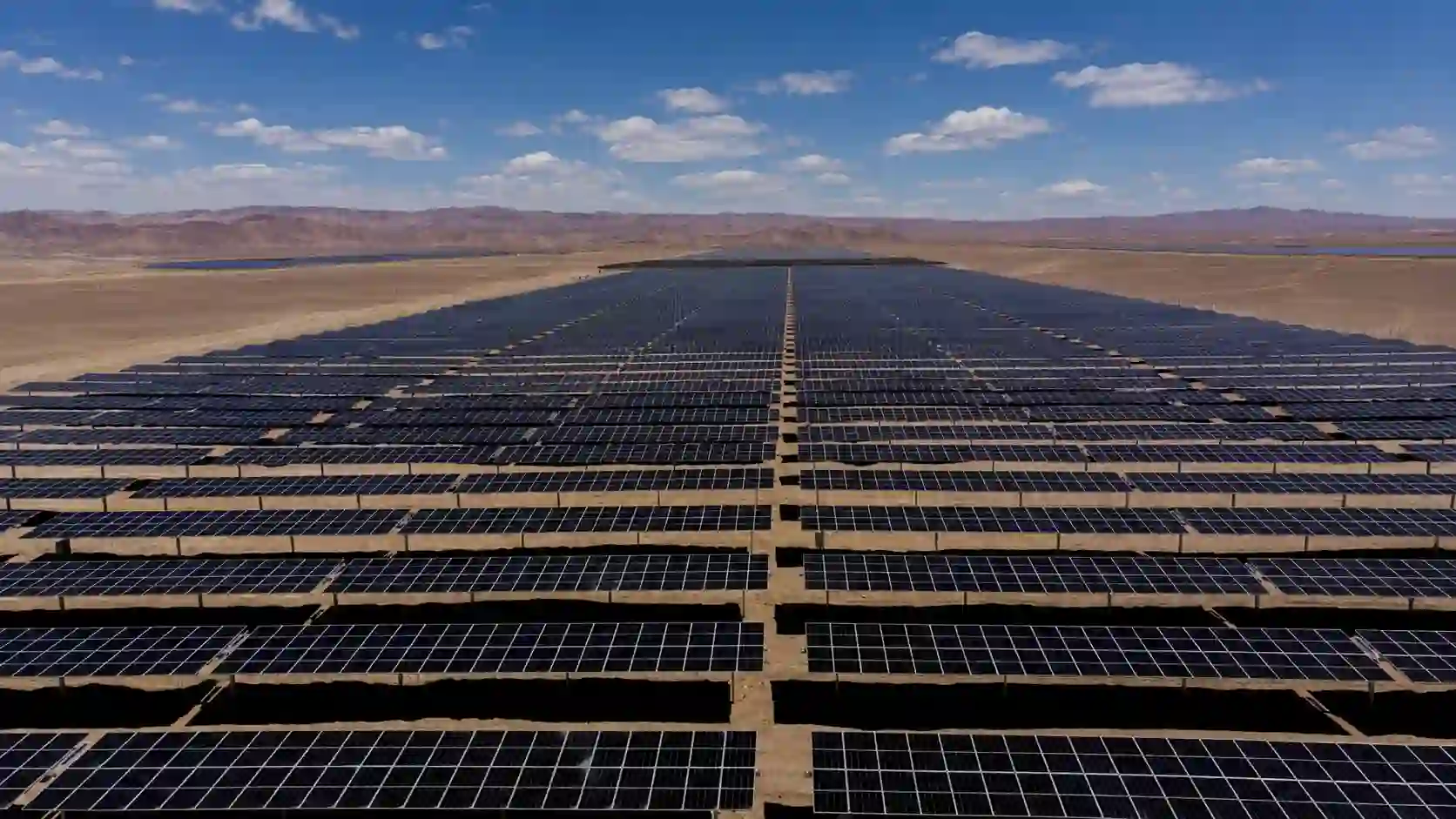
Chile’s battery boom is a response to a power system that produces more renewable electricity than it can always transport and use at the moment it is generated.
More than 6,000 GWh of renewable electricity was curtailed in 2025 because of transmission bottlenecks. Batteries can absorb part of that surplus, release it during evening and nighttime demand, and provide technical support to an increasingly inverter-based grid.
But storage is not a substitute for transmission. Chile’s own preliminary long-term energy planning still describes new transmission as a fundamental enabling element for integrating renewable generation and maintaining security of supply.
By September 28, the market had moved materially beyond the June snapshot. ACERA’s July statistics reported 2,655 MW / 11,250 MWh of BESS in operation, 3,151 MW / 14,698 MWh in testing and 5,040 MW / 21,721 MWh under construction. Solar and wind curtailment reached 2,680 GWh in the first seven months of 2026. ENGIE brought BESS Libélula and BESS Los Loros into commercial operation on August 28, adding 251 MW, while Grenergy reported the 1,100 MWh Gabriela phase of Oasis de Atacama operational on September 2. On September 21, Los Loros became the site of Chile’s first field pilot of Grid Forming technology under real operating conditions.
For the system-level view, see Econosur’s Chile Power Grid analysis. The Kimal–Lo Aguirre project analysis follows the country’s first HVDC line into ownership, procurement and suppliers. Wider context is available in the South America AI data-center site-selection analysis, the regional AI infrastructure analysis, the energy and infrastructure overview, Chile market insights and the analysis of Chile’s seawater mining infrastructure.
Core thesis:
Chile’s storage market is not expanding because the country lacks renewable generation. It is expanding because generation, transmission, demand and time are increasingly misaligned. Batteries address the timing problem and part of the congestion problem; transmission remains necessary to address the geography of the system.
Chile has moved beyond the stage in which battery storage is a small technical add-on to solar projects. The Ministry of Energy’s June report recorded 2,291 MW operating, while ACERA’s later July dataset reported 2,655 MW / 11,250 MWh in operation. ACERA also reported 3,151 MW / 14,698 MWh in testing and 5,040 MW / 21,721 MWh under construction at the end of July. The different publication series should not be merged mechanically because they use different reporting dates and category boundaries.
Data-category note:
The June report’s overview chart uses slightly different aggregate totals — 2,524 MW in testing and 4,937 MW in construction — while the detailed status pages list 2,760 MW / 12,835 MWh in testing and 4,705 MW / 19,223 MWh in construction. This analysis uses the detailed project-status pages. CNE “declaration in construction” records are a broader regulatory category and should not be treated as identical to the Ministry’s physical-construction count.
The storage market continued to move from construction into operation during August and September.
ACERA’s July statistics, published in September using data updated to August 1 and the Coordinador’s July 31 operating summary, reported 2,655 MW / 11,250 MWh in operation, 3,151 MW / 14,698 MWh in testing and 5,040 MW / 21,721 MWh under construction. The same dataset recorded 2,680 GWh of solar and wind curtailment from January through July 2026. These figures supersede the June snapshot for a current market overview, while the June Ministry report remains useful for project-by-project status comparisons.
On August 28, ENGIE Chile announced commercial operation of BESS Libélula and BESS Los Loros, together adding 251 MW of storage. Los Loros is now reported by ENGIE at 48 MW maximum gross power and 275.23 MWh of storage. On September 21, the Coordinador, ENGIE and Huawei used Los Loros for Chile’s first field pilot of Grid Forming technology under real operating conditions.
Grenergy’s Oasis de Atacama also moved forward commercially. On September 2, Grenergy reported the Gabriela phase operational and completed its sale to CVC DIF at an enterprise value of US$475 million. Gabriela combines 272 MW of solar capacity with 1,100 MWh of storage and is backed by a 15-year hybrid PPA.
Enel Green Power started construction of the 100 MW Finis Terrae BESS on August 17 and said the project will incorporate Grid Forming technology. On September 23, Enel reported that Valle del Sol BESS had reached roughly 60% construction progress, with more than half of its planned battery units already in Chile and the remaining principal storage equipment installed on site.
The market therefore is no longer defined only by storage volume. Commercial operation, project finance, asset transactions, Grid Forming compliance and the relationship between storage and transmission are becoming equally important differentiators.
Those numbers explain the scale of the investment cycle, but not its cause. The deeper reason is a structural mismatch. Chile’s strongest solar resources are concentrated in the north. Wind generation is expanding in several regions. Demand peaks do not always occur when solar production is highest. Transmission capacity cannot always move available electricity to where it is needed. The result is renewable energy that exists technically but cannot be fully used commercially or operationally.
Battery storage sits directly inside that mismatch. It can charge when renewable production is abundant, discharge when demand and prices rise, and increasingly support voltage, frequency and system stability. That makes BESS critical infrastructure. It does not make transmission optional.
The curtailment signal: generation has outrun the system
The clearest structural number remains the one Chile’s Ministry of Energy used in its Ruta Energética 2026–2030: more than 6,000 GWh of renewable electricity was curtailed during 2025 because of transmission bottlenecks. The problem did not disappear in 2026. ACERA’s July bulletin reported 2,680 GWh of solar and wind curtailment in the first seven months of the year, the highest January-to-July level in its comparison series.
This is not a marginal operational inefficiency. It is evidence that parts of the renewable build-out have advanced faster than the system’s ability to transport and absorb the electricity. Chile can have world-class solar irradiation, installed generation and available electrons while still failing to convert all of that technical production into delivered energy.
The Coordinador Eléctrico Nacional publishes monthly operational files for reductions in wind, solar and hydro generation. The June 2026 dataset was published on July 24. Those files are important because they move the discussion away from project announcements and into actual system operation: where generation was reduced, by how much and under which constraints.
"Chile’s storage boom begins with a paradox: the country needs batteries not because it produces too little renewable electricity, but because it cannot always use what it already produces."
The mismatch is both spatial and temporal. Spatially, generation and demand are separated by long distances and constrained corridors. Temporally, solar output peaks during the day while valuable demand and contracted delivery increasingly extend into the evening and night. Batteries can solve part of the second problem and soften parts of the first. They cannot rebuild the power corridor between northern generation and central consumption.
What batteries solve — and what they do not
Battery-storage systems are often described as if they perform one simple function: store solar electricity during the day and release it after sunset. That function is central, but Chile’s market is becoming broader.
The Coordinador’s May 2026 Grid-Forming guidance made the technical transition visible. Grid-Forming inverters can allow battery, solar and wind installations to contribute to system stability and security. The guide establishes a verification path through pre-connection modelling, field tests and monitoring during commercial operation.
By September, the transition had moved into the field. On September 21, the Coordinador, ENGIE Chile and Huawei carried out the first pilot tests under real operating conditions at BESS Los Loros. Power Block No. 1 was operated in Grid Forming mode, including the formation of an electrical island in which the system maintained stable voltage and frequency. The pilot is intended to generate practical evidence for future verification criteria.
That matters because Chile’s power system is becoming more dependent on inverter-based resources. Storage is therefore not only an energy container. Depending on its design, controls and connection requirements, it can become an active grid asset. Enel’s 100 MW Finis Terrae BESS, which entered construction in August, is another current project explicitly designed to incorporate Grid Forming technology.
But a battery does not create unlimited transmission capacity. It can delay injection, reduce a peak or support operation at a node. It cannot permanently move large volumes of electricity across the country without the network. This distinction is the key to understanding why storage and transmission investment are rising at the same time.
The project map: storage moves into industrial scale
Chile’s storage cycle is visible through a series of operating, testing and construction-stage projects. The status labels matter. A commissioned project, a system in testing, a construction-complete asset awaiting operation and a future expansion are not the same thing.
| Project / company | Status · September 28, 2026 | Storage signal | Market meaning |
|---|---|---|---|
| Grenergy / Elena | Operating · expansion planned | Grenergy states that Elena has 3.5 GWh installed and operating, with expansion planned to 7 GWh. The company’s June PPA covers 1 TWh per year of non-solar-hour delivery for 15 years. | Shows how storage is being converted into contracted nighttime electricity rather than valued only as installed battery capacity. |
| ContourGlobal / Víctor Jara | Operating | 231 MWp solar paired with a 200 MW / 1.3 GWh battery system capable of 6.5 hours of continuous output. | Demonstrates the conversion of daytime solar into dispatchable evening and nighttime electricity. |
| Arena BESS | Operating since June | 220 MW and 1,100 MWh in Antofagasta, recorded by the Ministry as entering operation during June 2026. | Shows how rapidly large stand-alone or grid-connected storage is moving from pipeline into operation. |
| ENGIE Chile / BESS Los Loros | Commercial operation · Grid Forming pilot | ENGIE announced COD on August 28 at 48 MW maximum gross power and 275.23 MWh. On September 21, Los Loros hosted Chile’s first field Grid Forming pilot under real operating conditions. | Shows the transition from energy shifting into grid-stability services and verification of inverter-based system behaviour. |
| ENGIE Chile / Libélula | Commercial operation | Entered commercial operation together with Los Loros on August 28. The two projects add 251 MW of storage capacity to the SEN. | Confirms that Chile’s construction pipeline is converting into operating capacity at utility scale. |
| Grenergy / Gabriela | Operating · asset sale completed | 272 MW of solar capacity paired with 1,100 MWh of storage. Grenergy completed the US$475 million sale to CVC DIF on September 2 after the project became operational. | Provides a current benchmark for financing, contracted revenue and secondary-market valuation of operating solar-plus-storage infrastructure. |
| Enel / Finis Terrae BESS | Under construction | Construction started August 17. The project will provide 100 MW at the interconnection point and incorporate Grid Forming technology. | Shows that Grid Forming is moving from technical guidance into new-build project specifications. |
| EDP / Punta de Talca | Installation advancing | A 240 MWh battery system at an 83 MW wind park in Coquimbo, backed by USD 44 million of investment. | One of the clearest project-level cases in which the developer explicitly connects storage investment to curtailment restrictions. |
| Cristales and Pampas | Under construction | Each project includes 340 MW / 1,360 MWh of storage alongside large renewable-generation components in Antofagasta. | Shows the standardisation of multi-hour storage at utility scale inside the northern project pipeline. |
The Elena status distinction remains useful. Grenergy described 3.5 GWh as commissioned and operating in June, while the Ministry’s June project report listed BESS Elena Phase I at 430 MW and 3,010 MWh in the testing category. Those statements can reflect different phase definitions, gross versus reported capacity and the timing difference between developer commissioning and official system-status reporting. By September, Grenergy continued to describe Elena as operating.
That is precisely why market analysis must separate announcements from system status. Chile’s battery boom is real, but the value of each project depends on connection, testing, dispatch, contractual structure, grid services, financing and actual operation — not only on headline GWh.
Why transmission still matters
The preliminary PELP 2028–2032 report, published on July 24, projects continued demand growth, increasing electrification, new consumption from data centres, and expansion dominated by solar photovoltaic and onshore wind generation. It also identifies the need for storage systems with longer duration.
Yet the same planning document is explicit: transmission remains a fundamental enabling element for integrating new renewable resources and maintaining security of supply. It identifies a continuing need to expand the system in the central-northern and central-southern zones.
The construction pipeline confirms that Chile is not choosing between batteries and wires. As of June 2026, 50 national and zonal transmission projects were under construction, representing USD 3.3 billion of investment and 2,143 kilometres of new lines. The most significant transmission investment in the official report was the Kimal–Lo Aguirre HVDC project.
Econosur’s Chile Power Grid analysis, updated September 28, follows this question at system level: where congestion emerges, how mining, desalination and data-center demand change the load map, why Grid Forming is becoming relevant and why new transmission remains necessary even as storage expands. The Kimal–Lo Aguirre analysis then narrows the lens to one project: a 1,346 km LCC-HVDC corridor whose ownership, financing, specialist equipment and international suppliers show how transmission expansion becomes a procurement market.
Storage addresses time. Transmission addresses distance.
Chile needs both. A battery can move solar output from noon to night. A transmission corridor moves electricity between regions. Treating one as a substitute for the other misunderstands the structure of the bottleneck.
This also explains why storage duration is becoming more important. Short-duration batteries can manage peaks and provide fast technical services. Longer-duration systems can cover larger parts of the evening and nighttime demand period. But the economic value depends on where the battery connects, which constraints it faces, how it is dispatched and whether transmission expansion later changes local price spreads.
The commercial model: selling solar after sunset
Chile’s battery cycle is not only an engineering story. It is creating new electricity products and contract structures.
ContourGlobal’s Víctor Jara project combines its solar plant with a 6.5-hour battery and a 15-year night-only power purchase agreement with Copec EMOAC. The model is straightforward: capture solar production during lower-demand hours and deliver contracted electricity during late-afternoon and nighttime periods.
Grenergy’s Elena project makes the same transition visible at a larger scale. In June 2026, the company announced a 15-year agreement to deliver 1 TWh per year during non-solar hours. The contract was scheduled to begin between July and October 2026.
Gabriela adds an asset-transaction benchmark. On September 2, Grenergy completed the sale of the operational 272 MW solar / 1,100 MWh storage phase of Oasis de Atacama to CVC DIF at an enterprise value of US$475 million. The project is backed by a 15-year hybrid PPA and its construction had been financed through a US$324 million green loan from an international bank group.
These contracts and transactions show the commercial meaning of storage. The product is no longer simply renewable electricity when nature produces it. It is renewable electricity shaped into a delivery profile that buyers can use — and, when the revenue structure is bankable, infrastructure that can be financed and traded as an operating asset.
Commercial shift:
Chile’s next storage market is not defined only by installed MW or MWh. It is defined by the ability to convert intermittent generation into firm delivery windows, grid services and bankable long-term contracts.
What this means for suppliers and investors
The Chilean storage market extends far beyond battery-cell supply. Every utility-scale system requires a larger technical and commercial ecosystem: battery containers, power-conversion systems, inverters, transformers, energy-management software, cooling, fire protection, civil works, substations, grid studies, commissioning, cybersecurity, monitoring, maintenance and future augmentation.
The Grid-Forming transition adds another layer. Suppliers have to demonstrate not only that a battery can charge and discharge, but that the complete system can meet Chilean connection, stability and verification requirements. Models, laboratory tests, field trials and continuous monitoring become part of market access. The September 21 Los Loros pilot is the first concrete field example of this verification path, while projects such as Enel’s Finis Terrae BESS are already incorporating Grid Forming into new construction.
Investors face a similar shift in due diligence. A storage project cannot be evaluated only through nominal capacity and battery cost. Its economics depend on connection status, local congestion, charging opportunity, contracted revenues, merchant exposure, degradation, cycle assumptions, dispatch rules, curtailment risk and the timing of future transmission projects.
For international suppliers, Chile offers one of South America’s clearest large-scale storage pipelines. It is also a technically demanding market. Companies need credible references, Spanish-language documentation, understanding of Chilean grid procedures and a precise explanation of how their technology performs under desert conditions, high renewable penetration and evolving system requirements.
Chile’s storage market is moving from a capacity story to an integration and commercial-structure story.
The simple growth metric — how many MW or MWh are operating or under construction — remains important, but it increasingly says less about which projects create durable value. The more relevant questions are where a BESS connects, what congestion it is exposed to, whether it can provide Grid Forming or other system services, how its revenue is contracted and how future transmission changes the local price spread.
The September developments make that shift visible. ENGIE converted Libélula and Los Loros into operating assets. Los Loros then became a real-world Grid Forming test site. Grenergy converted Gabriela into an operational, financed and tradable infrastructure asset. Enel is specifying Grid Forming in new projects. The market is therefore becoming technically more demanding at the same time that it becomes more financially mature.
For international suppliers, the commercial opportunity is not “Chile needs batteries.” It is narrower: which project has reached the stage where a buyer is specifying cells, PCS, transformers, controls, cooling, fire protection, grid studies, commissioning or long-term service — and what evidence is required to qualify?
For investors, the question is similarly project-specific. Curtailment can support battery economics, but large storage deployment can also compress arbitrage spreads over time. Transmission expansion can change node economics. A strong project therefore needs a defensible position in the grid and a revenue model that remains credible as the system evolves.
How Econosur can research the market
Public statistics establish the direction of the Chilean storage market. Commercial decisions usually require a narrower layer of research around a specific project, technology, buyer group or investment question.
Research boundary:
Public project reports can show installed capacity, status and regulatory milestones. They usually do not show approved vendor lists, current tender packages, buyer priorities, commercial qualification criteria, pricing, competitor positioning or whether a supplier still has a realistic route into a project. Those questions require project-specific research.
The larger argument: batteries are becoming grid infrastructure
Chile’s battery boom is frequently presented as proof that the renewable transition is accelerating. That is true, but incomplete. The boom is also evidence of an electricity system under pressure from its own success.
Solar and wind generation expanded. Transmission did not always expand at the same speed. Daytime supply became abundant in parts of the system. Evening delivery remained valuable. Curtailment grew. Storage economics strengthened.
Batteries are therefore becoming critical infrastructure because they sit between generation, demand, transmission and system security. They absorb electricity, reshape delivery and increasingly contribute technical services. But they cannot remove the underlying need for a larger and stronger network.
The deeper Econosur reading is this: Chile is rebuilding the operating architecture of its power system around renewable generation, multi-hour storage, new transmission corridors and more demanding forms of grid control. Storage addresses the temporal mismatch between generation and demand; transmission addresses the geographic mismatch between where electricity is produced and where it must be delivered. The two investment cycles reinforce each other.
From renewable capacity to usable electricity
Chile’s battery-storage market is an infrastructure, contract, grid-integration and supplier-market story. The decisive question is not only how much renewable power the country can generate, but how much it can transport, store, contract and deliver when demand requires it.
Econosur prepares custom market analysis for companies, analysts and institutions evaluating Chilean energy storage, renewable generation, transmission, project pipelines, suppliers and South American infrastructure risk.
Explore custom market analysisPrimary & official sources
Primary sources are used for project status, capacity, regulation, operational milestones and company transactions wherever available. Reporting dates and category definitions are kept visible because “operation”, “testing”, “construction”, “commissioning” and regulatory “declaration in construction” are not equivalent.
- Chile Ministry of Energy — Preliminary PELP 2028–2032, July 24, 2026
- Chile Ministry of Energy — Ruta Energética 2026–2030 and 2025 curtailment figure
- Chile Ministry of Energy — project-report archive and June 2026 project report
- Comisión Nacional de Energía — regulatory generation and transmission project records
- CNE — launch of participatory electricity-network reform process, September 21, 2026
- CNE — new Plexos system-modelling database tender, September 22, 2026
- Coordinador Eléctrico Nacional — monthly renewable-generation reductions, 2026
- Coordinador Eléctrico Nacional — Grid Forming verification guidance, May 2026
- Coordinador Eléctrico Nacional — first field Grid Forming pilot at BESS Los Loros, September 21, 2026
- ENGIE Chile — commercial operation of BESS Libélula and BESS Los Loros, August 28, 2026
- ContourGlobal — Víctor Jara solar-plus-storage operating data, May 27, 2026
- Grenergy — Elena 15-year nighttime PPA, June 30, 2026
- Grenergy — Elena commissioning statement, June 2026
- Grenergy — Gabriela operational status and US$475 million sale to CVC DIF, September 2, 2026
- Chile Ministry of Energy — earlier BESS Los Loros construction update
- Chile Ministry of Energy — Punta de Talca storage and curtailment case
- Enel Green Power Chile — start of construction of 100 MW Finis Terrae BESS, August 17, 2026
- Enel Green Power Chile — Valle del Sol BESS construction update, September 23, 2026
Secondary & market sources
Secondary sources are used for market-wide aggregation, cross-checking, independent context and commercial interpretation. Where a company or official primary source is available for a project milestone, the primary source takes precedence.
- ACERA — July 2026 renewable and storage statistics, published September 21: 2,655 MW / 11,250 MWh BESS operating, 3,151 MW / 14,698 MWh in testing, 5,040 MW / 21,721 MWh under construction and 2,680 GWh of solar/wind curtailment through July.
- pv magazine — Chile curtailment and BESS market update, September 10, 2026: independent summary of ACERA and system-operator data.
- pv magazine — Los Loros Grid Forming field pilot, September 22, 2026: independent technical context on the pilot and current operating configuration.
- Energy-Storage.News — ENGIE COD and Grenergy Gabriela transaction, September 3, 2026: independent coverage of two current operating-market milestones.
- pv magazine — Chile from solar powerhouse to storage leader, August 21, 2026: market context on solar oversupply, storage economics and northern Chile.
- pv magazine / Wood Mackenzie — Latin America storage outlook, August 28, 2026: regional comparison and warning that growing Chilean storage capacity can compress arbitrage revenues.
FAQ
Why is Chile building so much battery storage?
Chile is building battery storage because solar and wind generation is expanding faster than the power system can always transport and use it. Batteries shift electricity into evening and nighttime demand, reduce some curtailment and can provide technical services to the grid.
How much renewable electricity did Chile curtail in 2025?
Chile’s Ministry of Energy reported that more than 6,000 GWh of renewable electricity was curtailed in 2025 because of transmission bottlenecks.
How much battery-storage capacity was operating in Chile by the latest market update?
ACERA’s July 2026 dataset, published in September, reported 2,655 MW / 11,250 MWh of BESS in operation, 3,151 MW / 14,698 MWh in testing and 5,040 MW / 21,721 MWh under construction. The Ministry of Energy’s June report remains useful for project-level status, but the publication series use different dates and category boundaries.
Can batteries replace new transmission lines in Chile?
No. Batteries shift electricity through time and provide flexibility and grid services, but they do not replace the need to transport large volumes of electricity between regions. Chile’s wider grid expansion and the Kimal–Lo Aguirre HVDC project show why storage and transmission must develop together.
Which projects illustrate Chile’s battery-storage market?
Relevant examples include Grenergy’s Elena and Gabriela projects, ContourGlobal’s Víctor Jara hybrid plant, Arena BESS, ENGIE Chile’s Libélula and BESS Los Loros, Enel’s Finis Terrae BESS, EDP’s Punta de Talca system and the Cristales and Pampas projects in Antofagasta.
What changed with Grid Forming in September 2026?
On September 21, the Coordinador Eléctrico Nacional, ENGIE Chile and Huawei carried out Chile’s first field pilot of Grid Forming technology under real operating conditions at BESS Los Loros. The tests included Grid Forming operation while connected to the system and the formation of an electrical island that maintained stable voltage and frequency.
What does Econosur examine beyond published storage statistics?
Econosur can research project maturity, suppliers, competitors, procurement routes, buyer functions, grid and location constraints, commercial models and the practical route from a published project pipeline to an addressable B2B opportunity.