
Market Insight · Argentina · Foreign Exchange · Energy · Mining · Agriculture
The End of Argentina’s Dollar Season
How energy and mining are weakening Argentina’s seasonal stop-and-go cycle by changing when export dollars arrive.
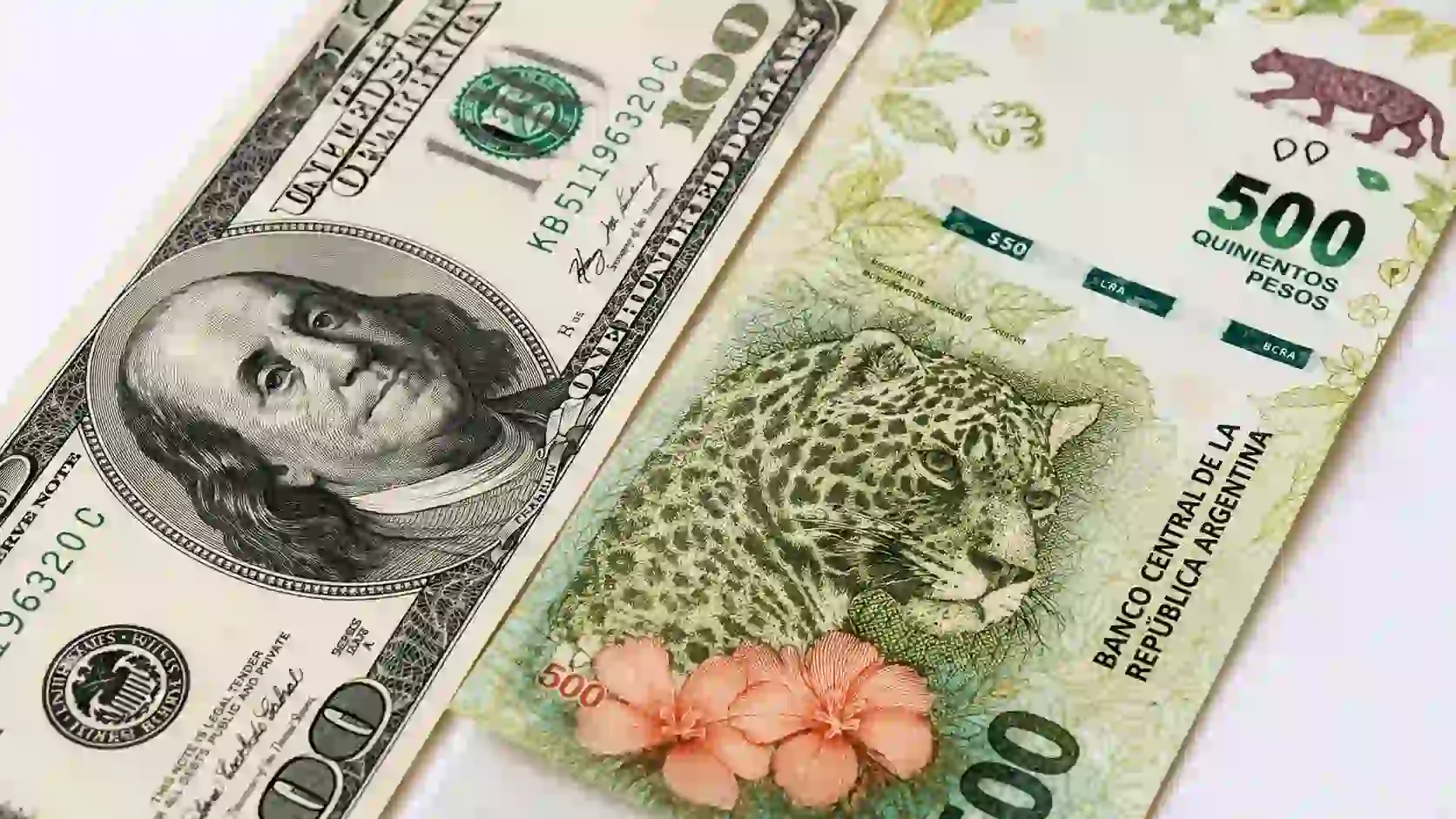
Argentina’s foreign-exchange supply is becoming less dependent on the agricultural harvest calendar.
The Rosario Board of Trade projects USD 57.168 billion in combined export settlements from agriculture, mining and energy in 2026. The important signal is the timing: the second half is projected to generate USD 29.793 billion, more than the USD 27.375 billion expected in the first.
Energy and mining are filling part of the seasonal trough that traditionally followed the soy and maize harvest. This weakens the supply-side mechanism behind Argentina’s stop-and-go cycle, but it does not solve debt service, private demand for foreign currency, capital movements or exchange-rate pressure.
The accurate conclusion is therefore narrower than the title: Argentina’s dollar season may be ending, while Argentina’s dollar constraint remains.
Core market reading:
The record total is less important than the distribution. Argentina has often produced enough export value over a full year but struggled with when those dollars arrived. Energy and mining are beginning to change that calendar.
Data update · October 4, 2026
The BCRA’s August 2026 exchange-market report, published on September 25, records USD 770 million in central-bank foreign-currency purchases and end-month gross reserves of USD 48.259 billion. Oilseed and cereal exporters remained the largest private-sector net sellers, at USD 2.933 billion; individuals made net purchases of USD 3.366 billion.
These are realized monthly flows. The Rosario Board of Trade’s USD 57.168 billion figure remains a full-year 2026 projection, not a completed result. August does not settle whether second-half export settlements will exceed the first half.
The August exchange-balance current account showed a USD 806 million surplus, while the financial account recorded a USD 1.061 billion deficit. Gross reserves also reflect valuation changes and debt payments. Less agricultural seasonality therefore cannot be equated with an end to Argentina’s external constraint.
Why Argentina’s dollar calendar matters
Argentina’s external constraint has historically been seasonal as well as structural. The cosecha gruesa — principally soy and maize — is commercialized and exported mainly during the first half of the year. Exporters sell foreign currency, imports become easier to finance and the economy receives its strongest commercial-dollar inflow.
The flow weakens later in the year. Imports, debt payments, tourism, savings and corporate demand continue, while the main agricultural contribution declines. Pressure then shifts toward reserves, the exchange rate and administrative controls.
This mechanism sits inside the broader balance-of-payments constraint associated with Argentina’s stop-and-go cycle: growth raises the demand for imports and foreign currency until the external account forces adjustment. Academic research covering 1930–2018 finds that the trade-balance bottleneck remained a recurring limit on growth across changing economic regimes.
The historical pattern is important for reading the current signal. Argentina does not need energy and mining to replace agriculture. It needs them to reduce the depth of the period between one harvest-led inflow and the next.
For the wider national context, see Econosur’s Argentina market profile and its analysis of Argentina’s stabilization gap.
The record is not the main story
The projected USD 57.168 billion would exceed the USD 56.722 billion recorded in 2022 and the USD 50.381 billion settled in 2025. Commodity prices and one-off commercial incentives can create records, however, so the annual total alone does not establish a structural change.
The stronger evidence lies in the half-year split. The Rosario Board of Trade projects USD 29.793 billion for July–December and USD 27.375 billion for January–June. Its monthly profile also avoids the pronounced fourth-quarter decline visible in recent averages.
That would reverse the usual ordering. Argentina’s second half would no longer be defined automatically by a shrinking commercial-dollar supply.
| Foreign-exchange pattern | Historical model | Emerging 2026 signal |
|---|---|---|
| First half | Dominated by the main agricultural harvest and normally the strongest settlement period. | Agriculture remains central, but its contribution is weaker than in 2025. |
| Second half | Lower agricultural inflows create the traditional seasonal trough. | Energy and mining are projected to lift total settlements above the first half. |
| Annual result | Highly sensitive to crop size, grain prices and commercialization timing. | A record remains possible even after the agricultural projection was reduced. |
| Macroeconomic meaning | The calendar concentrates external vulnerability in the second half. | The vulnerable window narrows, but debt and private dollar demand remain. |
The calendar is changing before the external constraint has disappeared.
Energy changes the rhythm through production and infrastructure
Energy provides the largest immediate change. Argentina’s energy trade balance exceeded USD 6.987 billion in the first half of 2026, the strongest first-half surplus on record and 87 percent above the same period in 2025. Fuel and energy exports rose by approximately 52 percent to more than USD 8.118 billion.
More than 70 percent of the export increase came from higher physical volumes rather than the price effect associated with conflict in the Middle East. This distinction matters. A price spike raises receipts temporarily; higher production creates a larger export base that can persist if infrastructure and market access keep pace.
Vaca Muerta’s unconventional output now accounts for close to 70 percent of Argentina’s crude production. The Rosario Board of Trade projects oil extraction to rise 16 percent in 2026, taking national production beyond the previous 1998 record.
The next constraint is transport. VMOS is expected to add approximately 190,000 barrels per day of takeaway capacity toward the end of 2026. This is additional evacuation capacity, not a guarantee that the entire volume will be exported immediately. It nevertheless expands the physical route through which Vaca Muerta production can become a steadier foreign-exchange flow.
Econosur examines this infrastructure layer in Vaca Muerta’s Pacific Question, the regional Oil and Gas industry overview and company analyses of YPF, Vista Energy, Pluspetrol and Pampa Energía.
Most of the 2026 energy-export growth came from higher quantities rather than prices alone.
Year-end start-up remains a project milestone. Capacity becomes economically relevant only after commissioning and sustained utilization.
Production growth requires pipelines, terminals, storage and shipping capacity to advance together.
Mining adds a second less-seasonal export flow
Mining exports reached approximately USD 6.075 billion in 2025 after five consecutive years of growth. The 2026 projection exceeds USD 9 billion, which would raise mining from roughly 7 percent to more than 10 percent of Argentina’s exports.
The current mining contribution comes principally from gold, silver and lithium. Higher precious-metal prices and growth in lithium volumes and prices support the projection. In the first four months of 2026, mining generated USD 2.927 billion in net foreign-exchange income from goods trade, 88 percent more than one year earlier.
Mining also has relatively low import requirements compared with its exports once an operation is producing. That makes the operating sector a strong net contributor of foreign currency across the year.
Copper should not be inserted into this current export story prematurely. Argentina had no operating commercial copper mine in August 2026. The country’s copper pipeline represents a future construction, infrastructure and production cycle, as explained in Econosur’s Argentina copper-economy analysis.
Lithium is already producing and exporting, but individual projects still face ramp-up constraints. The Eramet Centenario case shows why design capacity, production and stable operation must remain separate. Broader regional context is available in Econosur’s Lithium and Mining overview.
Agriculture remains the base, but no longer carries the calendar alone
Agriculture remains the largest of the three export complexes. The Rosario Board of Trade projects USD 34.897 billion in agricultural settlements for 2026.
That estimate was reduced by approximately USD 1.2 billion from the May projection because expected export prices weakened. Settlements through June were estimated at USD 15.768 billion, below USD 18.303 billion in the same period of 2025.
The annual combined total still reaches a projected record despite this agricultural downgrade. That is the clearest evidence of a composition shift: the traditional engine can weaken while energy and mining keep the aggregate foreign-exchange projection rising.
Agriculture is therefore not being replaced. It remains the largest source of commercial dollars and the core of Argentina’s export economy. The change is that its seasonality is becoming less decisive for the entire market.
For the broader production and export system, see Econosur’s Agriculture and Food Systems in South America.
Composition signal:
The agricultural projection fell by USD 1.2 billion, yet the combined total still points to a record. The structure changed enough for weaker grain-price assumptions to be absorbed by other export sectors.
The demand-side constraint has not disappeared
A smoother supply of export dollars does not automatically create reserve accumulation or exchange-rate stability. Dollars also leave through imports, services, debt payments, private portfolio decisions and transfers.
The BCRA’s June 2026 foreign-exchange and balance-of-payments report illustrates the distinction. The central bank bought USD 1.418 billion in the foreign-exchange market during June, yet gross international reserves fell by USD 3.323 billion during the same month and closed June at USD 44.870 billion. The BCRA attributed the decline mainly to lower banks’ foreign-currency holdings at the central bank, valuation effects, payments to international organizations and BOPREAL obligations. The June purchases therefore did not translate into an equivalent increase in the reserve stock.
Individuals made net foreign-currency purchases of USD 2.821 billion in June, according to the same BCRA report. The central bank estimated that part of the purchased currency remained deposited in local banks, part covered card-related services and another part increased external assets. Private demand therefore cannot be treated as a single measure of capital flight, but it remains a substantial use of foreign currency.
The reserve position then changed sharply during July. The BCRA’s daily monetary report shows gross reserves of USD 49.196 billion on July 31, an increase of USD 4.326 billion from 30 days earlier. The same report records cumulative BCRA foreign-currency purchases of USD 13.174 billion during 2026. The movement from USD 44.870 billion at the end of June to USD 49.196 billion at the end of July is therefore an officially reported monthly rebound, not two competing estimates for the same date. The wholesale exchange rate nevertheless returned toward ARS 1,500 per dollar at the beginning of August.
These movements explain why the article’s claim must remain narrow. Energy and mining can weaken the seasonal supply-side root of stop-and-go. They cannot by themselves determine what happens to reserves, debt capacity or the peso.
| External-sector layer | What is improving | What remains unresolved |
|---|---|---|
| Commercial supply | Energy and mining produce larger, less seasonally concentrated inflows. | Export projections still depend on output, prices, infrastructure and settlement behavior. |
| Reserves | BCRA purchases add foreign currency when market conditions permit. | Debt service, valuation effects and other balance-sheet movements can offset purchases. |
| Private demand | A deeper formal market can absorb legal savings and transaction demand. | Households and companies continue to seek foreign currency for savings, hedging and payments. |
| Exchange rate | A less seasonal inflow can reduce the historical second-half scarcity. | Policy credibility, inflation, rates and expectations still determine pressure on the peso. |
The cycle is losing one of its engines, not both.
What would confirm a structural break?
One projected half-year is a signal, not a completed regime change. Three tests would provide stronger confirmation.
Actual July–December 2026 settlements must exceed the first half rather than merely doing so in the forecast.
The flatter seasonal profile should continue in 2027 and later, without depending on a single commodity-price spike or temporary tax incentive.
Additional export inflows must improve reserves and debt-service capacity after private demand, imports and financial outflows are included.
VMOS commissioning, sustained Vaca Muerta output, lithium ramp-ups and the realized value of gold and silver exports will all influence the result. Agricultural prices and commercialization incentives remain equally important because agriculture still contributes the majority of the combined inflow.
How this changes the way Argentina should be read
The old market calendar treated the second half as the period of automatic vulnerability. Companies watched the end of the harvest, reserve losses, import restrictions and the possibility of exchange-rate adjustment.
A less seasonal inflow changes the timing of that risk. Importers, exporters, investors and suppliers can no longer assume that commercial-dollar liquidity will deteriorate mechanically after June. Energy cargoes and mining exports make the second half more economically active and potentially less constrained.
The sector map also changes. Argentina begins to look less like an agricultural exporter with energy and mining on the side, and more like a multi-resource export economy in which agriculture, hydrocarbons and minerals operate on different production clocks.
This has practical consequences for market analysis:
- Energy infrastructure becomes part of the national foreign-exchange system, not only an oil-and-gas sector issue.
- Operating mines matter differently from announced mining projects because only production generates current export dollars.
- Agricultural price and policy changes remain decisive but no longer explain the entire annual pattern.
- Reserve accumulation must be measured after debt payments and private financial demand, not inferred from gross export settlements.
- Second-half exchange-market pressure becomes an outcome to monitor rather than an automatic seasonal assumption.
The relevant internal comparison is therefore not energy versus agriculture or mining versus agriculture. It is a new portfolio of export flows whose calendars overlap rather than peak at the same moment.
Market reality: Argentina’s export-dollar supply is becoming more diversified and less seasonal. The structural change is visible in the projected second-half distribution, not merely in the annual record.
What remains constrained: Commercial inflows do not equal reserve accumulation. Debt service, private foreign-currency demand, imports, financial flows and exchange-rate policy still determine the net external result.
Human interpretation: The historical second-half shortage may become less automatic. Argentina is earning more dollars on clocks that do not stop with the harvest, but the country has not yet escaped its broader external constraint.
Marcus A. Volz perspective
The useful change is in the timing of Argentina’s export capacity, not an automatic guarantee of dollar availability. A broader energy and mining base may reduce dependence on one harvest window, while imports, household demand and debt service can still absorb that additional supply.
For an industrial supplier, the question is consequently specific: can the buyer generate foreign currency, obtain financing and pay when the equipment is delivered? A national export forecast is useful context, but buyer exposure, payment conditions and the project’s physical export route determine commercial relevance. This is where country analysis needs to connect to company and procurement analysis.
Research services for Argentina’s foreign-exchange and export system
Econosur can turn a defined business question into a sourced brief or a scoped research assignment.
- Country and market briefs: Assess export seasonality, foreign-exchange exposure and the implications for a defined Argentine market decision.
- Sector briefs: Compare energy, mining and agricultural export drivers, their infrastructure constraints and their different revenue calendars.
- Custom analysis: Connect a buyer or project question with documented export exposure, financing conditions and supplier-access routes.
Public research is the starting point. Direct verification, interviews or additional datasets can be scoped where they are necessary and feasible; they are not implied by this article. The proposal defines deliverables, timing and evidence limits.
This analysis distinguishes projections from realized flows, commercial settlements from reserves, infrastructure capacity from actual exports and current mining production from future copper projects. Data and source periods were reviewed through October 4, 2026.
Primary, institutional and company sources
- Bolsa de Comercio de Rosario — USD 57.168 billion combined projection, half-year split, agricultural revision, mining flows, energy surplus and VMOS takeaway capacity.
- Banco Central de la República Argentina — June 2026 foreign-exchange market, individual purchases, central-bank purchases and reserve movements.
- BCRA Daily Monetary Report — latest available gross-reserve and cumulative foreign-currency-purchase data at the beginning of August 2026.
- Cambridge University Press — historical analysis of Argentina’s balance-of-payments constraint and stop-and-go dynamics from 1930 to 2018.
- BCRA — August 2026 realized exchange-market flows, exchange-balance accounts and gross reserves; published September 25.
Industry and secondary sources
The structural claim should be tested against realized data rather than repeated as a completed fact.
- Will realized second-half settlements exceed the first half in 2026?
- How much of the energy-export increase remains volume-driven if international prices weaken?
- Will VMOS begin operating on schedule and how quickly will its capacity be utilized?
- Can lithium projects sustain ramp-up while gold and silver continue supporting export value?
- How much will agricultural prices and export-policy incentives alter the final settlement total?
- Will higher commercial inflows translate into stronger gross and net reserves after debt service?
- Does the flatter seasonal profile persist in 2027?
- Will import access become more predictable during the second half?
Reading Argentina beyond the harvest calendar
Argentina’s external position is being rewired by production, infrastructure and a broader export mix. The practical question is no longer only how many dollars the country earns, but when they arrive, which sectors generate them and how much remains after competing demands.
Econosur prepares custom market analysis for companies, analysts and institutions evaluating Argentina’s external sector, energy, mining, agribusiness, infrastructure and supplier markets.
Explore custom market analysisFAQ
What is Argentina’s dollar season?
Argentina’s dollar season is the historical concentration of export-related foreign-exchange inflows in the first half of the year, when the main soy and maize harvest is commercialized and exported.
Why could the second half of 2026 generate more export dollars than the first?
The Rosario Board of Trade projects stronger second-half settlements because expanding energy and mining exports are less dependent on the agricultural harvest calendar.
Does this mean Argentina’s stop-and-go cycle is over?
No. A less seasonal supply of export dollars weakens one source of the cycle, but debt service, private demand for foreign currency, capital movements, imports and exchange-rate policy continue to affect the external balance.
Which sectors are changing Argentina’s foreign-exchange calendar?
Energy and mining are the principal new stabilizers. Energy growth is driven by Vaca Muerta production and export infrastructure, while current mining exports are led mainly by gold, silver and lithium.
Is copper already driving Argentina’s mining export growth?
No. Argentina had no operating commercial copper mine in August 2026. Copper represents a future project and infrastructure cycle, while current mining export growth is based mainly on gold, silver and lithium.
What role does the VMOS pipeline play?
VMOS is expected to add approximately 190,000 barrels per day of oil takeaway capacity toward the end of 2026. This expands the infrastructure available for exports but does not guarantee immediate utilization of the full capacity.
What would confirm that the seasonal break is structural?
Confirmation would require the second half of 2026 to exceed the first in realized settlements, the pattern to persist beyond one year, and the additional inflows to improve the external position after debt payments and private foreign-currency demand.