
Argentina’s Copper Economy
Before the First New Mine
Argentina has had no large-scale copper production since 2018, although small-scale output continues at Martín Bronce in Jujuy. Taca Taca in Salta, Vicuña and Los Azules in San Juan, PSJ Cobre Mendocino and the Alumbrera restart in Catamarca are already creating demand for engineering, power, roads, logistics, supplier qualification and procurement. These are the commercial signals of a pre-production copper market.
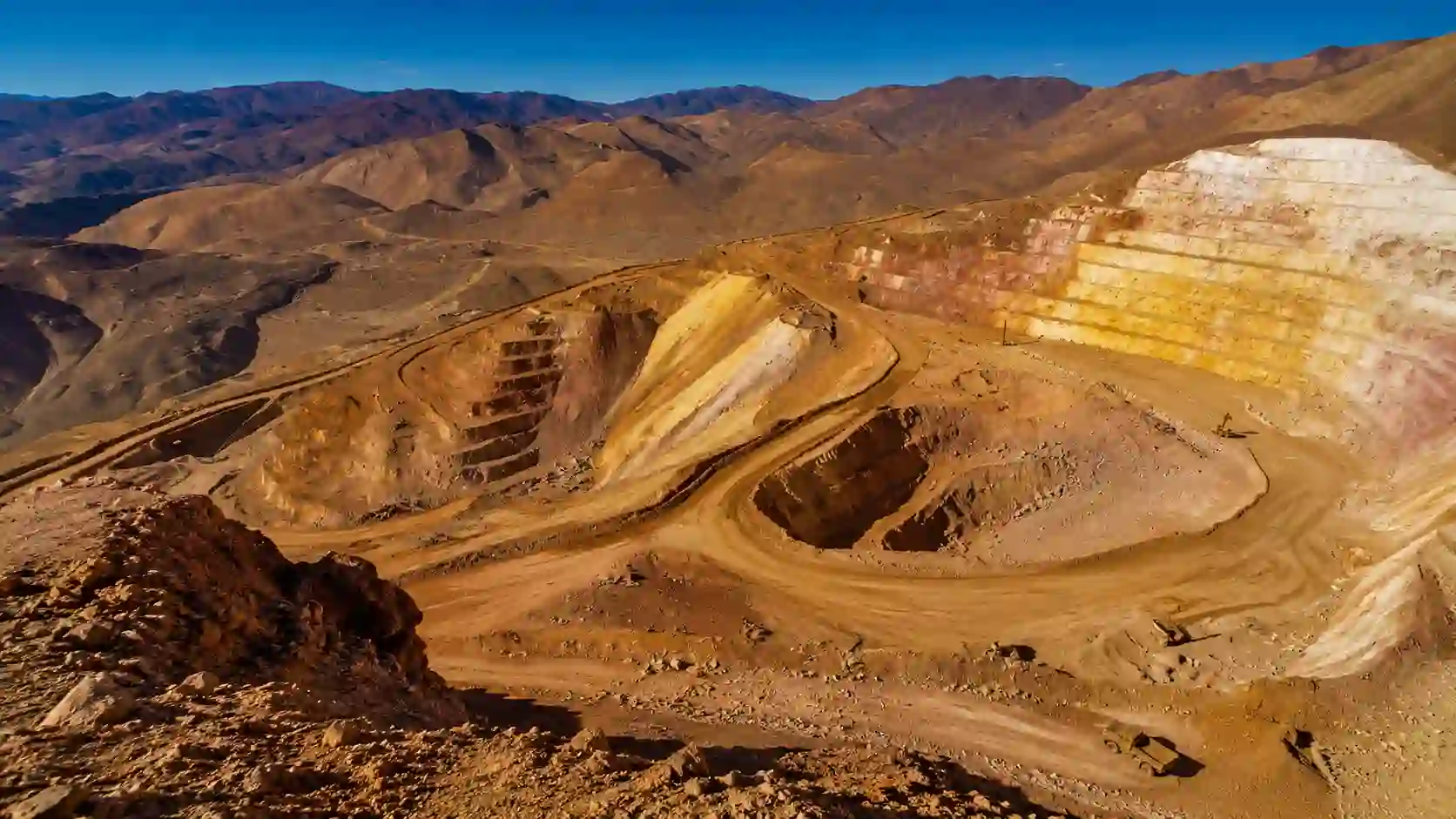
Argentina’s copper economy is forming before large-scale copper production returns.
Argentina’s current copper output is marginal. Secretaría de Minería identifies Martín Bronce in Jujuy as a small-scale copper producer, while official mining statistics also record copper as a by-product at Lindero. What ended with the closure of Bajo de la Alumbrera in 2018 was large-scale copper production. Expenditure on the next generation of large projects is already under way. Resolution 1154/2026 records US$9.025 billion in computable assets for Vicuña, including US$1.129 billion in the stage running from July 2024 through the end of 2026 and US$7.896 billion from 2027 through 2031. During Q2 2026, Lundin Mining reported that Vicuña mobilized a 24-truck early-works fleet and moved 1.1 million tonnes of material. On 27 August, McEwen Copper closed a US$240 million term loan to continue engineering and early works at Los Azules. Engineering for key process packages has been awarded to Metso, the mining-fleet tender is in final evaluation and EPCM contractor selection is expected in Q4 2026.
The pre-production economy is the current form of Argentina’s copper market. Its commercial content is the operational system required to make copper possible: roads, power, camps, engineering, logistics and the supplier chains that serve them. Taca Taca adds another important layer because its visible project structure already spans a Canadian owner, an Argentine project company, international engineering firms and a Chilean export route before construction procurement is fully defined.
The strategic context is larger than Argentina. The IEA estimates that Latin America and the Caribbean already account for roughly 40% of global copper mine output and still projects a copper supply gap of about 25% in 2035 under the base project pipeline. Argentina’s relevance therefore depends on whether its project pipeline can be converted into reliable new supply. See South America’s Strategic Resource Advantage in a Fragmenting World Economy.
Argentina is commonly presented as a future copper producer. That description compresses several distinct stages into one headline. A resource estimate is not a mine. A feasibility study is not a construction decision. RIGI approval is not commissioning. Planned capacity is not production.
There is nevertheless a measurable market forming around the projects. At Vicuña, a 24-truck early-works fleet moved 1.1 million tonnes of material during Q2, and on 11 September the company awarded construction of the first 63.6 kilometres of its planned Northern Corridor access route. The 500 kV transmission expansion for Josemaría was contested by other mining interests but received regulatory authorization at the end of July. At Los Azules, engineering for key process packages has been awarded to Metso, the mining-fleet tender is in final evaluation and a US$240 million term loan is financing continued engineering and early works. These activities are occurring before commercial copper output.
Market reading: Argentina’s first copper cycle is currently a pre-production infrastructure and supplier market. The relevant commercial questions are no longer only which project advances first, but which contracts have already moved into execution, which procurement systems suppliers must enter and who is positioned before the larger construction packages follow.
No large-scale copper production, but an active project economy
Argentina does produce copper today, but only at marginal scale. The Secretaría de Minería identifies Martín Bronce in Jujuy as a small-scale copper producer, while official mining statistics also record copper as a by-product at Lindero. Bajo de la Alumbrera in Catamarca was the country’s last large-scale copper operation before it closed in 2018.
That distinction is important because it prevents announced projects from being mistaken for an established large-scale operating industry. Argentina has geological resources, advanced development projects and growing corporate investment. It does not yet have a new generation of large operating copper mines.
Several projects are competing to change that position. Taca Taca in Salta is being advanced by First Quantum through its Argentine project company Corriente Argentina. The 2026 technical design starts at 40 Mtpa and expands to 60 Mtpa from the fifth operating year, with approximately US$5.25 billion in total development capital. A 10 September provincial update said the project evaluation process was continuing while Salta and First Quantum developed a joint agenda to prepare workers, suppliers and local companies for the project’s scale; that update did not announce full construction. Vicuña Corp. combines Josemaría in San Juan with Filo del Sol across the Argentina-Chile border. McEwen Copper is advancing Los Azules in San Juan. PSJ Cobre Mendocino has provincial environmental approval and RIGI status in Mendoza. Glencore is restarting Alumbrera and now expects first production in H2 2027, ahead of its previous H1 2028 guidance. Alumbrera would restore output from an existing asset rather than become the first new greenfield copper mine.
The distinction matters. Large-scale production belongs to the next phase. The expenditure and supplier economy already belongs to the present.
Project-status boundary. Everything below describes a pre-production market. RIGI approval establishes an investment framework and an approved investment plan; it does not prove that financing is closed, full construction has started or production will follow. Feasibility, engineering, financing, construction, commissioning and stable production are separate stages, and each project in this analysis sits at a different one.
The pre-production stage still has its own contracts, participants and commercial logic. That is where Argentina’s copper market currently exists.
The pre-production economy is the current form of Argentina’s copper market.
The money that has already been spent
The clearest available measure of the pre-production stage is the gap between project approval, early expenditure and the much larger capital program still ahead.
Vicuña’s RIGI approval now provides an official project-level schedule. Resolution 1154/2026 records a total investment plan of US$9.737 billion and US$9.025 billion in computable assets. Of those computable assets, US$1.129 billion are assigned to the first stage from 8 July 2024 through 31 December 2026, while US$7.896 billion are assigned to 2027 through 2031. The resolution also approves a list of goods and services eligible for import benefits and incorporates a supplier-development plan.
That schedule does not mean US$1.129 billion had already been spent by the publication date. It does show that a material share of the approved investment program belongs to the period before planned first production in 2030. Vicuña separately stated at Expo San Juan Minera 2026 that US$800 million had already been invested in engineering, technical studies and road improvements. The RIGI schedule and the company-reported expenditure are different measures and should not be combined.
The February 2026 integrated technical study estimates US$7.1 billion of initial capital for Stage 1 and US$18.1 billion across all three development stages. Those PEA figures are technical development estimates; the RIGI figures describe the approved Argentine investment plan and computable assets. Keeping the two frameworks separate avoids turning different capital concepts into one headline number.
Los Azules reinforces the same timing logic from a different project structure. McEwen reported in its Q2 2026 update that 27% of the planned FID work-program deliverables were complete by 30 June. The picture advanced materially on 27 August, when McEwen Copper closed a US$240 million four-year term loan to continue engineering and early works. Engineering for the SX/EW plant, sulfuric acid plant and crushing packages has now been awarded to Metso, the mining-fleet tender is in final evaluation, and EPCM contractor selection is expected in Q4 2026. The company now says a final investment decision and full project financing are expected in mid-2027, while commercial copper cathode production remains targeted for 2030, subject to financing and customary approvals.
Roads and equipment create the first contracts
The Vicuña early-works and supplier structure makes the pre-production economy physical. Lundin Mining reported that a 24-truck fleet was mobilized during Q2 2026 to ramp up Stage 1 early earthworks, moving 1.1 million tonnes of material during the quarter. Earlier company reporting also documented the recruitment and training of operators from Iglesia and Jáchal for the early-works phase.
Road development has now moved from preparation into an awarded construction package. On 11 September 2026, Vicuña announced that Sections A1 and A2 of its Northern Corridor had been awarded to a joint venture formed by Contreras, BBC (Boetto y Buttigliengo Constructora) and San Juan-based Construmin. The sections cover 63.6 kilometres between Angualasto and Junta La Palca, via Malimán, and form the first part of an approximately 220-kilometre access route planned entirely through San Juan.
The scope includes earthworks, embankments, excavation and blasting, drainage, retaining structures, signage and road-safety elements. That makes the supplier sequence visible: engineering becomes a civil-works package, which becomes machinery, explosives, aggregates, transport, maintenance, safety, workforce and subcontracting demand before the mine itself is sanctioned.
The sequence is commercially important because early infrastructure awards create references and working relationships that can carry into later construction phases. They also show that the pre-production market is no longer limited to studies and planning.
Exploration is also expanding alongside execution work. On 10 September, Vicuña announced a new approximately 55,500-metre drilling campaign focused mainly on Filo del Sol over the following 12 months, using up to eight rigs. Boart Longyear Argentina and Hy-Tech Griffith Drilling Argentina were selected after a competitive process covering technical, commercial, safety, sustainability and local-development criteria. That creates a parallel contractor market even while Stage 1 engineering and infrastructure continue.
The early copper market extends beyond specialist mining companies. It includes businesses that can operate in remote, high-altitude and safety-critical conditions.
The pre-production economy is already contested
Two episodes in 2026 show where the economic stakes of Argentina’s pre-production copper market already sit. Road access and camp procurement became disputes over provincial compensation, domestic industrial participation and control of future supplier chains before a new mine entered production.
A road dispute exposed Vicuña’s logistics dependency. The Vicuña deposits sit in San Juan, but the project’s principal logistics corridor runs more than 200 kilometres through La Rioja, via the town of Guandacol. On 14 April 2026, a judge in Chilecito ordered a 30-day suspension of the project’s activities on La Rioja territory and barred heavy machinery from the corridor, on the grounds that no integrated environmental impact assessment had been filed with La Rioja authorities — even though the deposit itself holds environmental approval from San Juan.
Police checkpoints closed the route. Contemporaneous reporting recorded that Vicuña kept working: the company rerouted its logistics through Iglesia inside San Juan at higher cost and obtained a protective injunction from the San Juan courts. What the order blocked was the corridor, not the project. Governor Ricardo Quintela argued publicly that the project had used La Rioja’s road for twenty-five years without leaving money in the province. Residents of Guandacol, meanwhile, blocked the road for the opposite reason: they wanted the work back.
The dispute was defused politically rather than through a final judicial resolution. Traffic normalized on 8 May 2026 under a seasonal “Plan Invierno 2026” protocol with fixed access windows for light vehicles, heavy equipment and personnel transport. A preliminary agreement committed Vicuña to financing maintenance of the access road. Regional reporting described the planned Guandacol bypass as roughly four kilometres long, with an estimated cost near US$10 million and a construction period of six to nine months; the contract was awarded to a company with La Rioja capital.
The alternative inside San Juan has since moved forward. On 11 September, Vicuña awarded Sections A1 and A2 of the Northern Corridor to the Contreras-BBC-Construmin joint venture. The 63.6-kilometre package is the first section of an approximately 220-kilometre route intended to provide project access through San Juan. The earlier road dispute therefore did more than expose a logistics dependency: it accelerated the commercial relevance of an alternative corridor and the civil-works contracts attached to it.
The deposit is in San Juan. The road is in La Rioja. That distinction became a negotiating position.
A camp contract triggered a national argument. According to reporting by Ámbito, Vicuña awarded a stage of its Batidero camp — around 45,000 square metres, roughly 25 per cent of the new complex — to a consortium of Argentina’s RAFA S.A. and China’s Beijing Chengdong, under PowerChina. The reported division of work assigns civil works, earthworks, foundations and assembly to RAFA, while Beijing Chengdong manufactures the housing modules.
Industry sources cited by Ámbito put the winning bid at around US$52 million, against competing proposals with higher national integration near US$70 million. The same reporting estimated that 75 to 80 per cent of the contract value was tied to manufacturing and supplying the modules. FAPROMIN, the Argentine mining suppliers’ federation, criticized the decision as damaging to domestic industrial participation. Vicuña said the selected proposal best met its technical, safety, schedule and cost requirements.
Both episodes point the same way. The pre-production stage is where the distribution of value is being decided — which province is compensated, which supplier chain is built, which capability becomes permanent. Those decisions are being taken now, and they will be difficult to reverse once construction starts.
The first permanent asset may be a power corridor
Josemaría’s electricity requirement shows why the copper story cannot be separated from infrastructure — and why the pre-production stage creates assets that outlast any single project. Econosur’s planned Josemaría Power Corridor case analysis will examine the ENRE decisions, CAMMESA modelling, competing capacity claims and the infrastructure packages behind the dispute.
Josemaría Phase 1 requires around 260 MW. To supply it, Vicuña proposes to finance a package of works: a 220 kV line of 93 kilometres, a new Chaparro substation at 3,000 metres of altitude, a 500 kV line of 167 kilometres to Rodeo, and expansion of the Nueva San Juan substation. The company states that the entire cost is privately borne, with no charge to the state or to other users, and that the resulting infrastructure will be incorporated into the national interconnection system and operated by Transener.
That last point is the crux. The works become public infrastructure — which is precisely why other companies objected to who controls access to them.
ENRE Resolution 79/2026, published in February 2026, granted Vicuña priority use over 90 per cent of the remaining transport capacity of the Nueva San Juan–Rodeo corridor for 25 years. The arithmetic behind that share is where the dispute begins. The resolution states the line’s total capacity as 854 MVA and adopts CAMMESA’s calculation that 71 per cent of it — roughly 606 MVA — is remaining. Ninety per cent of that gives Vicuña a priority of approximately 545.7 MVA. Resolution 79/2026 also granted priority over up to 90 per cent of the new 167-kilometre Rodeo–Chaparro line and of the new Chaparro 500/220 kV substation, rated at 450 MVA.
At a public hearing on 3 June 2026, convened by Resolution 219/2026, several mining companies and project operators objected. Andes Corporación Minera, operator of Los Azules, argued that the 854 MVA total was not a direct measurement but the output of a model built on an “infinite power bus” assumption at Nueva San Juan — a hypothesis CAMMESA described as not matching the system’s current condition and dependent on future works outside Vicuña’s proposed package. Los Azules also argued that reserving capacity for 25 years on an already-built line would create a structural barrier for other developments and set out its own requirement of 184.8 MW for the 2031/32 summer. Hualilán, which produced its first doré in June 2026 through third-party processing at Casposo, cited future requirements of 15 MVA by 2028 and 40 MVA by 2030. Barrick, operator of Veladero, gave conditional support while defending a claim to 250 MW and citing a US$55 million contribution to the original line. Gualcamayo made a comparable claim for 30 MW, and Casposo for up to 20 MW.
The comparison most often drawn in coverage — 545.7 against 260 — is not a like-for-like ratio, since apparent power in MVA and real power in MW are different quantities. The objectors’ argument is nonetheless straightforward: the capacity reserved substantially exceeds what Josemaría’s Phase 1 has stated it needs.
Underlying all of it is a question about ownership. The existing corridor was built with public money, including provincial and national funds and contributions collected from electricity users. Objectors argued that what the resolution classifies as “remaining capacity” is trunk infrastructure the community paid for. San Juan’s provincial regulator, the EPRE, backed mining development but asked for open access, periodic review instead of a 25-year priority, and a guarantee that capacity beyond Vicuña’s own needs stays available to others.
The regulatory decision has now been made. ENREGE Resolution 330/2026, dated 28 July and published on 29 July 2026, rejected the filed objections, authorized Josemaría Phase 1 to access 260 MW at the future Chaparro 220 kV busbars and issued the Certificate of Convenience and Public Necessity for the transmission expansion. The approved package includes the Nueva San Juan and Rodeo works, the 167-kilometre 500 kV Rodeo-Chaparro line and the new 500/220 kV Chaparro substation. The dispute therefore moved from whether the access would be authorized to how the infrastructure is built, commissioned and shared as additional mining demand develops.
The electricity corridor may become permanent infrastructure before any of the mines it was built to serve.
San Juan will need more than one connection to the national grid to develop Vicuña, Los Azules, El Pachón and Altar alongside its gold operations. Roads, Andean passes and rail capacity present comparable bottlenecks. This connects the copper pipeline directly with Argentina’s wider energy infrastructure market: grid access, substations, transmission rights and long-term power contracts are part of mining economics rather than an external detail.
The supplier market has rules now — and a queue
CAEM estimates that one mining project can require approximately 800 supplier companies during exploration and construction, and around 550 during production, across a process that can extend beyond fifteen years. These are general industry estimates rather than a verified count for any specific copper project, but they set the scale.
The composition changes by stage. Exploration requires drilling, laboratories, geology, transport and temporary camps. Construction expands demand toward civil works, electrical systems, industrial equipment, concrete, steel, logistics and workforce services. Production creates a more permanent market for maintenance, parts, consumables, chemicals and process support.
San Juan has now legislated on that chain. The Chamber of Deputies approved the Local Mining Development Law on 2 July 2026 by 33 votes to two, replacing Law 1208-M, which provincial officials described as ineffective in practice. The law applies across the mining lifecycle, including prospecting, exploration, construction, operation, closure and post-closure.
Official and sector summaries of the approved law identify two headline targets: 80 per cent of each operation’s workforce should be resident in San Juan, with priority for departments in the project’s direct area of influence, and 60 per cent of annual purchasing value should go to suppliers based in the province where a competitive local offer exists. Companies falling short must provide a technical justification that no local supplier meets equivalent conditions of quality, price or operational capacity. Mining companies and their principal contractors must submit employment and supplier-development plans with progressive targets and periodic compliance reporting. The law also creates the Provincial Register of Mining Suppliers, REPROMIN, and assigns enforcement to the provincial Ministry of Mining.
Published summaries of the committee amendments state that municipalities were added to the Consultative Council and that companies seeking fiscal-credit incentives must meet additional municipal thresholds for suppliers and employees. These implementation details will depend on the final promulgated text and subsequent regulation.
The gap the law is trying to close is substantial. According to local contractors, only 15 to 20 per cent of mining purchases currently reach companies based in San Juan.
The queue is already forming. In July 2026, Vicuña held supplier meetings linked to tenders for 33 kV electrical distribution and the Phase II expansion of the camp power system. In August, its fourth business round brought together more than 90 companies from Iglesia and Jáchal ahead of a tender for the Site Personnel Transportation Service, connecting prospective bidders with potential local subcontractors.
The procurement system is also becoming more formalized. Vicuña is preparing to launch Coupa on 22 September 2026 for bidding processes, contracts, purchase orders, receipt of goods and services and invoicing. Achilles will continue to be used to keep supplier information current. For suppliers, this means that registration, qualification and participation in actual purchasing processes are increasingly separate steps.
Provincial origin therefore does not by itself create technical qualification. Suppliers need to be visible in the relevant local ecosystem, maintain their Achilles information, meet legal, tax, accounting, safety and environmental requirements, and be ready to use Coupa for commercial processes. The practical barrier is no longer simply finding the project; it is entering the project’s procurement architecture early enough to compete.
Workforce preparation is moving in parallel with supplier preparation. On 11 September, Vicuña Argentina and Fundación UOCRA signed a training agreement covering civil construction, electricity and instrumentation, plumbing, welding, metal-structure assembly and heavy road machinery. That does not prove a full construction decision, but it is another execution signal: the project is preparing capabilities that are required before large-scale construction can be sustained.
Taca Taca shows a different version of the same problem. The visible Taca Taca supply chain separates project ownership, the Argentine project company, process engineering, non-process infrastructure, technical studies and the export route across several organizations and countries. The Government of Salta reported that 89% of suppliers active in the project’s study phase in October 2025 were from Salta. On 10 September 2026, Salta and First Quantum added a more forward-looking agenda: anticipating workforce and supplier requirements, identifying future contracting opportunities and strengthening local industrial capacity if the project advances.
Salta’s official mining-employment platform provides a second signal. Taca Taca published multiple project roles on 4 September in areas including permits and land, environment, GIS, document control and tender coordination. These hires should not be interpreted as proof that full construction has started. They do show that organizational and permitting capacity is being built while the project remains in evaluation.
The 89% study-phase supplier figure should not be projected onto future construction procurement, and neither the September agenda nor current recruitment should be read as a construction award. They show how supplier and workforce positioning begins before major packages are released.
Projects at different commercial stages
Argentina’s copper pipeline should not be read as one uniform project list. Taca Taca, Vicuña, Los Azules, PSJ Cobre Mendocino and the Alumbrera restart sit at different stages and therefore create different types of demand.
Los Azules demonstrates the financing and procurement boundary. The McEwen Copper company insight examines the shareholder structure, feasibility study, reserves, financing architecture and supplier implications in detail. The October 2025 feasibility study established proven and probable reserves of 10.2 billion pounds of copper. On 27 August 2026, McEwen Copper closed a US$240 million senior secured four-year term loan to continue engineering and early works. Engineering for the SX/EW plant, sulfuric acid plant and crushing packages has been awarded to Metso, the mining-fleet tender is in final evaluation and EPCM contractor selection is expected in Q4 2026. Access-road and site-camp construction had already started. McEwen now expects a final investment decision and full project financing in mid-2027, with commercial copper cathode production still targeted for 2030, subject to financing and customary approvals.
Vicuña and McEwen Copper reveal opposite development constraints. Vicuña has the capital backing of BHP and Lundin Mining but still depends on infrastructure, access and further project conversion. McEwen Copper has a feasibility study, reserves, environmental approval and RIGI status but still needs to close its financing coalition. The Los Azules procurement picture is instructive for European suppliers in particular: the feasibility study reported preliminary financing proposals from tier-one OEMs, YPF Luz and European export credit agencies that could support more than US$1.1 billion in equipment and infrastructure. Komatsu and Sandvik were named among them.
PSJ Cobre Mendocino demonstrates the local-content boundary. The project’s Environmental Impact Declaration was ratified by Mendoza’s legislature in December 2025. Resolution 801/2026, published in the Boletín Oficial on 28 May 2026, then approved its RIGI adherence and investment plan, fixing 13 May 2026 as the adherence date and confirming US$613.4 million in computable assets. Provincial and industry reporting put the broader investment, including maintenance and closure, at US$891 million. The company committed to directing 27 per cent of investment in goods, services and infrastructure to suppliers in Mendoza and the region, above the 20 per cent regulatory floor. The company schedule targets construction from June 2027 and operations from January 2029; those are planned dates rather than established outcomes. Provincial reporting states that preliminary drilling, road opening and detailed engineering are already under way.
The copper supplier market has three time horizons
Companies evaluating Argentina’s copper pipeline need to separate opportunities by project stage. A service that can be contracted today is different from equipment that will be purchased only after a final investment decision.
This is the main difference between a project pipeline and an accessible market. A pipeline describes what developers intend to build. Market access requires knowing which packages are active, who controls them, what qualification rules apply and when expenditure moves from studies into procurement.
What international suppliers should watch
International suppliers should not evaluate Argentina’s copper market only through projected production dates. Tender activity, early works, contractor appointments, electricity proceedings, environmental updates and supplier-registration programmes provide earlier and more reliable evidence of commercial movement.
The first requirement is project-specific due diligence. Vicuña is a cross-border, phased district-scale development. Los Azules is designed around copper cathodes and a different processing model, with export credit agencies already in the financing conversation. Econosur’s Copper Mining in South America hub and Chile mining investment analysis provide the comparison with Chile’s operating mines, continuous procurement and brownfield-heavy investment cycle. PSJ Cobre Mendocino has its own provincial, environmental and investment framework. Equipment and services that fit one project may not fit another.
The second requirement is provincial analysis. Argentina’s mineral resources and many of the relevant approvals are controlled at provincial level, and the Guandacol episode shows that a province without the deposit can still hold operational leverage. San Juan, Mendoza and La Rioja have different political, supplier and environmental systems. A national RIGI approval does not remove provincial realities.
The third requirement is access-chain analysis. Companies need to identify the operator, engineering contractors, procurement platforms, local-content rules, registration requirements, insurance conditions, technical specifications and local partners before treating a project announcement as a sales opportunity. Vicuña now makes that architecture unusually visible: Achilles remains the supplier-information and qualification layer, while Coupa is being introduced for bidding, contracting, purchase orders and invoicing. The Batidero award also demonstrates that scale, price and schedule can outweigh local integration — and that the resulting political friction becomes part of the operating environment.
The Copper Mining in South America industry hub connects these project-level findings with regional production, ownership, processing, infrastructure and supplier systems. Argentina’s wider market context remains important. The investment framework sits inside the country’s stabilization gap, while the infrastructure challenge resembles the project dependencies visible in Argentina’s critical infrastructure reactivation and the corridor logic examined in the Vaca Muerta Pacific route.
Conclusion
Argentina’s copper return is already generating commercial activity before a new mine reports production. The evidence now spans several provinces and project structures: Taca Taca’s 40-to-60 Mtpa development concept and a September agenda in Salta focused on preparing local suppliers and workers; Vicuña’s approved RIGI schedule, a 24-truck early-works fleet that moved 1.1 million tonnes in Q2, the award of the first 63.6 kilometres of the Northern Corridor and a new 55,500-metre Filo del Sol drilling campaign; an authorized 500 kV transmission expansion for Josemaría; procurement rounds and a new Coupa purchasing platform; and Los Azules’ US$240 million term loan, Metso process-package engineering awards and active mining-fleet and EPCM procurement.
What remains uncertain is whether these systems survive the transition into full construction and operation. Vicuña is still targeting a sanction decision as early as the end of 2026. Los Azules has shifted its stated timing: McEwen now expects a final investment decision and full project financing in mid-2027 rather than at year-end 2026. Josemaría’s 260 MW access and the associated transmission expansion have regulatory authorization, but construction, commissioning and the future allocation of capacity remain execution questions. The local-content rules are new and untested, and Taca Taca still has permitting, RIGI and financing steps ahead. A permanent copper economy begins only when several of these systems survive construction and become part of stable operations.
For companies assessing the market, the practical consequence is one of sequence. The contracts being awarded now are the ones that establish who is qualified, registered and known when the larger packages follow.
Argentina’s strategic copper asset is not the project pipeline itself. It is the ability to convert that pipeline into executable supply.
Vicuña, Los Azules, Taca Taca and PSJ Cobre Mendocino are already creating roads, engineering packages, financing structures, procurement systems, workforce programmes and infrastructure demand before new large-scale copper production returns. These are the control layers that determine whether geology becomes an operating mine.
The projects are also separating by execution model. Vicuña is moving through early works, corridor construction, supplier qualification and a formalized procurement platform. Los Azules is combining interim financing with process-package engineering and EPCM selection. Taca Taca remains earlier, but Salta and First Quantum are already building supplier, workforce and permitting capacity. PSJ adds another provincial and local-content model.
For international suppliers, the useful question is therefore not which Argentine project has the largest resource. It is which project has moved far enough for a specific package to have an identifiable buyer, qualification route, timing and execution need. That reading connects directly to South America’s Strategic Resource Advantage in a Fragmenting World Economy: resource ownership creates potential, while infrastructure, finance, procurement and operating capability determine whether strategic value is captured.
Market Reality: Argentina’s current copper production is marginal, while large-scale production has been absent since Alumbrera closed in 2018. The market has nevertheless moved further into execution. Vicuña has mobilized early earthworks, awarded the first 63.6 kilometres of its Northern Corridor and is formalizing procurement through Coupa. Los Azules has secured a US$240 million term loan for engineering and early works, awarded key process-package engineering to Metso and moved its stated FID and full-financing target to mid-2027.
Visibility: Public information now shows more than project design and permits. It reveals specific civil-works awards, procurement platforms, supplier rounds, process-package engineering and financing steps. It still does not consistently show complete supplier shortlists, package values, commercial evaluation criteria, subcontracting structures or the exact timing of every upcoming award.
Interpretation: Argentina’s copper opportunity should be divided by project, province, time horizon and control of the commercial chain. Vicuña shows how early infrastructure contracts and procurement systems can create supplier positions before sanction. Los Azules shows how engineering awards and interim financing can advance before full project financing. Taca Taca shows the earlier stage, where government and developer are already preparing local suppliers and workers while permitting, RIGI and financing remain unresolved. For an international supplier, the practical question is therefore who specifies, who qualifies, which packages are already locally covered and where specialist capability is still needed.
For foreign industrial suppliers, the commercial question is not simply whether Argentina will produce copper again. It is where procurement is already moving, where international suppliers can still enter, and which uncertainties require project-level verification.
Which parts of Argentina’s copper pipeline are commercially relevant now?
The strongest near-term market is in services and enabling infrastructure rather than mine output. Engineering, drilling, geotechnical work, roads, camps, transport, communications, electrical distribution and supplier qualification are already part of the market. Larger processing plants, transmission systems, pumps, pipelines and major mobile equipment remain more dependent on final investment decisions and subsequent project execution.
Where can European and North American suppliers realistically compete?
The clearest openings are in specialized equipment, engineering and technology where projects cannot obtain an equivalent local offer on quality, price or operational capacity. Los Azules provides a concrete signal: engineering for the SX/EW plant, sulfuric acid plant and crushing packages has been awarded to Metso, the mining-fleet tender is in final evaluation and EPCM contractor selection is expected in Q4 2026. McEwen Copper has also closed a US$240 million term loan for continued engineering and early works, while the feasibility work identified more than US$1.1 billion in potential equipment and infrastructure financing. Access still depends on project stage, qualification, procurement structure and provincial local-content rules.
What cannot be established reliably from public project announcements alone?
Public sources do not consistently reveal the final timing and size of procurement packages, supplier shortlists, EPC-level purchasing responsibility, detailed qualification requirements or how new local-content rules will be applied in practice. These are the points where direct market research — including interviews, company and competitor research, supplier checks and on-the-ground verification — can add information that a public project pipeline cannot provide.
Public sources establish project status, permits, announced procurement processes and formal supplier rules. Commercial decisions often depend on information that is not visible in those disclosures. Econosur can investigate the gap between the published project and the actual buying process.
For a specific supplier question: commission a custom market analysis focused on the project, product category and procurement route that matter to the decision.
Research boundary
Project pipeline is not production. Argentina has advanced copper projects and growing pre-production expenditure, while new large-scale output has not yet returned.
RIGI approval is not project sanction. RIGI establishes an approved investment framework and incentives. Financing, full construction, commissioning and stable production remain separate milestones.
Supplier preparation is not an awarded package. Business rounds, training programmes, recruitment and procurement-platform launches are commercial signals, but they do not prove that a specific equipment or construction package is open to outside suppliers.
Local-content percentages are not interchangeable. Provincial laws, project commitments and study-phase supplier shares describe different things and should not be projected automatically onto future construction procurement.
Capital figures use different definitions. Technical-study capex, RIGI computable assets, executed expenditure, financing commitments and company-reported investment are separate measures.
This analysis anchors project status, investment approvals, grid access, procurement systems, workforce programmes and company execution milestones in government, regulator and corporate-primary sources available by 15 September 2026.
Government and regulatory primary sources
- Boletín Oficial — Ministerio de Economía, Resolución 1154/2026, 30 July 2026 — approves Vicuña under RIGI as a Long-Term Strategic Export Project; records US$9.737 billion total investment, US$9.025 billion in computable assets, US$1.129 billion for the stage through end-2026 and US$7.896 billion for 2027–2031; approves eligible imported goods and services.
- Boletín Oficial — ENRE Resolución Sintetizada 79/2026, 20 February 2026 — Article 9 grants priority use of 90 per cent of the remaining transport capacity, stated at 71 per cent of the line’s total 854 MVA per CAMMESA; Articles 10 and 11 extend priority to the new Rodeo–Chaparro line and the Chaparro 500/220 kV substation.
- Boletín Oficial — ENRE Resolución 219/2026, 24 April 2026 — convenes the public hearing; records the 260 MW access request for Josemaría Phase 1, the objections filed, and Andes Corporación Minera’s challenge to the “infinite power bus” modelling assumption.
- Boletín Oficial — ENREGE Resolución 330/2026, 29 July 2026 — rejects the objections, authorizes 260 MW of access for Josemaría Phase 1 and issues the CCyNP for the Nueva San Juan, Rodeo and Chaparro transmission expansion.
- Boletín Oficial — Ministerio de Economía, Resolución 801/2026, 28 May 2026 — approves PSJ Cobre Mendocino’s RIGI adherence and investment plan; fixes 13 May 2026 as the adherence date; Article 1 states the 10 million tonne annual processing capacity.
- Cámara de Diputados de San Juan — Local Mining Development Law approved, 2 July 2026 — sixth ordinary session, 33 votes in favour and two against; scope across the mining lifecycle under Article 249 of the Mining Code; committee amendments.
- Government of Salta — Taca Taca supplier and employment update, November 2025 — reports that 89% of suppliers active in the study phase as of October 2025 were from Salta; this should not be extrapolated to future construction procurement.
- Government of Salta — Taca Taca development and supplier agenda, 10 September 2026 — reports a new working agenda with First Quantum focused on preparing local workers, suppliers and companies for the project’s scale while the evaluation process continues.
- Government of Salta — mining employment platform, accessed 15 September 2026 — active Taca Taca roles published on 4 September in permits and land, environment, GIS, document control and tender coordination.
- Secretaría de Minería — Copper market report, current official series available in 2026 — identifies Martín Bronce in Jujuy as small-scale copper production and distinguishes it from the return of large-scale copper mining after Alumbrera.
- Secretaría de Minería — Statistical Compendium of Mining Activity — records Argentina’s copper output as marginal, with Martín Bronce as the only project extracting copper as its principal mineral and Lindero producing copper as a by-product.
- Senado de Mendoza — final approval of PSJ Cobre Mendocino environmental assessment, 9 December 2025 — records legislative ratification of the project’s Environmental Impact Declaration.
- Secretaría de Minería — Serie de estudios para el desarrollo minero — official studies on infrastructure requirements, exploration budgets and mineral resources.
Corporate primary sources
- First Quantum Minerals — Taca Taca NI 43-101 Technical Report, February 2026 — project design, 40-to-60 Mtpa development concept, infrastructure, logistics and development-capital estimates.
- First Quantum Minerals — Taca Taca project page — current corporate project overview and ownership context.
- Vicuña — RIGI-PEELP approval and development status, published 16 June 2026 — more than 2,600 direct and indirect jobs, detailed engineering and site preparation. Note: the body text carries a dateline of “16 de mayo de 2026”, which conflicts with the release’s own publication timestamp and with the ministerial announcement of 16 June 2026.
- Vicuña — truck fleet incorporated for early works, 29 May 2026 — 21 units at 40-tonne capacity, 180 operators of whom 28 are women, 24-hour operations, staged deliveries through August.
- Lundin Mining — Vicuña Integrated Technical Study, 16 February 2026 — staged development plan and capital estimates.
- Lundin Mining — Q2 2026 results, 5 August 2026 — reports detailed engineering and execution planning, a 24-truck early-earthworks fleet, 1.1 million tonnes moved during Q2 and continued work toward a Vicuña sanction decision.
- Vicuña — Northern Corridor Sections A1 and A2 awarded, 11 September 2026 — 63.6 kilometres between Angualasto and Junta La Palca awarded to the Contreras-BBC-Construmin joint venture as the first part of the approximately 220-kilometre planned corridor.
- Vicuña — Filo del Sol 2026-2027 drilling campaign, 10 September 2026 — approximately 55,500 metres of drilling planned over 12 months using up to eight rigs, with Boart Longyear Argentina and Hy-Tech Griffith Drilling Argentina selected as contractors.
- Vicuña — Coupa supplier-management portal — procurement platform scheduled for launch on 22 September 2026; Coupa will manage bidding, contracting, purchase orders, receipts and invoicing while Achilles remains the supplier-information platform.
- Vicuña — UOCRA workforce-training agreement, 11 September 2026 — training in civil construction, electricity and instrumentation, plumbing, welding, metal structures and heavy road machinery.
- McEwen Inc. — Q2 2026 results, 5 August 2026 — 27% of Los Azules FID work-program deliverables complete by 30 June; vendor engineering for SX/EW, sulfuric acid and crushing; fleet and power assessments; EPCM selection; access-road and site-camp construction.
- McEwen Copper — US$240 million term loan and Los Azules project update, 27 August 2026 — financing for engineering and early works; Metso process-package engineering awards; mining-fleet tender in final evaluation; EPCM selection expected in Q4 2026; FID and full project financing expected in mid-2027.
- McEwen Copper — Los Azules Feasibility Study, 7 October 2025 — technical design; OEM and export credit agency financing proposals.
- McEwen Inc. Form 10-Q, Q1 2026 (SEC) — feasibility study completion, reserve estimate and continued project development.
- TNR Gold — Los Azules financing and schedule update, 19 May 2026 — Société Générale mandate, FID target and RIGI approval date.
- Panorama Minero — Vicuña RIGI-PEELP approval — Ron Hochstein’s statement at Expo San Juan Minera 2026 on the US$800 million already invested in engineering, technical studies and road improvements.
- Glencore — 2026 Half-Year Report — confirms that the Alumbrera restart is ahead of schedule, with first production now expected in H2 2027.
Institutional and journalistic sources are used for global copper-supply context, reported local-content disputes, independent interpretation of regulatory hearings and commercial details not fully disclosed in primary project documents.
Institutional context
- International Energy Agency — Global Critical Minerals Outlook 2026: Latin America and the Caribbean account for roughly 40% of global copper mine output; the base project pipeline still implies a copper supply gap of about 25% in 2035.
- IEA — Latin America chapter: infrastructure, financing, processing, skills and stakeholder engagement as constraints on converting mineral resources into reliable supply.
Independent reporting and sector context
- Bloomberg Línea — mining employment and RIGI investment, 28 May 2026 — Secretaría de Minería data: US$854 million executed by 30 April 2026, 11.37 per cent of approved, across copper, lithium, gold and silver; supplier origin split; CAEM supplier estimates.
- Minería & Desarrollo — RIGI approval for Vicuña, 16 June 2026 — workforce breakdown reported from company data: 2,615 total, 2,421 in Argentina, 580 direct and 1,841 contractors.
- Parlamentario — mining companies challenge electricity priority for Vicuña, 4 June 2026 — objections from Los Azules, Hualilán, Gualcamayo and Veladero, and the Barrick and Gualcamayo capacity claims.
- Diario de Cuyo — two models of electrical investment, 3 June 2026 — transfer of works to Transener as public infrastructure, public financing of the existing corridor, and San Juan’s wider grid bottlenecks.
- Dinámica — Vicuña asks to negotiate on network use, June 2026 — the 545.7 MVA derivation as stated at the hearing by Los Azules’ electrical engineer, and Vicuña’s request for a 30-day extension.
- Energía & Negocios — ENRE sets the public hearing — the works package including the Chaparro GIS substation and the 167 km Rodeo–Chaparro line, and the objections filed by Casposo and others.
- +e — the La Rioja agreement, May 2026 — the 200 km logistics corridor, the 14 April judicial order, the Plan Invierno 2026 protocol and the Northern Corridor.
- MINING.COM / Reuters — police block access road to Vicuña’s copper project, April 2026 — contemporaneous reporting that the company continued operating during the restriction.
- Tiempo de San Juan — La Rioja company to build the Guandacol bypass — approximately four kilometres, six to nine months, awarded to provincial capital.
- Ámbito — local content tension with the major copper projects, June 2026 — the Batidero camp award, bid values, module share of contract value and FAPROMIN’s objection.
- Panorama Minero — the keys to the Local Mining Development Law, June 2026 — the 80 per cent workforce and 60 per cent procurement targets, REPROMIN, and the development-plan obligations.
- Eco del Viento — Local Mining Development Law approved, 2 July 2026 — the committee amendments, municipal floors of 20 and 30 per cent, and the fiscal credit certificates.
- El Inversor Energético & Minero — supplier law and electrical tenders, July 2026 — the Achilles supply-chain platform and the two tender processes.
- +e — San Juan accelerates local content, November 2025 — the current 15–20 per cent share of mining purchases reaching San Juan firms.
- Fuerza Minera — Vicuña opens supplier round, July 2026 — the full list of supplier categories called for.
- Río Negro — San Jorge enters the RIGI, 28 May 2026 — the 27 per cent local supplier commitment against the 20 per cent minimum.
- UPI — Argentina aims to mine more than 1 million tons of copper in 10 years, 11 December 2025 — the production gap and the infrastructure constraint.
- MINING.COM — Argentina mining revival fuels $40B copper push, May 2026 — provincial heterogeneity and project risk.
- Panorama Minero — Argentina’s copper project pipeline, March 2026 — resource base, project stages and the Alumbrera restart proposal.
- Econosur analysis of project status, supplier access, infrastructure dependencies and the difference between planned capacity and current production. Visible status updated: 14 September 2026.
Evidence note: project status, RIGI approvals, grid decisions, procurement platforms and company execution milestones are anchored in primary sources. Secondary reporting is used for independent context, reported disputes, local-content interpretation and commercial detail that is not fully disclosed in official or company releases.
A related analysis by Marcus A. Volz was published by Global Mining Review on 14 September 2026. It focuses specifically on the supplier timing around Vicuña and Los Azules: why engineering, early works, qualification and procurement create commercial opportunities years before the first copper is produced.
Frequently asked questions
Does Argentina currently produce copper?
Argentina currently produces copper only at marginal scale. Secretaría de Minería identifies Martín Bronce in Jujuy as a small-scale copper producer, while official mining statistics also record copper as a by-product at Lindero. Argentina has had no large-scale copper production since Bajo de la Alumbrera closed in 2018.
How can Argentina have a copper economy before large-scale production returns?
Copper projects create demand before large-scale production begins. Vicuña’s Resolution 1154/2026 records US$1.129 billion in computable assets for the stage running through the end of 2026 and US$7.896 billion for 2027–2031. During Q2 2026, Vicuña mobilized a 24-truck early-works fleet and moved 1.1 million tonnes of material. At Los Azules, McEwen Copper closed a US$240 million term loan on 27 August 2026 to continue engineering and early works; engineering for key process packages has been awarded to Metso, the mining-fleet tender is in final evaluation and EPCM contractor selection is expected in Q4 2026. These are pre-production activities, not copper output.
What early work is taking place at Vicuña?
Vicuña is advancing detailed engineering, execution planning and early earthworks. Lundin Mining reported that a 24-truck fleet was mobilized during Q2 2026 and moved 1.1 million tonnes of material during the quarter. On 11 September 2026, Vicuña also awarded construction of Sections A1 and A2 of the Northern Corridor, covering 63.6 kilometres of the approximately 220-kilometre planned access route through San Juan.
Why is electricity important for the Josemaría project?
Josemaría Phase 1 requires 260 MW. After objections from other mining projects and public authorities, ENREGE Resolution 330/2026 of 28 July 2026 rejected the objections, authorized Josemaría Phase 1 to access 260 MW at the future Chaparro substation and issued the Certificate of Convenience and Public Necessity for the associated 500 kV transmission expansion.
Why does a road through La Rioja matter for a mine in San Juan?
The Vicuña deposits are in San Juan, but the project’s main logistics corridor runs more than 200 kilometres through La Rioja. In April 2026 a court in Chilecito ordered a temporary suspension of activity on La Rioja territory and barred heavy machinery from the Guandacol corridor over the absence of an environmental impact assessment filed in that province. Contemporary reporting indicated that Vicuña continued work through alternative access inside San Juan. Corridor traffic resumed in early May under a seasonal protocol, while the company continued developing an alternative route within San Juan.
Does RIGI approval mean that a copper mine is operating?
No. RIGI approval establishes an investment framework and approved investment plan. It does not by itself prove that financing is complete, full construction has started, commissioning has occurred or commercial production has begun.
Which suppliers can enter Argentina’s copper market before production?
Supplier opportunities already include engineering, earthworks, roads, camps, electrical systems, transport, safety, environmental services, maintenance and workforce support. In August 2026, Vicuña’s fourth business round brought together more than 90 companies from Iglesia and Jáchal ahead of a site-personnel-transport tender. Vicuña is also preparing to launch Coupa on 22 September 2026 for bidding, contracting, purchase orders and invoicing, while Achilles remains the platform for keeping supplier information current.
What does Taca Taca add to Argentina’s pre-production copper economy?
Taca Taca adds a major Salta project with a 40-to-60 Mtpa development concept, large power and logistics requirements and an international engineering structure. On 10 September 2026, the Government of Salta and First Quantum Minerals reported a joint agenda focused on preparing local workers, suppliers and companies for the scale of the project, while the project itself remains under evaluation rather than full construction.
What is the difference between Alumbrera and the new copper projects?
Bajo de la Alumbrera is an existing mine that closed in 2018. Glencore is restarting the operation and now expects first production in H2 2027, ahead of its previous H1 2028 guidance. Taca Taca, Vicuña, Los Azules and PSJ Cobre Mendocino are development projects intended to create new mining and processing operations.