
Argentina · Freight Rail · Logistics · Mining · Infrastructure
Argentina’s Freight Rail Reset: Which Corridors Will Private Capital Actually Rebuild?
Argentina has opened 7,594 kilometres of freight-rail infrastructure to 50-year private concessions. The commercial question is not simply who takes over Belgrano Cargas. Mandatory works will stabilise parts of the network, while optional corridors will depend on where agriculture, mining and industrial freight can justify additional capital.
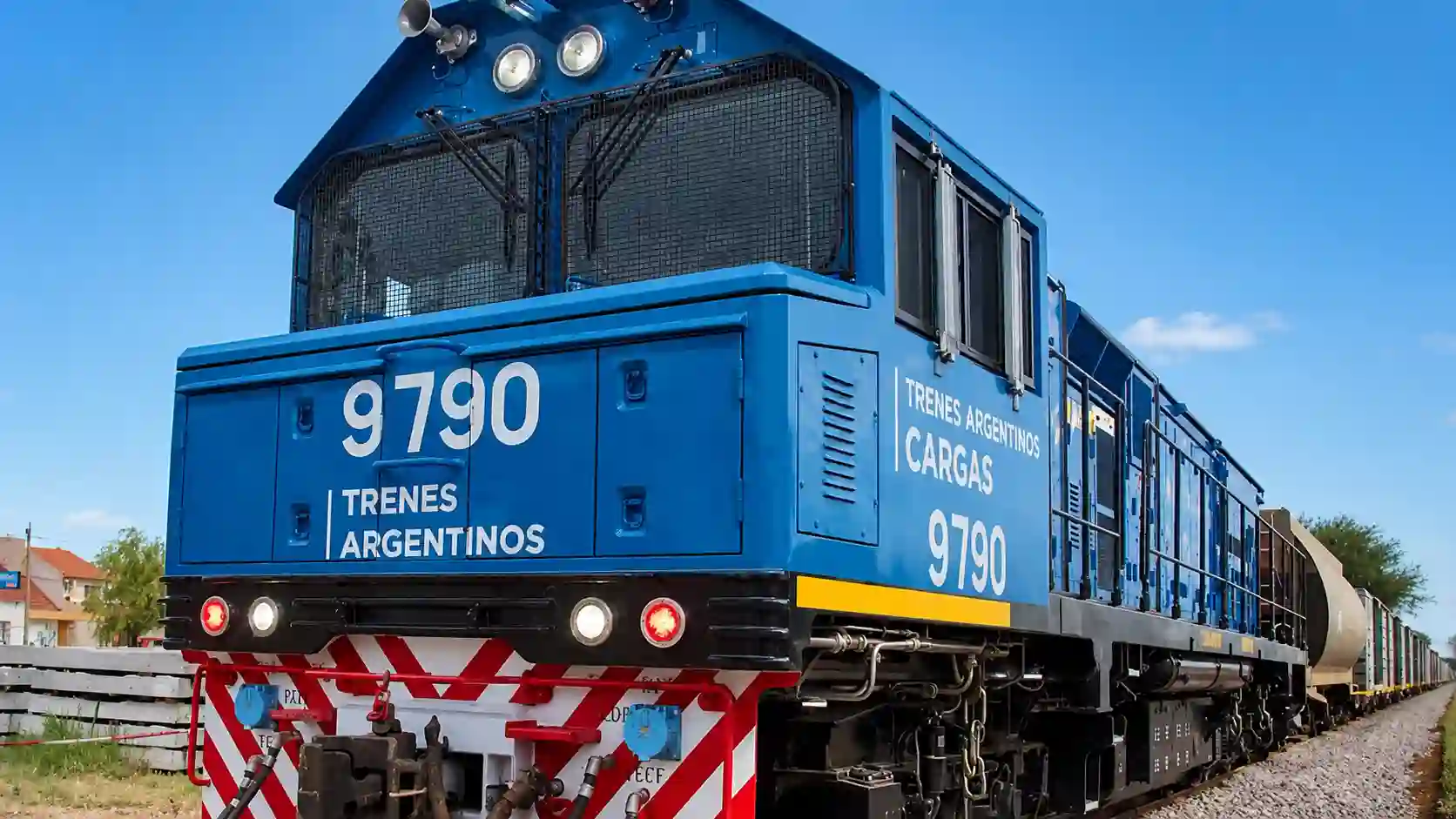
Argentina's freight-rail privatization creates three infrastructure investment cases rather than one railway sale.
The state has launched separate 50-year concessions for the General Belgrano, General San Martín and General Urquiza networks under an open-access model. Railway infrastructure remains structurally separate from rolling stock and train operations.
Mandatory works create an initial rehabilitation floor. The larger commercial question lies in optional investments. Corridors such as the Belgrano C14 and C15 branches can become strategically important for mining and cross-border logistics, but their rehabilitation is not automatically guaranteed by the concession.
Taca Taca makes that distinction concrete. First Quantum's 2026 project design requires a new 5 km rail spur linking the mine to the existing railway between Salta and Mejillones, Chile, together with rail-loading facilities and rehabilitation of sections of the existing route. The mine therefore creates a potential freight anchor, but the project design does not by itself finance or contract the wider corridor.
This changes the investment logic. Freight demand from agriculture, mining and industry can influence which additional corridors attract capital, while project-level investors may become relevant where a specific branch serves a commercially important supply chain.
For the wider logistics context, see Econosur's Logistics & Waterways cluster, Paraná–Paraguay Waterway analysis, analysis of how a deeper Paraná River could reshape Mercosur trade, Argentina copper analysis and Argentina lithium project and procurement analysis.
Core market reading:
The concession does not determine one uniform railway-investment programme. It establishes a mandatory rehabilitation layer and then leaves a second layer of corridor expansion increasingly exposed to commercial freight demand.
What Changed in August 2026
On 20 August 2026, Argentina formally launched national and international tender 504/2-0004-LPU26 for the infrastructure of the General Belgrano, General San Martín and General Urquiza freight-rail lines.
The three networks cover 7,594 kilometres across 16 provinces and connect major production regions with ports and international crossings toward Brazil, Bolivia, Chile, Paraguay and Uruguay. Offers are due on 11 November 2026.
The tender is the implementation stage of a privatization structure approved earlier through Decreto 67/2025. That decree did not treat Belgrano Cargas y Logística as a vertically integrated railway to be transferred intact. It separated the business into infrastructure, rolling stock and workshops.
Infrastructure: the Belgrano, San Martín and Urquiza tracks and adjacent properties are being tendered through long-term public-works concessions.
Rolling stock: locomotives and wagons are treated separately. Some equipment can be acquired in connection with the line concession; other material can be sold through auction processes.
Workshops: railway workshops are subject to separate use concessions.
Belgrano Cargas y Logística: the state company is scheduled for dissolution and liquidation once the relevant concession processes have been completed.
Network transition: Resolution 1498/2026, published September 10, extends Ferrosur Roca’s existing service arrangement to September 10, 2027, or an earlier replacement contract. It also calls for continued design of the Roca contractual model. This is a separate transition from the tender for Belgrano, San Martín and Urquiza; it does not announce winners for those three lines.
The railway concessions can be assessed alongside ports, roads, waterways and airports in South America’s Transport Infrastructure 2035: A Six-Country Outlook.
The New Structure Separates the Track From the Train
The open-access principle is central to the new model. The infrastructure concessionaire manages and maintains the railway, controls network access and charges for use. It does not automatically receive an exclusive right to carry all freight over the line.
Qualified railway operators can use the infrastructure under the open-access regime. This separates the infrastructure business from the operating business and creates more than one possible commercial role inside the same network.
The key change is not simply who operates Belgrano Cargas. It is that infrastructure investment, train operation and freight demand can now follow different commercial routes.
Rolling Stock, RIGI and the New Financing Layer
The financing structure adds another separation. Proceeds from the sale of rolling stock are assigned to a dedicated trust whose sole purpose is to finance and pay for works carried out by the future infrastructure concessionaires.
Public reporting based on the tender documents puts the maximum potential trust reimbursements at approximately US$78.5 million for Belgrano, US$386 million for San Martín and US$34.3 million for Urquiza.
That does not mean the concessionaires receive the money before construction. According to the published tender-document analysis, they must secure financing, execute eligible works and then receive repayments against certified physical progress. The concessionaire therefore remains exposed to project-finance and execution requirements.
RIGI adds a second financing and incentive layer. Decreto 748/2026 clarified that railway infrastructure can qualify as infrastructure investment not only when entirely new lines are built, but also when existing infrastructure is renewed, substituted, transformed or developed.
For an expansion of pre-existing railway infrastructure, the regulation requires a verifiable increase in transport capacity based on objective technical parameters. Routine conservation and maintenance alone do not meet that definition.
RIGI favours investment programmes that change capacity rather than simply preserve the existing railway. For engineering and equipment suppliers, that places greater commercial weight on renewal, heavy rehabilitation, signalling, logistics nodes and other capacity-expanding scopes.
Three Networks, Three Different Investment Cases
| Network | Initial works / priority | Freight logic | Commercial question |
|---|---|---|---|
| Belgrano | Santa Fe rail bypass and other network rehabilitation; C14 and C15 reported as optional rather than mandatory works. | Grain, sugar, northern industry, lithium and potential Chile/Bolivia connectivity. | Which optional northern branches generate enough freight to attract additional capital? |
| San Martín | Track renewal and capacity/reliability improvements on key sections of the trunk corridor. | Agriculture and industrial freight, with growing strategic relevance for San Juan's future copper supply chain. | Can new mining demand change the economics of western rail infrastructure? |
| Urquiza | Works reported between Concordia and Paso de los Libres and embankment reconstruction around La Criolla–Chajarí. | Mesopotamian production, forestry-related freight and international connectivity toward Brazil and Uruguay. | Can cross-border and regional freight support a larger investment programme beyond initial rehabilitation? |
Belgrano: Agriculture Pays for the Core, Mining Tests the Expansion Case
The Belgrano network remains anchored in agricultural freight. Trenes Argentinos Cargas reported that in 2024 it moved 7.39 million tonnes across its operations, of which 4.68 million tonnes were grain. Grain represented 63% of total freight, led by soy and maize.
That existing freight base helps explain why the Santa Fe rail bottleneck matters. Reporting based on the tender documents identifies completion of the Circunvalar railway project around Santa Fe as one of the main mandatory works. The project is designed to improve the route used by northern grain traffic moving toward the Greater Rosario export terminals.
Rail economics do not end at the terminal gate. For northern grain flows, the commercial value of better rail access to Gran Rosario also depends on vessel-loading conditions on the lower Paraná. Deeper navigation can change how much cargo ocean-going vessels load at Rosario and how much completion loading is required farther downstream. Econosur examines that interface separately in How a Deeper Paraná River Could Reshape Mercosur Trade.
The more uncertain investment case lies farther north.
Salta has been working with mining companies to identify railway branches relevant to the province's growing mineral supply chain. The provincial logistics plan highlights C14, C13 and CC. The General Güemes logistics node is also identified by Salta as part of the Belgrano concession framework.
C14 is especially relevant because it links General Güemes with the Puna and the Chilean border at Socompa. Salta reported in 2024 that the branch had an operating capacity of about 120,000 tonnes per year and that infrastructure improvements could progressively raise potential capacity toward two million tonnes.
That number is a provincial development target, not a committed capacity expansion under the current concession.
The distinction became more important after the tender was released. Regional reporting on the line-specific documents states that C14 and C15 were included as optional or weighted works rather than mandatory first-stage investments.
Taca Taca is now one of the clearest project-level tests of that optional-investment logic. First Quantum's February 2026 technical report places the project about five kilometres from the existing railway linking Salta with Mejillones and requires a new spur, rail-loading infrastructure and rehabilitation of sections of the existing line. Concentrate is planned to move by rail toward the Chilean port.
The Taca Taca project analysis maps the physical rail requirement. Econosur's Taca Taca supply-chain analysis separately maps the visible rail and export actors and distinguishes discussions and technical routes from confirmed contracts.
The commercial tension:
The branches most clearly associated with future mining and cross-border growth are not necessarily the branches the concessionaire must rebuild first. Their investment case therefore depends more directly on expected cargo, project timing and potentially the participation of freight-generating companies.
San Martín: The Larger Rehabilitation Case Meets Argentina's Copper Pipeline
The San Martín concession has a different profile. Published tender-document reporting identifies track-renewal works across sections linking Rufino, Justo Daract, Venado Tuerto, Villa Constitución and Soldini, with the broader objective of recovering reliability and capacity.
It also has the largest reported ceiling for reimbursement from the rolling-stock-financed trust: approximately US$386 million.
The longer-term question is western Argentina. The San Martín network reaches Mendoza and San Juan, placing it geographically close to a province where Argentina's next generation of large copper projects is moving through engineering, early works and investment decisions.
Econosur's Argentina copper analysis shows why the timing matters. Vicuña, Los Azules and other projects can generate large flows of construction materials, fuel, chemicals, equipment and eventually mineral products.
That does not prove that these projects will use San Martín rail infrastructure. Mine-specific logistics routes remain unresolved and road transport will continue to play a major role. But growing project volumes create a new demand variable that did not exist at the same scale when the current freight structure was established.
Verified: the line forms part of the 50-year concession and has a substantial mandatory rehabilitation programme.
Strongly indicated: western mining growth increases the strategic relevance of the corridor.
Unresolved: the public evidence reviewed does not establish which specific copper project will contract railway freight, which terminal would be used, or which operator would hold that traffic.
Urquiza: A Smaller Initial Case With Cross-Border Logic
The Urquiza line has the smallest reported trust-fund ceiling of the three concessions, at approximately US$34.3 million.
Published analysis of the tender documents identifies rehabilitation between Concordia and Paso de los Libres and reconstruction of embankments between La Criolla and Chajarí among the required interventions.
Its strategic value is different from Belgrano and San Martín. The Urquiza network crosses Argentina's Mesopotamian region and links into the country's eastern international logistics system toward Brazil and Uruguay.
That makes its future investment case dependent less on one dominant mining pipeline and more on regional industrial, forestry, agricultural and cross-border freight volumes.
The wider corridor should also be read alongside river transport. Econosur's Paraná–Paraguay Waterway analysis examines the parallel logistics system that carries bulk freight through the region. Railway competitiveness will therefore depend partly on where rail complements road, ports and waterways rather than replacing them.
Mining Demand Does Not Automatically Produce Railway Investment
The mining angle is where the new concession model becomes particularly interesting.
Argentina's lithium and copper project pipeline creates potential freight demand in regions where transport infrastructure is already a major project constraint. But a mine announcement does not create a rail project by itself.
For C14, Salta's own logistics work makes that distinction visible. The province has asked mining companies to provide projected freight demand for the connection toward Chile and for the industrial area around Olacapato. That is effectively a demand-validation exercise.
The concession model reinforces the same logic. If C14 is optional, the future concessionaire has to see an economic reason to allocate capital to it. A mining company that depends on the route could therefore become commercially relevant not only as a freight customer but potentially as an investor supporting a specific branch.
Public reporting on the tender documents describes a structure allowing sector-specific investment partners to participate alongside the concessionaire in particular projects or branches. Rio Tinto has been discussed publicly as one possible mining-sector participant because of its lithium asset base in Argentina.
No such participation is confirmed.
Taca Taca turns C14 from an abstract mining corridor into a project-level test case
First Quantum's current Taca Taca design gives the C14 discussion a more concrete commercial basis than a generic forecast of future mining growth. The project expects to use the rail route between Salta and Mejillones for concentrate exports and requires a new 5 km spur, rail-loading facilities and rehabilitation of sections of the existing railway.
That is significant because it creates identifiable future freight rather than only a provincial aspiration for more mining traffic. But the evidence boundary remains important. First Quantum's technical design establishes the project's intended logistics architecture; it does not establish the final concessionaire, rail operator, rehabilitation contract, port-services agreement or allocation of corridor investment.
For suppliers and infrastructure investors, this is the commercial hinge: the mine can strengthen the economics of the corridor before the corridor itself has a fully defined investment and procurement structure.
Verified: the 2026 First Quantum design requires a new 5 km rail spur to the existing Salta–Mejillones line and identifies rehabilitation of sections of the existing railway.
Verified: the planned export route moves copper concentrate toward Mejillones in Chile.
Not established: the project design does not prove that C14 rehabilitation has been financed under the new concession, that a final rail operator has been selected or that port and rail-service contracts have been awarded.
The mining boom changes railway demand before it changes railway infrastructure.
I would therefore separate project growth from corridor execution. Salta can have more lithium production, and San Juan can have more copper investment, without every strategically desirable railway branch being rebuilt.
Taca Taca is a useful test because the project already defines a rail-to-Mejillones logistics route. That makes future freight more tangible, but it still does not answer who finances the rehabilitation, who operates the trains or who buys the rail-infrastructure packages.
The decisive intermediate step is freight concentration. A corridor becomes commercially stronger when Taca Taca and other projects can aggregate enough predictable volume to support infrastructure, rolling stock, terminals and regular operations.
The same mechanism applies to agriculture. Rail capacity into Gran Rosario becomes more valuable when terminal throughput and downstream river navigation can absorb the additional freight efficiently. Rail and waterway investment therefore have to be read as parts of the same export-corridor economics.
That makes the most important indicator neither mine capex nor railway-network length. It is the amount of bankable freight that can be attached to a specific corridor over the concession period.
Where the Supplier Market Actually Opens
For international railway and infrastructure suppliers, the opportunity is broader than locomotives and wagons.
The concession structure creates different buying points depending on whether a package belongs to mandatory infrastructure rehabilitation, an optional expansion, rolling stock, workshop operations or a freight customer's own logistics system.
The buying route is therefore not one national procurement office.
A mandatory infrastructure package can sit with the concessionaire or its engineering and construction contractors. Rolling-stock procurement can follow a different financing route. A mining-linked terminal can involve the mine owner, logistics operator and concessionaire. Workshop concessions create another commercial layer.
Financing can also affect supplier selection. Grupo México Transportes has publicly confirmed that it is examining the tender and announced a strategic relationship with U.S. rail-technology company Wabtec. Separate reporting has described potential financing conversations involving U.S. and multilateral institutions.
Those signals do not establish future equipment awards. They show that technology, financing and concession strategy can become connected before individual procurement packages are awarded.
Taca Taca adds another buying route to this map. Mine-specific rail-loading equipment, the project spur and on-site facilities may follow a different procurement chain from rehabilitation of the wider public railway. The Taca Taca supply-chain analysis therefore separates mine-side logistics from the still-unresolved operator and corridor structure.
Foreign state control is a bidder issue, not a blanket supplier ban
The bidding rules have also been reported as excluding companies controlled directly or indirectly by foreign states from competing for the infrastructure concessions.
This is frequently described as an anti-China clause, but that description is narrower than the legal effect reported from the tender. The restriction concerns foreign state control rather than Chinese origin as such.
It should therefore not be interpreted as evidence that Chinese private suppliers, components or rolling stock are automatically excluded from the future railway supply chain. The final supplier mix will depend on the concessionaires, financing structures, procurement rules and individual equipment packages.
Published procurement during the transition
Belgrano Cargas y Logística continues to publish purchases while the concession process advances. Tender 102/2026, published October 2, seeks track materials with an estimated value of US$86,730 plus VAT; offers are due October 28 at 11:00, with opening at 11:30. This identifies a current buying process, not a concession award. Eligibility, specifications and any subsequent amendments must be checked in the bidding documents.
Three Business Questions
1. Which concession and which investment layer creates the actual buying point?
A supplier needs to distinguish mandatory track works, optional corridor investment, rolling stock, workshop operations and customer-specific logistics infrastructure.
2. Which freight flows can make an optional corridor bankable?
For C14, C15 or mining-linked western routes, the relevant variable is not only projected mineral output but the timing, concentration and contractual reliability of freight demand.
3. Who specifies and finances the package before procurement begins?
The concessionaire may be the visible infrastructure actor, but project investors, engineering contractors, equipment-finance institutions and freight owners can influence technical and commercial requirements.
Research Boundary
Verified: Tender 504/2-0004-LPU26 has been launched for the Belgrano, San Martín and Urquiza infrastructure concessions. The contracts run for 50 years, use an open-access model and cover 7,594 kilometres in 16 provinces. Offers are due on 11 November 2026.
Verified: The privatization legally separates infrastructure, rolling stock and workshops. Rolling-stock sale proceeds are assigned to a trust for concession-related railway works. Decreto 748/2026 clarifies RIGI treatment for qualifying railway infrastructure investment.
Public tender-document reporting indicates: mandatory works across the three lines total approximately US$800 million; the reported maximum trust reimbursements differ substantially by line; and C14 and C15 are treated as optional rather than mandatory works. Reporting from Salta on 1 September continued to describe both branches as optional and recorded political pressure to make their rehabilitation mandatory.
Verified: First Quantum's February 2026 Taca Taca design requires a new 5 km rail spur to the existing Salta–Mejillones line and rehabilitation of sections of the existing railway, creating a concrete potential freight anchor for the northern mining corridor.
Unresolved: no concessionaire had been selected as of 6 September 2026. Public expressions of interest do not establish submitted bids. The eventual mix of optional works, financing institutions, contractors, equipment suppliers and project-level mining partners remains open. Taca Taca's project design does not establish final rail-operator, corridor-rehabilitation or port-contract arrangements.
Commercial research boundary: this public analysis maps the concession and investment structure. It does not identify complete package-level buyer lists, RFQ status, supplier qualification, contractor shortlists or procurement contacts.
Argentina is not creating one new freight railway. It is creating a mechanism that will test which corridors can convert freight demand into investable infrastructure.
- Resolution 1498/2026: Ferrosur Roca service continuity and development of its separate contractual model.
- Boletín Oficial, October 2, 2026 — BCyL tender 102/2026: track-material procurement.
- Argentina Ministry of Economy — Avanza la privatización del Belgrano Cargas, 20 August 2026: 50-year concessions, open access, 7,594 km, 16 provinces, international links and RIGI context.
- Resolution 1350/2026 — Ministry of Economy: authorization of tender 504/2-0004-LPU26, bidding-document IDs, tender process and 11 November 2026 offer deadline.
- CONTRAT.AR — Tender 504/2-0004-LPU26: official tender portal. Relevant documents include the general conditions PLIEG-2026-79595975, technical specifications PLIEG-2026-79596251 and line-specific documents for Belgrano, San Martín and Urquiza.
- Decreto 67/2025: vertical separation of rolling stock, tracks and adjacent property, workshops and eventual liquidation of Belgrano Cargas y Logística.
- Decreto 282/2026, updated after Decreto 718/2026: trust structure directing rolling-stock sale proceeds exclusively toward works carried out by concessionaires.
- Decreto 748/2026: RIGI treatment of new, renewed, substituted, transformed or developed railway infrastructure and capacity-increase requirement for pre-existing infrastructure.
- Trenes Argentinos Cargas — 2024 freight composition: 7.387 million tonnes transported, including 4.685 million tonnes of grain.
- Government of Salta — Provincial Logistics Plan for mining, 14 November 2025: C14, C13 and CC identified as mining-sector priorities and General Güemes logistics node context.
- Government of Salta — Ramal C14 operating update, 22 April 2024: 120,000 tonnes annual capacity and provincial objective to increase capacity progressively with infrastructure improvements.
- First Quantum Minerals — Taca Taca NI 43-101 Technical Report, February 2026: new 5 km rail spur, rail-loading and marshalling infrastructure, intended use of the Salta–Mejillones route and rehabilitation requirements on sections of the existing railway.
- First Quantum Minerals — Taca Taca Technical Report announcement, 19 February 2026: confirms the project has defined rail and port access and requires a new 5 km spur to the existing railway between Salta and Mejillones.
- La Nación — 20 August 2026: analysis of mandatory works, approximately US$800 million rehabilitation floor, line-specific trust ceilings and financing mechanics.
- Infobae — 20 August 2026: optional-work programme, publicly identified interested parties, investor-partner structure and Grupo México/Wabtec context.
- El Tribuno — 23 August 2026: Salta response to C14 and C15 being treated as optional or weighted works.
- Salta Mining — 1 September 2026: current Salta reporting that C14 and C15 remain listed as optional rather than mandatory works, alongside requests to change that treatment.
- Evidence note: Econosur verified the official tender process, legal structure and relevant bidding-document identifiers directly. Specific line-level work values and some optional-work classifications are attributed to current reporting based on the published tender documents where the complete annex text was not independently parsed through the public web interface.
- Econosur analysis published 28 August 2026 and updated 6 September 2026.
From a railway map to a commercial corridor map
The new concession structure creates different investment, procurement and freight-demand layers across Belgrano, San Martín and Urquiza.
Econosur prepares country, sector, company and custom analysis for businesses evaluating infrastructure, mining, industrial and logistics markets in South America.
Explore Custom Market AnalysisFrequently Asked Questions
What is Argentina privatizing in Belgrano Cargas?
The process separates railway infrastructure, rolling stock and workshops. Tracks and adjacent state property are being placed under long-term concessions, while rolling stock and workshops follow separate transaction structures.
How long are the new freight-rail concessions?
The General Belgrano, General San Martín and General Urquiza infrastructure concessions are tendered for 50 years.
What does open access mean?
The infrastructure concessionaire manages the network but does not automatically receive an exclusive right to operate all trains. Qualified freight operators can use the railway under the applicable open-access rules and infrastructure charges.
How much investment is required?
Current reporting based on the tender documents puts mandatory works across the three lines at approximately US$800 million during the initial rehabilitation period. Larger optional investment programmes exist, but their execution is not automatic.
Why are C14 and C15 important?
C14 connects the Salta mining region toward Chile, while C15 reaches northern Salta toward Bolivia. Their reported classification as optional rather than mandatory works makes freight demand and commercial investment logic especially important to their future development.
Why is Taca Taca relevant to the C14 mining corridor?
First Quantum's 2026 Taca Taca design requires a new 5 km rail spur linking the project to the existing railway between Salta and Mejillones, Chile, together with rail-loading facilities and rehabilitation of sections of the existing route. This makes Taca Taca a concrete potential freight anchor for the corridor, but it does not establish that the wider rehabilitation, operator structure or port contracts have been finalized.
Can railway investments receive RIGI benefits?
Potentially. Decreto 748/2026 clarified that qualifying construction, renewal, substitution, transformation and development of railway infrastructure can fall within the infrastructure sector of RIGI, subject to the regime's requirements.
Have the concession winners already been decided?
No. The offer deadline is 11 November 2026. Publicly reported interest from companies or sector groups should not be treated as a confirmed bid or concession award.