
Argentina · Copper · Salta · Mining Infrastructure · Suppliers
Taca Taca Copper Project: Project Status, Infrastructure and Supplier Opportunities
First Quantum's Taca Taca project is designed as a 40 Mtpa copper operation expanding to 60 Mtpa, with approximately US$5.25 billion in total development capital. The supplier opportunity is potentially large — but the commercial market should be read through permitting, engineering ownership, power, water, rail and First Quantum's execution model rather than through the capex headline alone.
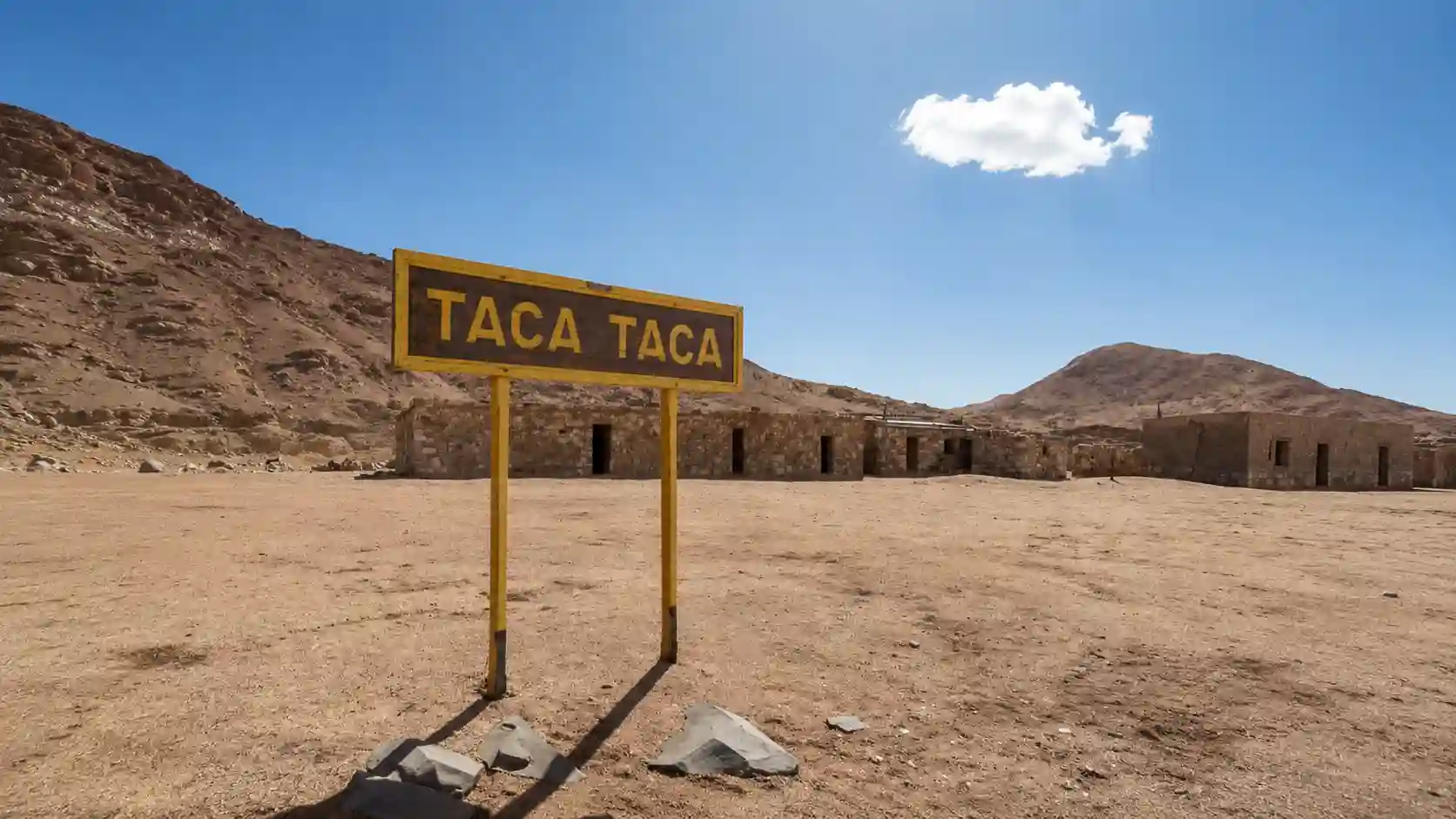
Taca Taca is large enough to create several supplier markets at once, but it is not yet a simple US$5.25 billion procurement opportunity.
First Quantum's February 2026 technical update defines a conventional open-pit copper-gold-molybdenum project with an initial 40 Mtpa processing design and expansion to 60 Mtpa. Total development capital is estimated at approximately US$5.25 billion.
The physical project requires large-scale crushing and milling, flotation, tailings handling, a new 122.5 km power connection, regional water borefields and pumping infrastructure, road works, rail loading, a new rail spur and rehabilitation of sections of the rail route toward Chile.
The execution gate remains permitting. In its 28 July 2026 Q2 update, First Quantum said approval of the main Mining ESIA is expected during 2026. Salta's Water Resources Secretariat issued a hydrological feasibility certificate in April for sufficient water to support the first stage, but the certificate is expected to become a water concession only after ESIA approval.
First Quantum's formal July disclosure said the RIGI application would follow the ESIA and water-use concessions. Post-panel reporting from Argentina Mining Norte now adds a more specific company target: a RIGI filing in the fourth quarter of 2026 and first preparatory works in the first half of 2027, subject to environmental approval and the remaining project decisions.
A second execution variable is financing and ownership. Bloomberg reported in July 2026 that First Quantum was exploring the sale of a minority stake. At the 2 September panel, company representatives were reported as saying that First Quantum has appointed international financial advisers and is evaluating both a strategic partner and third-party financing. No partner, financing package or final construction decision has been confirmed.
For the wider market context, see Econosur's Copper Mining cluster, Argentina copper analysis, Argentina freight-rail analysis and Argentina market profile.
Core market reading:
Taca Taca should be analysed as an execution system rather than as one mining contract. The project combines owner-led development, specialist engineering scopes, provincial permitting, large off-site infrastructure and a stated local-supplier strategy. Those layers determine where supplier access can actually emerge.
Why Taca Taca Matters Now
Taca Taca is not a new discovery. The important change in 2026 is that First Quantum has materially updated the development case and moved several de-risking processes forward.
On 19 February, First Quantum filed a new NI 43-101 Technical Report with an effective date of 31 December 2025. The update increased the scale of the proposed processing system, refreshed capital and operating assumptions and positioned Taca Taca more clearly inside First Quantum's development portfolio.
The deposit is located in the Puna region of Salta Province, approximately 230 kilometres west of the city of Salta and about 55 kilometres east of the Chilean border.
Proven and Probable Mineral Reserves are reported at approximately 1.99 billion tonnes grading 0.42% copper and 0.09 g/t gold. First Quantum's current plan supports an initial 35-year mine life.
The scale matters commercially because Taca Taca is not only a mine and concentrator. It requires a parallel infrastructure system for electricity, water, tailings, roads, rail and concentrate transport.
That connects the project directly with several Econosur research themes: energy infrastructure, logistics and copper mining.
Current Status: Permitting Still Gates Execution
The current project status should be separated from the long-term development design.
Post-event reporting attributes a more specific near-term roadmap to First Quantum representatives: environmental approval first, a RIGI filing targeted for Q4 2026 and initial preparatory works targeted for the first half of 2027.
The same reporting says First Quantum has appointed international financial advisers and is evaluating a strategic partner alongside third-party financing. These statements add execution timing and financing detail, but they do not establish a final project sanction.
Separate environmental processes also exist around supporting infrastructure. First Quantum's February presentation said a feasibility environmental study for the 345 kV transmission line was submitted in September 2025 and remained under review. The bypass-road ESIA was also under review.
Verified: First Quantum has defined a current project design, engineering architecture, capital estimate and development case.
Verified: key permitting, water and RIGI work is active.
Not established: the public material reviewed by Econosur does not establish that First Quantum has taken a final project sanction or full construction decision.
This matters for suppliers because a technically defined scope is not the same thing as an active procurement package.
The US$5.25 Billion Development Case
First Quantum estimates initial capital of approximately US$4.232 billion to develop the 40 Mtpa operation. Expansion capital to reach 60 Mtpa is estimated at another US$1.019 billion, producing total development capital of approximately US$5.25 billion.
The February technical case assumes average copper production of approximately 291,000 tonnes per year during the first ten years and peak annual production of approximately 323,000 tonnes. Life-of-mine average copper production is approximately 209,000 tonnes per year.
| Project measure | Current technical case | Commercial relevance |
|---|---|---|
| Initial processing | 40 Mtpa | Creates the first large process, mine and infrastructure procurement base. |
| Expansion | 60 Mtpa | Adds a third processing train and increases infrastructure demand. |
| Initial capital | US$4.232 billion | Includes mine, process and supporting infrastructure scopes. |
| Expansion capital | US$1.019 billion | Creates a second investment and equipment cycle after initial development. |
| Copper output | 291 ktpa average in first decade | Supports a long-duration operating and maintenance market if the project is built. |
| Mine life | 35 years | Creates potential demand beyond construction: replacements, maintenance, consumables and services. |
These figures explain the strategic scale of Taca Taca. They do not by themselves identify which suppliers will win contracts, when RFQs will be issued or which entity will control individual packages.
Financing and a Potential Minority Partner
Taca Taca's development case should also be read through First Quantum's capital position and the possibility of a future project partner.
In its second-quarter results, First Quantum reported US$136 million in net earnings attributable to shareholders. At the same time, adjusted earnings were negative US$106 million and net debt stood at approximately US$5.41 billion at 30 June 2026. The company also recorded a US$271 million gain on the sales of Çayeli and Cobre Las Cruces.
Against that financial backdrop, Bloomberg reported on 15 July that First Quantum was running a process to explore the sale of a minority stake in Taca Taca. Rio Tinto and the Japanese trading houses Mitsubishi and Mitsui were named as potential interested parties. Representatives of the companies declined to comment, and the process was reported to be at an early stage with no guarantee that a transaction would be completed.
The 2 September panel adds a more current financing signal. According to post-event reporting, First Quantum has appointed international financial advisers and is working on alternatives that include bringing in a strategic partner and obtaining third-party financing. That suggests the project is moving beyond technical optimisation toward financing structure and development preparation, while the final capital package remains unresolved.
Verified: First Quantum currently owns 100% of Taca Taca.
Reported / strongly indicated: Bloomberg reported that First Quantum is exploring the sale of a minority interest in the project. Post-panel reporting on 2 September also attributes to company representatives the appointment of international financial advisers and evaluation of strategic-partner and third-party-financing options.
Unresolved: whether a transaction will occur, the size of any stake, the identity of a buyer, governance rights, financing terms and any consequences for project execution or procurement.
For suppliers, the distinction matters. A future strategic partner could alter the project's capital structure or governance, but the current public record does not justify assuming that Rio Tinto, Mitsubishi, Mitsui or any other potential bidder has a role in engineering, procurement or supplier qualification.
The Engineering Layer Is Already Partly Visible
One of the more useful details in the 2026 Technical Report is that it identifies parts of the engineering structure behind the 40 Mtpa Stage 1 design.
First Quantum commissioned Lycopodium to undertake design work for the processing plant, including copper and molybdenum processing, primary crushing through copper-concentrate filtration and tailings pumping.
Fluor Australia was engaged for mining and non-process infrastructure. The documented scope includes the Salta Operations Centre, site village, remote water and brine borefields, construction and off-site roads, airstrip, mining service area, copper-concentrate conveyor and storage area, and rail-loading facilities.
A company approaching Taca Taca should not assume that one engineering firm represents the commercial gateway for every package.
The more relevant question is which scope remains owner-controlled, which scope is defined through an engineering consultant and which purchasing entity eventually issues the contract.
Processing: Large Equipment, Repeated Train Design
Taca Taca's processing architecture creates one of the clearest publicly visible equipment layers.
The initial 40 Mtpa design uses two milling trains with two 28 MW SAG mills and two 22 MW ball mills in total. Expansion to 60 Mtpa adds a third milling train.
First Quantum intends to use a conventional copper-molybdenum flotation flowsheet producing separate copper and molybdenum concentrates.
The wider process system includes primary crushing, coarse-ore handling, milling, flotation, thickening, regrinding, concentrate separation, filtration and tailings pumping.
These are project-defined technical demand areas. They should not be interpreted as evidence that those packages are currently in an open RFQ process.
Power and Water Are Separate Infrastructure Markets
Power: 345 kV and 122.5 kilometres of new transmission
First Quantum's current infrastructure plan connects Taca Taca to Argentina's national grid through approximately 122.5 kilometres of new transmission infrastructure tied to the existing 345 kV network.
The company's 2026 Annual Information Form estimates total power demand in the range of approximately 180 MW to 240 MW at 60 Mtpa.
First Quantum says the project could source 100% of its electricity requirements from renewable generation through long-term power arrangements.
For suppliers, this makes Taca Taca simultaneously a mining project and a high-voltage infrastructure project. Relevant scopes can include transmission, substations, switchgear, transformers, protection and control, monitoring, power quality, mine distribution and the electrical systems required by large process equipment.
Water: the first stage has a feasibility certificate, not the full expansion solution
Water remains one of the most commercially important execution variables.
First Quantum has identified four regional fresh-water basins. Its February 2026 presentation stated that the identified supply was sufficient for the 40 Mtpa stage and represented roughly 90% of the requirement for the 60 Mtpa expansion.
In April, the Salta Water Resources Secretariat issued the hydrological feasibility certificate permitting sufficient water for the first project stage. First Quantum said in July that additional supply opportunities continue to be evaluated to improve flexibility for the longer-term water strategy.
The physical water system itself is substantial: borefields, well drilling, pumps, pipelines, power supply to remote fields, process make-up water, brine handling and water recovery from tailings all form part of the project architecture.
Commercial distinction:
Water availability and water infrastructure are related but different supplier questions. The April certificate reduces one resource-risk layer for Stage 1. It does not mean that every borefield, pump, pipeline or 60 Mtpa expansion scope is fully contracted or technically closed.
For comparative context, Econosur's Chile seawater and mining infrastructure analysis examines how water constraints create separate engineering and infrastructure markets around large copper operations.
Rail and Port Access Connect Taca Taca to Chile
Taca Taca is located approximately five kilometres from the existing railway connecting Salta with northern Chile.
First Quantum's development concept includes a rail-to-port export route toward Mejillones. The project requires a new rail spur, rail-loading infrastructure, a maintenance and repair facility and rehabilitation of sections of the existing railway.
This creates an important link between Taca Taca and Argentina's broader freight-rail restructuring.
Econosur's August 2026 freight-rail analysis shows that northern mining corridors cannot be treated as automatically funded infrastructure. Rail rehabilitation depends on the commercial and concession structure as well as future freight demand.
Taca Taca creates a potentially large and predictable freight anchor. But the exact allocation of mine-specific rail investment, public-network rehabilitation, operator responsibility and port contracts remains a separate execution question.
Infrastructure discussion at the 2 September panel also went beyond roads, power and rail. Post-event reporting says First Quantum representatives identified connectivity and fibre-optic infrastructure among the wider requirements for developing a project of this scale in the Puna.
Verified: the Taca Taca design includes rail loading, a new spur and rehabilitation requirements on the route toward Chile.
Strongly indicated: a project of this scale can materially strengthen the commercial case for mining freight infrastructure in Salta.
Unresolved: the public record reviewed does not establish the final railway operator, rehabilitation contracting route, port-services contract or complete allocation of rail capex between the mine and wider railway system.
Where the Supplier Market Actually Opens
First Quantum explicitly says Taca Taca will seek to increase participation by local suppliers and strengthen local value chains. Salta's government has also framed the project around local employment and provincial supplier development.
That does not mean international suppliers are excluded. It means the commercial route is likely to combine global mining technology with a strong local-content, service and execution layer.
Post-panel reporting provides a newer measure of that local layer. Sueli Tang was reported as saying that 89% of current project suppliers are from Salta and that 85% of supplier purchases in 2026 were concentrated in the province. Of that purchasing share, 17% was attributed to communities in the project's direct area of influence and 68% to the rest of Salta.
The supplier-preparation process is also becoming more visible. First Quantum was reported as holding information meetings with business chambers and suppliers on project progress and future needs, while training agreements with the National University of Salta and UPATecO — and talks with UCASAL — are intended to build skills for later project stages. These signals do not amount to open RFQs, but they show that local-capability preparation has already started.
| Supplier area | Public evidence | What remains unresolved |
|---|---|---|
| Process equipment | Large SAG/ball milling and flotation architecture is defined. | OEM awards, package timing and final purchasing entity. |
| Power | 122.5 km transmission connection and 345 kV system are defined. | Detailed contracting structure, supply packages and final power counterparties. |
| Water | Borefield concept, pumping and Stage 1 hydrological feasibility are established. | Complete field development, package allocation and 60 Mtpa expansion solution. |
| Rail & concentrate logistics | Rail spur, loading, maintenance facility and route rehabilitation are part of the design. | Operator, rail works contracting, port contracting and final transport structure. |
| Engineering | Lycopodium and Fluor have documented design roles. | Future EPC/EPCM structure and package-level authority. |
| Local services | First Quantum and Salta explicitly support local supplier development. Post-panel reporting says 89% of current suppliers are from Salta and 85% of 2026 supplier purchases were concentrated in the province. | Qualification requirements, construction-phase supplier mix, service footprint and individual package awards. |
For a foreign equipment company, that changes the practical sales question.
The first question is not simply whether Taca Taca needs pumps, mills, automation or electrical equipment. It clearly does.
The harder question is who will specify, qualify and buy the relevant package, at what project stage, and with what local execution requirement.
That distinction is also visible in Econosur's Argentina lithium supplier and procurement analysis and Josemaría power-corridor case.
The US$5.25 billion figure is the least difficult part of Taca Taca to understand.
The more useful commercial question is how that capital is divided into execution layers.
Taca Taca already shows an unusual combination: First Quantum emphasizes an internal self-build model, while the public technical record identifies Lycopodium and Fluor in defined engineering scopes. At the same time, the project depends on provincial approvals and on infrastructure extending well beyond the concentrator itself.
For a supplier, this means that project presence and supplier access are not the same thing. Knowing that a pump system, transmission line or rail facility will be needed does not yet identify the buyer.
I would therefore watch the transition from defined technical scope to package-level commercial responsibility. The September panel suggests that transition is getting closer: financing is being structured, the RIGI filing has a reported Q4 target and supplier preparation is already under way in Salta. The missing step is still package-level visibility — who buys what, when and under which qualification route.
What to Watch Next
The next material public signals are now more clearly sequenced: environmental approval, water concessions, the reported Q4 2026 RIGI filing target, financing structure and the move toward preparatory works in 2027.
The Q4 2026 RIGI target, H1 2027 preparatory-works target, financial-adviser mandate, local purchasing figures and connectivity comments come from post-event reporting on statements made by First Quantum representatives at Argentina Mining Norte on 2 September 2026.
Econosur therefore treats these as reported company statements, not as a replacement for First Quantum's formal securities disclosure or the February NI 43-101 Technical Report. Where the formal record is less specific, both evidence levels are kept separate.
Salta Mining — post-panel coverage, 2 September 2026
INSalta / InfoMinería — post-panel roadmap and supplier data, 3 September 2026
Three Business Questions
1. Which execution entity will actually control the relevant package?
First Quantum, a project company, an engineering consultant, a construction contractor and an infrastructure operator can represent different commercial gateways.
2. What project milestone must occur before the package moves from design to procurement?
ESIA approval, water concessions, RIGI, financing and project sanction can affect the sequence of major commitments.
3. What local capability is required before a foreign supplier becomes commercially credible?
Local service, maintenance, registration, partner structure, inventory, technical support and supplier qualification may matter as much as the equipment itself.
Research Boundary
Verified: Taca Taca is currently 100% owned by First Quantum and is designed as a large open-pit copper-gold-molybdenum project. The February 2026 technical case defines 40 Mtpa initial capacity, expansion to 60 Mtpa, approximately US$5.25 billion total development capital and a 35-year initial mine life.
Verified: the current project record defines major process, power, water, tailings and rail infrastructure. Lycopodium and Fluor are publicly identified in specific engineering scopes.
Verified: the main Mining ESIA remained pending in First Quantum's July update. A hydrological feasibility certificate for Stage 1 was issued in April. RIGI submission is planned after ESIA approval and water concessions.
Reported company statements from Argentina Mining Norte: post-event coverage says First Quantum is targeting a Q4 2026 RIGI filing, first preparatory works in H1 2027, and is working with international financial advisers on strategic-partner and third-party-financing options. These points have not been treated as equivalent to a new formal First Quantum securities filing.
Reported supplier signal: post-panel coverage attributes to First Quantum an 89% current Salta supplier share and 85% of 2026 supplier purchases concentrated in the province, alongside ongoing supplier meetings and training initiatives.
Strongly indicated: if sanctioned, the project will create significant demand across mining equipment, processing, power, water, logistics, engineering, automation and long-term maintenance.
Reported / strongly indicated: Bloomberg reported in July 2026 that First Quantum was exploring the sale of a minority stake in Taca Taca. No transaction has been confirmed.
Unresolved: the public evidence reviewed does not establish a final project sanction, complete EPC/EPCM hierarchy, package-level buyer map, current RFQ schedule, approved supplier list, individual OEM awards, complete rail and port contracting structure or the final outcome of the reported minority-stake process.
Commercial research boundary: this public insight maps the project and execution structure. A supplier-specific analysis would need to identify the exact package, buyer, specification route, qualification status, procurement timing and local service requirements.
Taca Taca becomes commercially useful to a supplier only when the project map is converted into a buying-point map.
- First Quantum Minerals — Second Quarter 2026 Results, 28 July 2026 : current Mining ESIA status, April hydrological feasibility certificate, water-concession sequencing, planned RIGI submission and Q2 financial context including attributable net earnings, adjusted earnings, net debt and asset-sale gains.
- First Quantum Minerals — NI 43-101 Technical Report announcement, 19 February 2026 : reserves, project scale, 40-to-60 Mtpa development concept, local supplier strategy, RIGI and financing context.
- First Quantum Minerals — Taca Taca Project Presentation, 19 February 2026 : US$5.25 billion development capital, production profile, SAG and ball mill configuration, power, water, rail and RIGI details.
- First Quantum Minerals — Taca Taca Project NI 43-101 Technical Report, February 2026 : detailed processing, infrastructure, engineering, power, water, roads, rail, tailings and permitting architecture.
- First Quantum Minerals — 2026 Annual Information Form : project infrastructure, power demand, water basins, processing configuration, permitting and development status.
- First Quantum Minerals — Taca Taca project page : project ownership, project profile and stated local-supplier approach.
- Government of Salta — Taca Taca work-plan meeting, 26 February 2026 : US$5.25 billion project scale, 291,000 tonnes annual average copper during the first decade, employment, local suppliers and electricity, rail and road infrastructure.
- International Finance Corporation — Taca Taca Gaps collaboration, May 2026 : environmental and social alignment work for future project financing and partnerships.
- Argentina Mining Norte 2026 — Taca Taca panel agenda : official 2 September panel timing and project discussion.
- Mining Weekly — First Quantum Minerals eyes $5bn Argentina copper mine, 23 February 2026 : independent mining-sector synthesis of project scale, economics, production and First Quantum's development strategy.
- Panorama Minero — Taca Taca Technical Report analysis, 21 February 2026 : Argentine mining-sector interpretation of the project and its regional economic significance.
- The Assay — First Quantum Minerals Commits US$5.25B to Taca Taca Copper Project in Argentina : external synthesis of capital, costs, project economics, infrastructure and RIGI.
- Bloomberg via Mining Weekly — First Quantum said to seek sale of stake in giant copper project, 15 July 2026 : reported minority-stake process, potential interest from Rio Tinto, Mitsubishi and Mitsui, and the early-stage status of the discussions.
- Salta Mining — Argentina Mining Norte 2026 post-panel coverage, 2 September 2026 : reported company statements on the Q4 2026 RIGI target, international financial advisers, strategic-partner and third-party-financing options, local-supplier preparation and infrastructure needs including connectivity and fibre optics.
- INSalta / InfoMinería — Taca Taca post-panel roadmap and supplier data, 3 September 2026 : reported target for first preparatory works in H1 2027, 89% current Salta supplier share, 85% of 2026 supplier purchases in Salta and local training initiatives.
- Evidence note: current formal project status is controlled by First Quantum's latest public disclosure and provincial primary sources. Post-panel reporting is used for newer company statements on timing, financing, supplier preparation and infrastructure, but is kept explicitly separate from formal First Quantum disclosure.
- Econosur analysis published 1 September 2026 and updated 3 September 2026 after the Argentina Mining Norte Taca Taca panel. Material project updates are reflected through the article's dateModified field and evidence-status sections.
From project capex to the actual supplier route
A project such as Taca Taca creates opportunities across processing, mining equipment, water, energy, logistics and industrial services — but each scope can have a different engineering, procurement and qualification route.
Econosur prepares project, company, sector and custom analysis for international companies evaluating mining and industrial markets in South America.
Explore Custom Market AnalysisFrequently Asked Questions
Who owns the Taca Taca copper project?
First Quantum Minerals currently owns 100% of Taca Taca. Bloomberg reported in July 2026 that First Quantum was exploring the sale of a minority stake in the project, but no transaction has been confirmed. Corriente Argentina S.A. is the Argentine project company associated with Taca Taca and participates with First Quantum in the IFC collaboration.
Is First Quantum looking for a partner for Taca Taca?
Bloomberg reported in July 2026 that First Quantum was running a process to explore the sale of a minority stake in Taca Taca. Rio Tinto, Mitsubishi and Mitsui were named as potential interested parties. Post-panel reporting from 2 September says First Quantum has appointed international financial advisers and is evaluating a strategic partner alongside third-party financing. No transaction or final financing package has been confirmed.
How much investment is planned for Taca Taca?
First Quantum's February 2026 technical case estimates approximately US$4.232 billion of initial capital for the 40 Mtpa development and US$1.019 billion for the expansion to 60 Mtpa, for total development capital of approximately US$5.25 billion.
How much copper could Taca Taca produce?
The current technical case forecasts average annual copper production of approximately 291,000 tonnes during the first ten years, peak annual production of approximately 323,000 tonnes and life-of-mine average production of approximately 209,000 tonnes.
What is the current permitting status?
As of 3 September 2026, the main Mining ESIA remains the central permitting gate. First Quantum's July disclosure said approval was expected during 2026. Post-panel reporting from Argentina Mining Norte says the company is targeting a Q4 2026 RIGI filing after environmental approval and first preparatory works in H1 2027.
Has First Quantum submitted the RIGI application?
First Quantum's formal July disclosure says the application follows ESIA approval and water-use concessions. Post-panel reporting from 2 September says company representatives are targeting submission in Q4 2026. The statutory deadline remains July 2027.
When could preparatory works at Taca Taca begin?
Post-panel reporting from Argentina Mining Norte says First Quantum is targeting first preparatory works in the first half of 2027, subject to environmental approval, the RIGI process, financing and the remaining project decisions. This is a reported company target, not evidence of final construction sanction.
How is First Quantum preparing to finance Taca Taca?
Post-panel reporting says First Quantum has appointed international financial advisers and is evaluating both a strategic partner and third-party financing. No final financing package or partner has been confirmed.
What infrastructure does Taca Taca require?
The project includes large-scale mine and processing infrastructure, a 122.5 km power connection to a 345 kV network, borefield and water-pumping infrastructure, road works, rail loading, a new rail spur and rehabilitation of sections of the railway toward Chile.
Which suppliers could benefit from Taca Taca?
Relevant technical areas include mining equipment, crushing and conveying, SAG and ball milling, flotation, filtration, pumps and pipelines, power transmission, water systems, rail equipment, automation, monitoring, engineering and environmental services. Publicly identified demand areas are not the same as confirmed RFQs or supplier awards.
Are Lycopodium and Fluor the EPC contractors for the complete project?
The public technical record identifies Lycopodium and Fluor in defined design scopes. It does not establish that either company controls a complete future EPC or EPCM contract for all of Taca Taca.