
South America’s Strategic Resource Advantage
in a Fragmenting World Economy
South America is gaining strategic weight through a combination of expanding oil production, major mineral supply, food exports and still-underdeveloped processing capacity. The commercial question is increasingly about who controls the infrastructure, finance, processing and offtake routes that turn resources into secure supply.
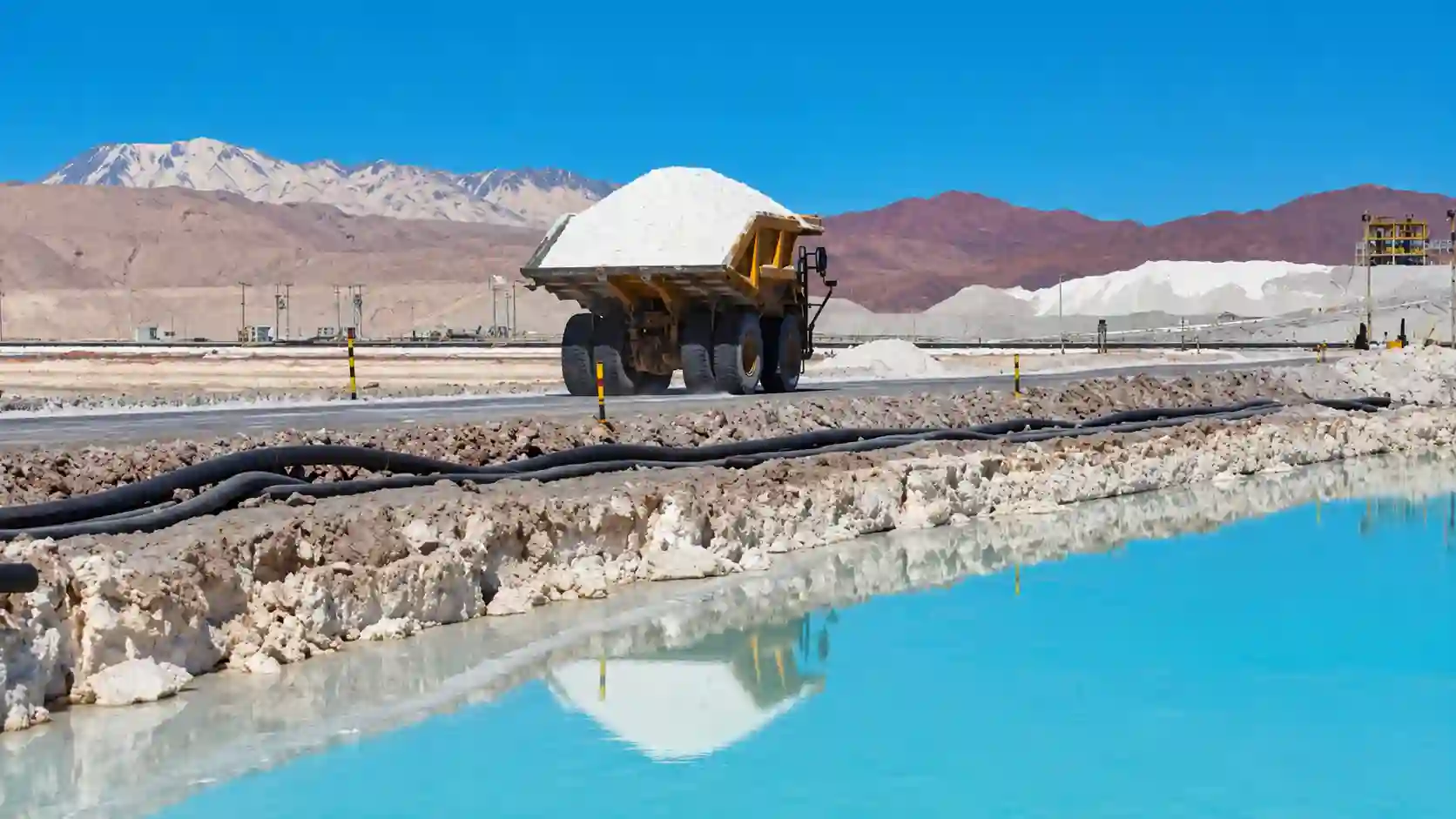
South America is becoming more strategically important because several resource systems are expanding or being revalued at the same time.
Brazil, Guyana and Argentina supplied an estimated 28% of global crude-oil production growth in 2025. Latin America and the Caribbean account for around 40% of global copper mine output and roughly one-quarter of lithium supply. Brazil alone supplied an estimated 93% of global niobium mine production in 2025. The wider region is also the world’s largest net food exporter.
Geoeconomic fragmentation increases the value of alternative supply sources. The advantage remains conditional: extraction does not automatically create strategic autonomy or domestic value. Processing, ports, power, water, financing, technology, regulation and long-term offtake determine who can convert resource endowment into reliable supply.
Why fragmentation changes the value of resource geography
The International Monetary Fund describes geoeconomic fragmentation as a policy-driven reversal of global economic integration across trade, capital, technology and other cross-border channels. That framing matters for South America because concentrated supply chains become more valuable when governments and companies are actively seeking diversification.
The strategic question is broader than commodity prices. A country can become more important because it offers a second source of supply, a different political relationship, another shipping route, an alternative processing location or a platform for regional infrastructure.
Econosur has already examined this logic in How Global Shocks Are Reordering Mercosur’s Economic Map. The resource layer adds another dimension: energy, minerals and food are increasingly evaluated through security of supply as well as cost.
In a more fragmented world economy, the strategic value of a resource depends on how reliably it can reach a buyer and how difficult that supply is to replace.
Oil: production growth is moving into new South American basins
The strongest current energy signal comes from production rather than reserves. The U.S. Energy Information Administration estimated that Brazil, Guyana and Argentina together accounted for 28% of global crude-oil production growth in 2025. Its December 2025 outlook expected those three countries to provide 0.4 million barrels per day of the 0.8 million b/d increase in global crude-oil output forecast for 2026.
Current national data show why the direction remains important. Brazil’s ANP reported 4.498 million barrels per day of oil in July 2026, 13.6% above July 2025. Pre-salt fields produced 3.728 million b/d of that total. Argentina reported a national record of 916,200 b/d in July 2026, up 17.2% year on year, with Vaca Muerta producing 643,100 b/d.
Guyana has added a third growth model. Its offshore production expanded from first oil in 2019 into a multi-FPSO system in the Stabroek Block. Guyana’s official Petroleum Management Programme now publishes production data through July 2026. The country’s 2026 budget estimated average Stabroek output of just below 830,000 b/d in 2025.
These are three different operating systems: Brazil’s deepwater pre-salt, Guyana’s greenfield offshore build-out and Argentina’s unconventional shale development. The Econosur Oil & Gas hub tracks how infrastructure, operators and export routes shape the commercial consequences of these systems. Argentina’s Pacific option is examined separately in Vaca Muerta’s Pacific Question, while Brazil’s offshore supplier structure is covered in the Equatorial Margin supply-chain analysis.
Venezuela shows why reserves and strategic supply must be separated
OPEC’s 2025 Annual Statistical Bulletin reported 303.221 billion barrels of proven crude-oil reserves for Venezuela at the end of 2024. Saudi Arabia was reported at 267.200 billion barrels.
That comparison is striking, but it cannot be read as a production ranking. Proven reserves do not measure the same thing as current output, spare capacity, crude quality, operating reliability, infrastructure, capital access or the ability to expand exports quickly.
Evidence boundary: Venezuela’s reserve figure establishes geological and economic reserve classification under the reporting framework used by OPEC. It does not establish that the barrels can be brought to market at Saudi-scale production rates or on the same commercial terms.
The strategic strength of South American oil therefore comes from a combination of reserve scale and active production growth in several separate basins. This is a more useful commercial signal than a simple comparison of reserve totals with the Middle East.
Critical minerals broaden the resource advantage beyond hydrocarbons
Oil is one part of the strategic picture. The International Energy Agency’s 2026 Critical Minerals Outlook reports that Latin America and the Caribbean account for around 40% of global copper mine output and around one-quarter of global lithium supply. The dominant copper and lithium producers behind those shares are concentrated in South America.
The regional position is especially visible in Chile, Peru, Argentina and Brazil. Econosur’s South America Critical Minerals analysis separates geological endowment from production, processing and project readiness. The Copper Mining hub and Lithium Mining hub track those differences at country and project level.
Brazil adds a mineral with an unusually concentrated operating position. The U.S. Geological Survey’s Mineral Commodity Summaries 2026 estimates that Brazil produced 104,000 tonnes of niobium in 2025, equivalent to 93% of world mine production. USGS also estimates Brazilian niobium reserves at 14.0 million tonnes, compared with a world total of more than 21 million tonnes — roughly two-thirds of the estimated global reserve base.
This distinction matters because Brazil’s niobium advantage is already an operating supply position. Rare earths present a different profile. Brazil has a large geological base and an expanding project pipeline, while most projects remain earlier in development. That gap between resources and operating supply is examined in Brazil’s Critical Minerals Question.
| Resource layer | Current evidence | Strategic significance | Commercial limit |
|---|---|---|---|
| Copper | IEA: LAC around 40% of global mine output in 2025. | Grid, electrification, defence and industrial demand require diversified mine supply. | Mine output can still depend on water, power, processing and export infrastructure. |
| Lithium | IEA: LAC around one-quarter of global supply. | Battery and storage demand links Argentina, Chile and Brazil to global supply-security policy. | Resources, design capacity and stable production must remain separate. |
| Niobium | USGS: Brazil 93% of 2025 world mine production; 14.0m t of reserves versus a world total of >21.0m t. | High concentration makes Brazilian supply strategically difficult to substitute. | Market structure and long-term contracting differ from exchange-traded bulk commodities. |
| Rare earths | Brazil has a large resource and project base; OECD records rising US, EU and Chinese interest. | Potential diversification away from highly concentrated global processing chains. | Most Brazilian projects remain less mature than the country’s niobium industry. |
Food gives South America a second kind of supply-security role
The region’s strategic position is broader than energy and mining. The World Bank and FAO describe Latin America and the Caribbean as the world’s largest net food-exporting region. South American countries including Brazil, Argentina, Paraguay and Uruguay form a major part of that export system across soy, grains, beef, poultry and other agricultural products.
This gives food security a different supply-chain logic from oil or minerals. Agricultural output is renewable, but highly exposed to climate, fertiliser, logistics, sanitary rules, ports and international trade policy. A large production base can still face operational bottlenecks.
Econosur tracks this layer through the Agriculture & Food Systems hub. The Paraguay soy model shows how production becomes commercially relevant only when river logistics, processing and export routes work together.
The strategic advantage is the combination
Gulf economies possess exceptional hydrocarbon concentration. South America’s differentiating feature is a broader resource mix: oil and gas, copper, lithium, niobium, iron ore, agricultural exports, hydropower and other energy systems.
This does not make the region automatically more powerful. It creates several separate supply-security roles that can become more valuable when companies and governments seek geographic diversification.
The US, EU and China are competing over different layers of the same resource system
The OECD’s 2026 regional note on critical minerals describes a clear increase in geopolitical competition. China already holds a dominant position in several refining and downstream segments. The European Union is using the Critical Raw Materials Act, Strategic Projects and Global Gateway investment tools to diversify supply. The United States is building bilateral critical-mineral frameworks and launched the Forum on Resource Geostrategic Engagement, or FORGE, in February 2026.
The European Commission has already designated critical-raw-material Strategic Projects outside the EU. The list includes the São Miguel Paulista nickel and cobalt refinery restart in Brazil. The EU and IDB have also launched a programme financed with a €6.3 million EU grant intended to leverage an additional €120 million in IDB investment for critical-raw-material projects in Argentina, Bolivia, Brazil, Chile and Ecuador.
China enters from a different position. Its companies, banks and industrial buyers have already built deep relationships across mining, energy, infrastructure and commodity trade. The commercial contest is not a blank-slate race for undeveloped resources. It is a competition over projects, processing, financing, infrastructure and long-term customer relationships that already have owners and counterparties.
Chile illustrates that interaction clearly. Econosur’s Chile–China copper and lithium analysis examines how mineral production and Chinese demand are linked through established trade structures rather than a single political relationship.
China
Strong existing position in processing, industrial demand, project participation and commodity purchasing.
European Union
Strategic Projects, CRMA diversification targets, Global Gateway and development-finance instruments.
United States
National-security focus, bilateral frameworks and FORGE cooperation to diversify critical-mineral supply.
The strategic question is who captures the value between extraction and the final buyer
Resource ownership is only the first layer. The International Energy Agency estimates that Latin America and the Caribbean refined only around one-fifth of the key energy minerals it extracted in 2025, excluding lithium. Much of the extracted material therefore enters processing chains outside the region.
The IEA estimates that the region could generate around US$185 billion of economic value from the base-case critical-minerals project pipeline by 2035. In an analytical case with substantially more local refining, that value rises to around US$220 billion.
That gap exposes the central commercial issue. A country can own the deposit while another company controls the mine, another institution finances the project, another supplier provides the processing technology, another operator controls the port or power system, and an overseas buyer secures the output through long-term offtake.
| Control layer | Commercial question | Why it matters |
|---|---|---|
| Resource / licence | Who holds the concession, licence or state mandate? | Defines legal access but not necessarily operating or procurement control. |
| Operator | Who develops and runs the asset? | Often controls engineering standards, suppliers and execution decisions. |
| Finance | Which banks, state institutions or investors make execution possible? | Financing can shape conditions, procurement and project timing. |
| Infrastructure | Who controls power, water, roads, rail, pipelines and ports? | Resource projects can remain stranded or delayed without enabling infrastructure. |
| Processing | Where is the material upgraded or refined? | Processing captures additional value and can become the real supply-chain bottleneck. |
| Offtake | Who has the right or relationship to buy future output? | Long-term buyers can secure supply before material reaches an open market. |
Marcus A. Volz perspective: South America’s advantage is optionality
The region’s strategic weight comes from several independent supply options
South America can serve global buyers through multiple resource systems at once. Brazil and Guyana are expanding offshore oil. Argentina is scaling unconventional hydrocarbons. Chile and Peru remain central to copper. Argentina and Chile are major lithium producers. Brazil dominates operating niobium supply and is building new critical-mineral projects. The agricultural base adds a separate food-security dimension.
The more important development is the change in buyer behaviour. Supply security is moving higher on corporate and government agendas. That increases the value of countries and projects able to provide credible alternative supply, especially where production can expand without depending on the same geopolitical or logistical bottlenecks as incumbent sources.
South America still has its own bottlenecks. Water, electricity, pipelines, ports, rail, financing, regulatory execution and project governance can all delay the conversion of resources into exports. A strategic-resource thesis therefore needs to follow the complete execution chain.
The decisive question for an international company is more specific than whether South America has “potential”: which project, country, infrastructure route and commercial counterparty creates a supply or sales position that can actually be executed?
South America’s resource advantage becomes commercially meaningful where geology, project execution, infrastructure, processing, finance and offtake align.
Commercial implications for international companies
| Business position | What the shift creates | What needs verification |
|---|---|---|
| Industrial supplier | New capex and operating demand around mines, oil projects, processing and infrastructure. | Project maturity, package ownership, qualification route, incumbent suppliers and local-service requirements. |
| Commodity buyer | Additional geographic options for energy, minerals and agricultural supply. | Production reliability, logistics, quality, pricing, contract structure and available uncommitted volume. |
| Investor / financier | Projects can gain strategic-policy support as supply diversification becomes a national-security objective. | Permitting, infrastructure, offtake, local value-add requirements and execution risk. |
| Processor / technology provider | Regional value-add policies can create demand for refining, processing, automation and industrial infrastructure. | Feedstock certainty, power and water availability, economics, incentives and market access. |
| Corporate strategy | South America becomes a diversification option across several input categories. | Which countries and counterparties reduce exposure rather than simply replacing one concentration with another. |
Three business questions worth answering next
1. Which South American resource projects can add commercially relevant supply within the buyer’s actual planning horizon?
Resource size and project announcements are insufficient. Financing, permits, infrastructure, construction, commissioning and ramp-up determine when output becomes available.
2. Which part of the value chain is controlled by China, the United States, Europe or another strategic buyer?
Ownership, finance, processing, technology and offtake can sit with different actors. Exposure should be mapped by layer rather than by country label alone.
3. Where can an international supplier or buyer enter before the strategic resource is already contractually or operationally locked in?
The relevant buying point may appear years before first production through engineering, infrastructure, qualification, processing decisions or long-term offtake negotiations.
Where the public evidence stops
Public sources establish the region’s resource scale, current production trends and the strategic-policy response of major economies. They do not establish that South America forms one integrated resource bloc or that its output can be redirected by a single political actor.
South American countries pursue different foreign policies, investment models and resource-governance systems. China, the United States, Europe and other buyers already participate through different combinations of trade, equity, finance, technology and long-term contracts.
The article therefore does not assume that the United States can “separate” South America from China, or that South America can replace Middle Eastern energy supply as a single bloc. Those would require country-, commodity- and contract-level evidence.
Several regional statistics used by the IEA, World Bank, OECD and FAO cover Latin America and the Caribbean rather than South America alone. They are used here to establish the broader regional position. South American country evidence is separated where current national data are available.
Research services for strategic-resource exposure in South America
Econosur can structure deeper research around a defined company decision involving energy, critical minerals, agricultural supply or the infrastructure that connects those resources to international markets.
Resource & project screening
Compare countries, operators and projects by current output, project status, infrastructure, financing and realistic supply timing.
Ownership, finance & offtake mapping
Trace who controls the asset, finances execution, processes output and holds long-term purchasing relationships.
Execution-route analysis
Map power, water, roads, rail, pipelines, ports and other enabling systems that determine whether production can reach market.
US–EU–China positioning
Compare strategic partnerships, investment, financing, processing and buyer exposure around a defined commodity or project.
Procurement & supplier mapping
Identify operators, EPC/EPCM structures, qualification routes, technical gatekeepers and incumbent suppliers around resource projects.
Country & supply-chain comparison
Test whether a South American supply option genuinely reduces concentration, cost or execution risk for a specific company.
- IMF Staff Discussion Note SDN/2023/001 — geoeconomic fragmentation framework.
- U.S. Energy Information Administration — Brazil, Guyana and Argentina crude-oil growth, December 2025 outlook.
- OPEC Annual Statistical Bulletin 2025 — proven crude-oil reserves, including Venezuela and Saudi Arabia.
- Brazil ANP — consolidated oil and gas production for July 2026.
- Argentina national government — July 2026 oil and Vaca Muerta production.
- Guyana Petroleum Management Programme — official oil-production data through July 2026.
- U.S. Geological Survey, Mineral Commodity Summaries 2026 — niobium and other mineral production/reserves.
- International Energy Agency, Global Critical Minerals Outlook 2026 — Latin America chapter.
- Inter-American Development Bank — EU-IDB critical raw materials initiative.
- European Commission — selected Strategic Projects under the Critical Raw Materials Act.
- FAO — Latin America and the Caribbean as the world’s largest net food-exporting region.
- OECD, Regional Note on Critical Minerals in Latin America and the Caribbean, 2026 — China, EU, US and regional value-capture strategies.
- World Bank — agrifood sector and net-food-export role of Latin America and the Caribbean.
- Evidence note: LAC-wide statistics are labelled as such and are not silently converted into South America-only figures.
- Econosur analysis: the “strategic resource advantage” framework and the control-layer model are analytical interpretations of the cited evidence, not claims made by one individual source.
- Econosur analysis prepared 15 September 2026.
Frequently asked questions about South America’s strategic resources
Why is South America becoming more strategically important for global supply chains?
South America combines expanding oil production, major copper and lithium production, dominant Brazilian niobium output and a large agricultural export base. Geoeconomic fragmentation raises the value of diversified supply, while infrastructure, processing, finance, regulation and offtake determine whether the resource position becomes commercially usable.
Does South America have more oil than the Middle East?
A simple regional ranking is misleading. OPEC reports that Venezuela alone held about 303.2 billion barrels of proven crude-oil reserves at the end of 2024, compared with about 267.2 billion barrels for Saudi Arabia. Proven reserves do not measure current production capacity, oil quality, infrastructure, investment conditions or spare capacity.
Which South American minerals are strategically important?
Copper, lithium and niobium are already highly relevant, while rare earths, graphite, nickel and cobalt add emerging project opportunities. The IEA reports that Latin America and the Caribbean account for around 40% of global copper mine output and roughly one-quarter of lithium supply. USGS estimates Brazil supplied 93% of global niobium mine production in 2025.
Who captures the strategic value of a resource project?
The country and resource owner are only part of the structure. Operators, financiers, processors, infrastructure providers, technology suppliers and long-term offtake buyers can each control commercially important layers of the value chain.
Need to understand where a South American resource opportunity becomes commercially actionable?
Econosur can compare projects, operators, infrastructure, financing, processing, offtake and supplier access around one defined energy, mining or agricultural supply-chain question.
Explore custom market analysis