
Argentina · Vaca Muerta · Operations · Infrastructure · Updated October 2026
Añelo: Where Vaca Muerta Becomes Operational Reality
Añelo is the production-support centre behind Argentina’s shale expansion. Roads, heavy traffic, rotating workers, oilfield services, housing, technical education, water, waste and evacuation infrastructure determine how quickly Vaca Muerta can operate at scale.
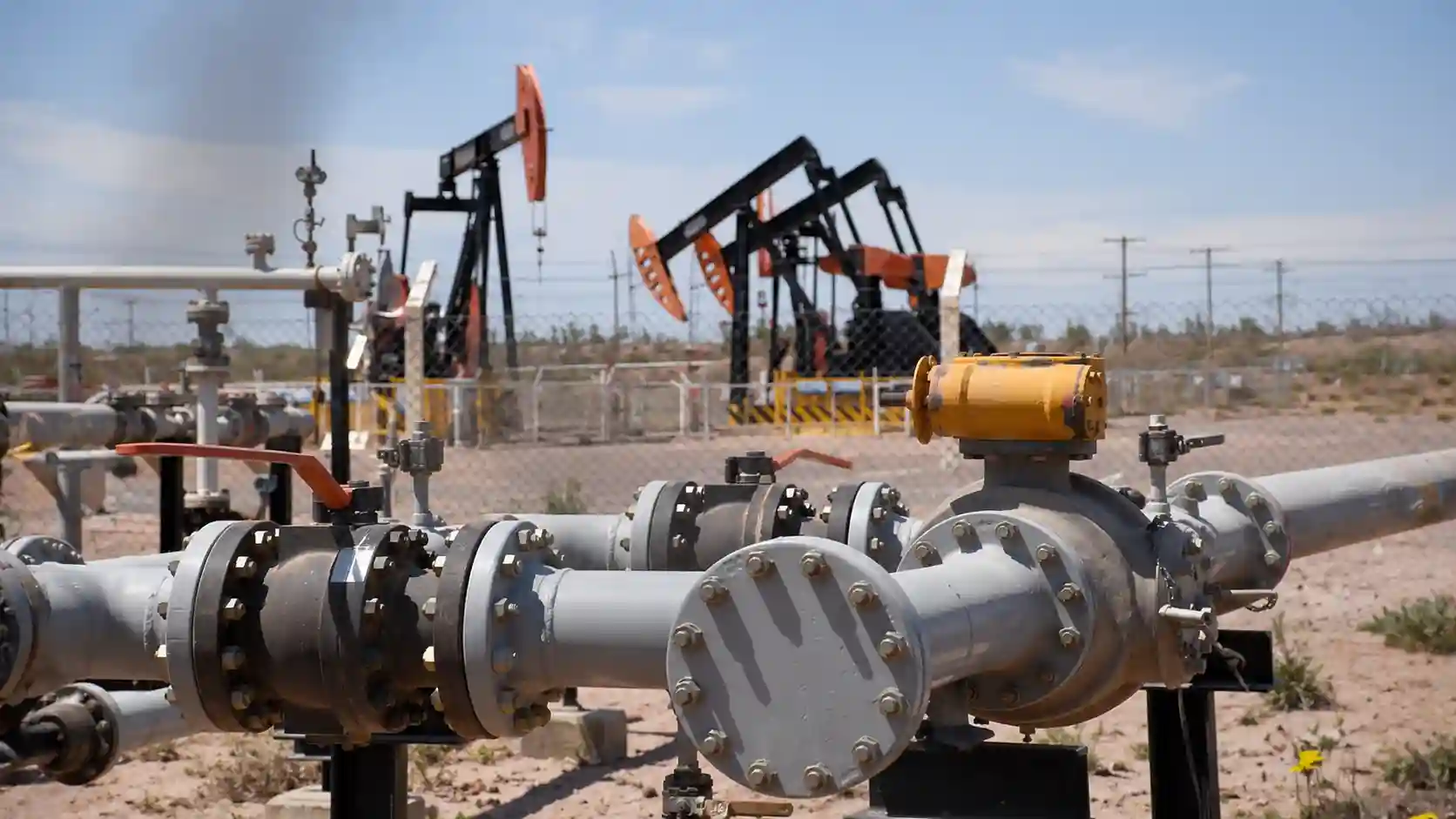
Añelo is Vaca Muerta’s production-support town.
Its importance comes from the concentration of field services, worker movements, heavy vehicles, accommodation, maintenance, water, waste and public-infrastructure demand around the Neuquén shale system.
The town shows where production growth encounters practical limits. More wells require more road capacity, qualified labour, environmental infrastructure and connections to pipelines and export routes.
For the wider structure, see Oil & Gas in South America and the analysis of Vaca Muerta gas routes to Brazil.
Core market reading:
Añelo is not a proxy for the entire Vaca Muerta market. It is the place where production cycles create recurring demand for logistics, services, labour and local infrastructure.
What Añelo is — and what it is not
Añelo is a municipality in Neuquén Province located inside the operating geography of Vaca Muerta. It became strategically important because operators, contractors, workers and service companies needed a local base close to drilling and production activity.
The town should not be presented as a diversified boom city or as a simple real-estate story. Its economy is tied closely to drilling cycles, contractor activity, production investment and the capacity of roads and public services to absorb industrial growth.
Vaca Muerta is officially described through technically recoverable shale resources: Argentina is positioned second globally in shale gas and fourth in shale oil. Resources are not the same as proven reserves or current production.
Añelo measures Vaca Muerta through trucks, shifts, service capacity and public infrastructure rather than geology alone.
The operating system behind production
Operators and drilling programmes
Production plans create demand for rigs, completions, treatment, maintenance and field logistics.
Contractors and service bases
Approved suppliers, yards, equipment, workshops and crews convert investment plans into operations.
Worker movement and accommodation
Rotating shifts require transport, camps, rentals, food, healthcare and safety systems.
Water, waste and environmental control
Water wells, disposal wells, treatment, monitoring and waste transport are part of the production system.
Evacuation infrastructure
Oil and gas production becomes marketable only when pipelines, storage and export systems can receive it.
The infrastructure outside the well pad
September road programme: On September 7, Neuquén announced an operator-backed road programme involving routes 8, 51 and 7 and links to route 6. Planned works aim to divert some traffic away from Añelo. This is a programme announcement, not confirmation that every road section has been completed.
Añelo bypass
The bypass is designed to divert trucks from the urban area and connect provincial routes 7 and 17. The first section opened on May 25, 2026; the full 25-kilometre route was still being completed.
EPET No. 23
The new technical-school building was 60 percent complete in April 2026 and is oriented toward hydrocarbons and robotics. Skills formation has become an explicit part of Vaca Muerta infrastructure.
Permanent and rotating demand
Permanent residents, temporary workers and daily commuters create different demand patterns. Housing availability alone does not measure whether transport, healthcare, education and municipal services are sufficient.
Environmental infrastructure
Project plans include water wells, disposal wells, treatment plants, monitoring and waste-management systems. Capacity and compliance outside the well pad affect operating continuity.
Continuous operations
Field systems, camps, monitoring and contractor bases require reliable electricity, connectivity and backup arrangements across a dispersed operating area.
Beyond Añelo
Oldelval, Vaca Muerta Oil Sur, national gas pipelines and future LNG infrastructure determine whether field growth can reach domestic and export markets.
Population figures require clear categories
Neuquén’s provincial government reported in August 2024 that Añelo had more than 10,000 permanent residents and about 15,000 workers with temporary residence. Daily commuters and rotating crews can produce much larger mobility counts, but they should not be added to create one exact population figure.
The relevant market distinction is between permanent municipal demand, temporary accommodation and daily worker transport. Each category creates different infrastructure needs and different commercial opportunities.
RIGI changes project economics, not project status
Argentina extended the RIGI application period to July 8, 2027 and added qualifying new onshore oil and gas developments with a minimum investment threshold of USD 600 million.
Approved project vehicles can receive a 25-percent corporate income-tax rate, eligible customs benefits, progressive foreign-currency availability and 30 years of stability. The general foreign-currency schedule is 20 percent from year two, 40 percent from year three and 100 percent from year four. The faster year-one, year-two and year-three schedule applies to qualifying long-term strategic export projects.
RIGI approval ≠ completed investment or operating capacity.
A company application signals investment intent and project preparation. Benefits apply only after the project and its plan are formally approved under the regime.
Neuquén reported evaluation-committee approval for Pluspetrol and GyP’s Bajo del Choique–La Invernada RIGI development on October 2, 2026. The plan totals USD 12.4 billion over 25 years. Its location near Rincón de los Sauces means demand must be mapped to the actual project, not attributed automatically to Añelo.
The same development was moving through environmental evaluation. A public hearing for the Bajo del Choique environmental-impact study took place on April 1, 2026. The project description includes roads, well locations, unconventional wells, disposal and monitoring wells, water wells, trunk pipelines, treatment plants and accommodation.
The project is a long-term demand signal, not proof that every procurement package is open.
Suppliers still need to identify the operator, contractor structure, environmental stage, approved project scope and qualification process.
Company cases around the Añelo operating system
YPF
YPF links upstream development with pipelines, refining, oil exports and LNG planning.
Read YPF insight →Vista Energy
Vista represents a concentrated private-operator model built around shale-oil growth and export exposure.
Read Vista Energy insight →Pampa Energía
Pampa connects gas production with electricity generation and petrochemical demand.
Read Pampa Energía insight →Pluspetrol
Bajo del Choique–La Invernada shows the scale of infrastructure, wells and processing attached to one long-term development plan.
Read Pluspetrol insight →Shell, Chevron, Pan American Energy, Tecpetrol, TotalEnergies and other operators form part of the wider Vaca Muerta system. Halliburton, SLB, Tenaris and local contractors illustrate the service and equipment layer. Their purchasing structures are not interchangeable.
Supplier demand follows the buyer and project stage
Añelo does not represent one open supplier market. Operator procurement, drilling contractors, civil works, camp services, pipeline projects and public infrastructure follow separate contracting and qualification systems.
Econosur’s European Suppliers in Vaca Muerta report maps this access problem across 24 European supplier cases. The central finding is that suppliers reach demand through specific procurement chains — operators, EPC contractors, engineering firms, integrators, distributors, project companies and local service platforms — rather than through one Vaca Muerta market.
| Demand layer | Typical buyer | What must be verified |
|---|---|---|
| Well and field operations | Operator and oilfield-service contractor | Approved-vendor status, technical standards, field support and safety requirements. |
| Roads and civil works | Province, trust structure, operator consortium or construction contractor | Project sponsor, tender route, schedule and local-content conditions. |
| Camps and worker services | Operators, contractors and service companies | Shift volumes, contract duration, transport and occupancy risk. |
| Water and waste | Operator, environmental contractor or treatment company | Permits, transport responsibility, monitoring and disposal capacity. |
| Pipeline and export systems | Transport company, project vehicle, EPC contractor or consortium | Project status, financing, EPC structure and commissioning responsibility. |
Registration is not demand, and demand is not an order.
International suppliers need to identify the decision centre, current project phase, local-service requirement and documentation needed for qualification.
Supplier Access, Operating Bottlenecks & Investor Watch
How can international suppliers actually access demand in Añelo and Vaca Muerta?
There is no single Vaca Muerta procurement channel. Access depends on the buyer and the project stage: operators, drilling and oilfield-service contractors, EPC and engineering firms, project vehicles, integrators, distributors and local service platforms can each control different packages.
Public sources can identify projects and major companies, but they rarely reveal current approved-vendor status, active sourcing priorities, incumbent supplier relationships or the local support expected from a new entrant. Those questions require direct market verification.
Which bottlenecks around Añelo create recurring business opportunities beyond drilling?
Production growth creates demand outside the well pad: roads and heavy-vehicle logistics, worker transport and accommodation, maintenance, water and wastewater, industrial waste, power, communications and evacuation infrastructure all form part of the operating system.
The commercial opportunity is still buyer-specific. An infrastructure constraint does not by itself identify the contracting authority, budget, incumbent provider or procurement timing. Those details determine whether visible demand is actually addressable by an international supplier.
How should investors interpret RIGI announcements around Vaca Muerta?
A RIGI application is an investment signal, not proof of approval, financing, procurement or construction. Investors should distinguish the sequence from application and regulatory approval through environmental review, financing, contracting, construction and ultimately production and export capacity.
For the Pluspetrol–GyP case discussed above, the announced scale is relevant as a long-term demand signal. It does not mean that every equipment or service package is already funded, tendered or commercially open.
What public filings do not show:
Project announcements, RIGI filings and infrastructure updates can establish investment intent and formal status. They usually do not show the live procurement position, supplier qualification barriers, buyer preferences, incumbent relationships or whether a specific opportunity is commercially executable.
Neuquén's export growth increases the pressure on evacuation systems
Neuquén exported USD 6.3006 billion in goods in 2025, according to the provincial statistics office using INDEC data. Fuels and energy represented 97.6 percent of the total. Crude oil exports reached USD 5.5747 billion and petroleum gas USD 564.2 million.
These figures show that Añelo is connected to a wider export system. Field output must move through oil pipelines, gas pipelines, storage, terminals and cross-border or maritime routes. The Pacific oil route, Brazil gas corridors, Vaca Muerta Oil Sur and the San Matías LNG chain are separate infrastructure paths with different statuses.
Añelo supports production. Evacuation infrastructure determines how much of that production becomes revenue.
The town shows where production growth encounters practical limits. More wells require more road capacity, qualified labour, environmental infrastructure and connections to pipelines and export routes.
Research Services for Añelo and Vaca Muerta Operations
Econosur can investigate a defined company, sector, project or market question within its South American operating context.
Verify demand for field services, maintenance and support infrastructure at the relevant asset.
Identify incumbents, local service footprints and the actual buyer for each category.
Assess representation, safety requirements, documentation and operational support capability.
Check road, workforce, water and evacuation bottlenecks against current project execution.
For a defined research question, see Custom Market Analysis South America.
Published company and project information establishes the public evidence base. Announced investment, approved capacity, construction, operating output and active procurement are separate stages. Purchasing contacts, current requirements and commercial terms require direct verification.
Primary, Institutional and Secondary Sources
- Neuquén government — permanent residents and temporary workers in Añelo.
- Neuquén government — Añelo bypass progress in April 2026.
- Neuquén government — opening of the first bypass section in May 2026.
- Neuquén government — EPET No. 23 construction and technical orientation.
- Argentina government — RIGI requirements, benefits and foreign-currency schedules.
- Argentina government — RIGI extension and USD 600m threshold for qualifying new onshore developments.
- Neuquén government — Pluspetrol and GyP RIGI application.
- Neuquén government — environmental public hearing for Bajo del Choique.
- Neuquén statistics — 2025 provincial exports.
- Argentina Secretaría de Energía — Vaca Muerta resource positioning.
- Neuquén — October 2, 2026 RIGI committee-approval announcement
- Neuquén — September 7, 2026 operator-backed road programme
Official statistics, regulatory documents, company disclosures and independent reporting serve different purposes. Company targets and sponsor proposals are attributed as such. Data periods are stated beside the relevant claims; historical figures are not presented as October 2026 measurements.
From public project data to commercial market intelligence
Public sources can show investment plans, RIGI filings, permits, infrastructure status and announced capacity. They do not necessarily show who is actively buying, how suppliers qualify, which competitors are already positioned or whether a stated opportunity is commercially accessible.
Marcus A. Volz provides custom and primary market research for international companies evaluating Argentina and Mercosur. Research can include interviews with market participants, company and competitor research, and supplier or distributor checks. Project-specific work can also verify procurement routes and local market conditions in the Southern Cone.
Discuss a custom research projectFrequently asked questions
What is Añelo in Vaca Muerta?
Añelo is a production-support town in Neuquén Province that concentrates oilfield services, worker movements, logistics, road pressure, accommodation and public-infrastructure demand around Vaca Muerta.
How many people live and work in Añelo?
The Neuquén government reported more than 10,000 permanent residents and about 15,000 temporary workers in August 2024. Daily commuting and rotating-shift populations are measured differently, so they should not be combined into one exact current population figure.
Why is the Añelo bypass important?
The 25-kilometre bypass is designed to move heavy trucks out of the urban area and improve access between provincial routes 7 and 17. The first section opened in May 2026, while the full route was still being completed.
What does the new technical school show?
The EPET No. 23 building, oriented toward hydrocarbons and robotics, was 60 percent complete in April 2026. It shows that local skills and technical education have become part of the operating infrastructure required by Vaca Muerta.
How does RIGI affect new Vaca Muerta developments?
For qualifying new onshore oil and gas developments, RIGI sets a minimum investment threshold of 600 million dollars and provides a 25-percent project-vehicle income-tax rate, eligible customs benefits, progressive foreign-currency availability and 30 years of regulatory stability after approval.
Has Pluspetrol's Bajo del Choique project been approved under RIGI?
Yes. Neuquén reported evaluation-committee approval on October 2, 2026.
What does Añelo mean for industrial suppliers?
Añelo signals recurring demand for field services, equipment, maintenance, logistics, transport, accommodation, water, waste management, safety and technical documentation. Market access depends on the operator, contractor, project stage and qualification route.
What are Añelo's main operating constraints?
The main constraints sit outside the well pad: heavy traffic, worker transport, housing, technical skills, water, wastewater, industrial waste, public services and the capacity to connect production with pipelines and export systems.