
Energy &
Infrastructure in
South America
Energy and infrastructure in Argentina, Brazil, Paraguay, Uruguay and Chile are not only about resources or installed capacity. The strategic question is whether power, grids, gas, logistics, digital infrastructure and regulation can turn regional potential into operational market capacity.
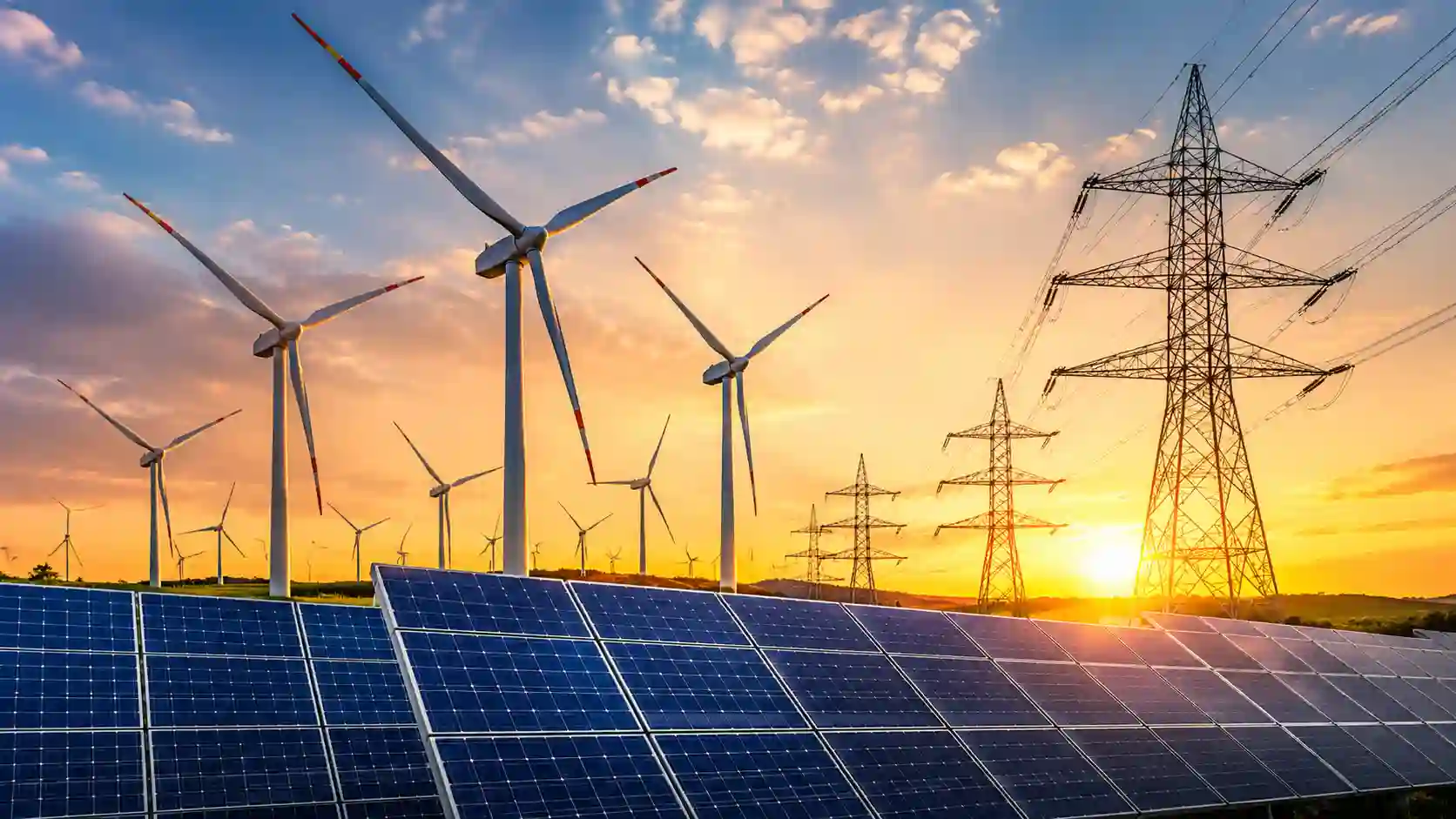
Energy and infrastructure are the execution layer behind market development in Mercosur and South America. The region has major energy advantages, from Vaca Muerta and Itaipu to Uruguay’s renewable electricity system, Chile’s mining-linked power and water systems and Brazil’s low-carbon fuel agenda.
The decisive issue is not potential alone. The decisive issue is whether energy can be converted into reliable industrial, logistical and digital capacity.
Market signal: energy is becoming a location factor
Energy is becoming a stronger location factor in South America. It shapes where industry can expand, where mining projects can operate, where logistics corridors become commercially relevant and where digital infrastructure can be built.
In Mercosur and the wider Southern Cone, the practical market question is clear: which countries can turn energy advantages into reliable infrastructure, export capacity and investable projects?
Current case: Josemaría Power Corridor. On 28 July 2026, Argentina’s federal electricity regulator authorized 260 MW of transmission access for Josemaría Stage 1 and issued the public-need certificate for the associated expansion. The approved scope includes the approximately 167 km Rodeo–Chaparro 500 kV line, the new ET Chaparro and upgrades at Rodeo and Nueva San Juan.
Read the Josemaría Power Corridor case analysis — the project now moves from a contested access process toward construction, commissioning, technical compliance and integration of the new capacity into the wider transmission system.
Why energy alone does not translate into infrastructure
Energy potential is only the first layer. Infrastructure begins when energy is connected to grids, transmission, storage, cooling, industrial land, ports, pipelines, fiber networks, operators, financing and regulation.
This distinction matters because South America often produces strong announcements before the operational layer is clear. A gas reserve, a hydropower plant, a renewable electricity matrix or a data-center plan only becomes economically relevant when it can support real users under predictable conditions.
For foreign companies, the practical question is therefore not whether the region has energy resources. The better question is whether the full infrastructure stack is strong enough for the specific project, sector and location.
The real test is not who has energy. The real test is who can convert energy into operational capacity.
Energy becomes a market advantage only when it is usable. Usable means connected, contracted, financed, permitted, maintained and integrated into industrial or digital demand.
Mining water infrastructure: where energy and water become one system
Northern Chile shows why water infrastructure belongs inside the energy and industrial-infrastructure discussion. Cochilco projects that seawater will rise from 40.7% of copper-mining water use in 2024 to 67.6% in 2034. That shift requires more than desalination plants. It requires marine intake, reverse osmosis, pipelines, pumping stations, high-voltage supply, reservoirs and long-term operating contracts.
The energy connection is direct. Water has to be treated at the Pacific coast and then moved across long distances and major elevation differences into mining districts. The reliability of pumps, power supply and pipelines therefore becomes part of copper-production reliability.
Codelco / Distrito Norte
Status, July 2026: under construction. The Aguas Horizonte system includes a reverse-osmosis plant, three pumping stations and more than 160 km of underground pipelines. Initial design capacity is 840 l/s, expandable to 1,956 l/s, under a BOOT structure. Commissioning remains scheduled for 2026, but commercial delivery has not yet been confirmed. Read the Codelco company insight.
CRAMSA / Aguas Marítimas
Status, July 2026: environmentally approved, not under construction. CRAMSA describes up to 700,000 m³/day, around 480 km of distribution infrastructure and 18 pumping stations. The company currently states 2028 as the expected construction start. Read the CRAMSA company insight.
Infrastructure distinction: Distrito Norte is an active construction project for a defined Codelco mining district. Aguas Marítimas is an environmentally approved multi-user corridor whose financing, offtake and construction still have to be executed.
See Econosur’s full analysis: Seawater Is Becoming Chile’s Mining Infrastructure and the regional Copper Mining industry page.
How country roles differ in the regional energy map
Argentina
Argentina’s infrastructure story is tied to Vaca Muerta, gas, oil, pipelines, LNG ambitions and increasingly to mining-grid access. For the supplier side of that build-out, Econosur’s European Suppliers in Vaca Muerta report maps procurement chains, gatekeepers and market-access models across 24 European supplier cases. The Josemaría Power Corridor shows how large mining demand can trigger dedicated 500 kV expansion, new substations and project-specific capacity rights before mine production begins.
Brazil
Brazil adds scale. Its role combines industrial demand, electricity-market depth, bioenergy, biomethane, low-carbon fuels, ports and manufacturing-linked energy infrastructure.
Paraguay
Paraguay’s position starts with hydropower and low-cost electricity, but also depends on the Paraná-Paraguay waterway, logistics capacity and the ability to attract industrial and digital users.
Uruguay
Uruguay stands out for renewable electricity, institutional stability and digital positioning. The next layer is storage, export use, green hydrogen, data centers and higher-value industrial demand.
Chile
Chile links power and transmission directly to copper, lithium and mining-water infrastructure. Desalination plants, coast-to-mine pipelines, pumping stations and reservoirs turn electricity and water into one operating system. The power-grid analysis maps the transmission bottlenecks and investment cycle, the Kimal–Lo Aguirre case follows Chile’s first HVDC project into procurement and suppliers, the battery-storage analysis covers temporal balancing and curtailment, and the seawater infrastructure analysis follows the electricity-water connection into mining districts.
Regional layer
The regional infrastructure question connects energy with ports, waterways, pipelines, transmission lines, fiber routes, mining corridors and export logistics.
Which infrastructure questions matter most?
Energy and infrastructure analysis in Mercosur and South America should not stop at production figures. The relevant questions are operational and commercial.
Can power reach the user?
Installed capacity does not automatically mean usable capacity. Grid access, transmission constraints, congestion, distance from demand centers and connection costs can decide whether a project is viable.
Can energy support industrial scale?
Mining, chemicals, food processing, pulp, steel, manufacturing and data centers need stable supply, predictable prices, contractual security and infrastructure that can support continuous operations.
Can logistics convert production?
Energy projects become more valuable when they are connected to pipelines, ports, roads, rail, waterways and export terminals.
Can regulation support investment?
Permitting, tariff regimes, tax incentives, environmental rules, public-private partnership models and political continuity shape whether investors can commit capital.
Can digital infrastructure use the energy base?
Data centers and AI infrastructure require electricity, cooling, water strategy, fiber redundancy, cloud partners, hardware access, specialized operators and enterprise demand.
Can announced projects become assets?
The market difference lies between announcements and operational assets: financed, connected, permitted, staffed and maintained infrastructure.
Subsectors covered by this industry theme
Power generation
Hydropower, gas, renewables, biomass, solar, wind and thermal generation as the first layer of the regional infrastructure system.
Grid and transmission
Transmission lines, grid congestion, distribution reliability, high-voltage corridors and connection between production areas and demand centers. Chile’s power-grid analysis maps the system-level bottlenecks, while Kimal–Lo Aguirre shows how a planned transmission need becomes an LCC-HVDC procurement chain. The battery-storage analysis covers the parallel temporal-balancing market.
Oil and gas infrastructure
Vaca Muerta, pipelines, gas treatment, LNG ambitions, export routes and the connection between resource development and macroeconomic capacity. See European Suppliers in Vaca Muerta for the supplier, procurement and market-access layer behind this infrastructure build-out.
Renewables and storage
Wind, solar, hydro, battery storage, hydrogen, biomethane and the second stage of energy transition beyond generation capacity.
Water and desalination infrastructure
Seawater intake, desalination, pipelines, pumping systems, reservoirs, industrial water supply and the electricity required to operate high-elevation mining-water corridors.
Digital infrastructure
Data centers, AI compute, fiber, cooling, power contracts, cloud infrastructure and the attempt to turn energy into digital capacity.
Trade and logistics corridors
Ports, inland waterways, roads, rail, industrial parks and the physical routes that connect production zones with regional and global markets.
Business opportunities around the infrastructure layer
This sector is relevant for energy companies, engineering firms, industrial suppliers, mining operators, logistics providers, data-center developers, telecom infrastructure companies, cooling specialists, construction firms, equipment providers and investors.
The common denominator is execution risk. Companies entering the region need to understand where energy advantages are real, where infrastructure gaps remain and where public announcements do not yet translate into operational assets.
For B2B suppliers, the opportunity is often not only the headline project. It may sit in the supporting layer: grid equipment, pumps, valves, pipelines, desalination systems, measurement and control, cooling, industrial land, port services, environmental engineering, dredging, fiber, energy storage, project management and maintenance.
Resource layer: energy reserves, hydropower, wind, solar, gas, oil, biomass and renewable potential.
Infrastructure layer: grids, pipelines, desalination, pumping systems, ports, waterways, roads, storage, cooling, fiber and operational capacity.
Market layer: industrial demand, export logic, regulatory conditions, commercial users, financing and execution reliability.
Frequently asked questions about energy infrastructure
Why does energy infrastructure matter in Mercosur and South America?
Energy infrastructure matters because it determines whether natural resources, industrial projects, mining regions, ports, data centers and export corridors can actually operate at scale. Electricity, gas, grids, logistics and regulation are part of the same execution layer.
Is the regional energy story only about power generation?
No. Power generation is only the first layer. The decisive question is whether energy can be converted into reliable industrial, logistical and digital capacity through grids, transmission, cooling, fiber, storage, contracts, operators and predictable rules.
Which countries are most relevant for this sector?
Argentina, Brazil, Paraguay, Uruguay and Chile are all relevant, but for different reasons. Argentina is tied to Vaca Muerta and gas infrastructure, Brazil to industrial scale and low-carbon fuels, Paraguay to hydropower and logistics, Uruguay to renewables and stability, and Chile to mining energy demand and grid expansion.
How is energy connected to data centers and AI infrastructure?
AI and data centers make the physical layer of the digital economy visible. Compute infrastructure requires electricity, cooling, land, water management, fiber connectivity, specialized operators and long-term power contracts.
What are the main bottlenecks for energy and infrastructure projects?
The main bottlenecks include transmission capacity, grid congestion, permitting, financing, transport routes, port access, water use, political continuity and the ability to convert announced projects into operational assets. The Josemaría corridor in San Juan is a current example: 260 MW of access and the associated 500 kV expansion were authorized in July 2026, so the next questions are construction, commissioning and integration into the wider transmission system.
How are water and desalination connected to energy infrastructure?
Mining-water systems connect seawater intake, desalination, pipelines, pumping stations, reservoirs and electricity supply. In Chile, water must be treated at the coast and lifted to high-altitude copper districts, so pumping power and water-system reliability become part of mining infrastructure.
Why does Kimal–Lo Aguirre matter for Chile’s transmission market?
Kimal–Lo Aguirre is Chile’s first HVDC transmission project and a concrete example of how grid expansion becomes a procurement market. The project connects transmission planning with LCC-HVDC technology, international owners, specialist suppliers, project finance, port logistics and construction.
Which industries depend most directly on this infrastructure layer?
Mining, lithium, oil and gas, agroindustry, data centers, logistics, manufacturing, pulp and paper, industrial machinery, food processing and export-oriented production all depend directly on energy and infrastructure conditions.
Need more than an energy infrastructure overview?
Energy questions in South America rarely stay inside the energy sector. They affect mining, desalination, industrial water, data centers, ports, logistics, industrial land, food processing and manufacturing. Econosur connects infrastructure conditions with country exposure, sector risk and market execution.
Request an energy infrastructure analysis